
How Bacteria Take Up Dipeptides: New Structural Insights
Greg Howard
10th March, 2025


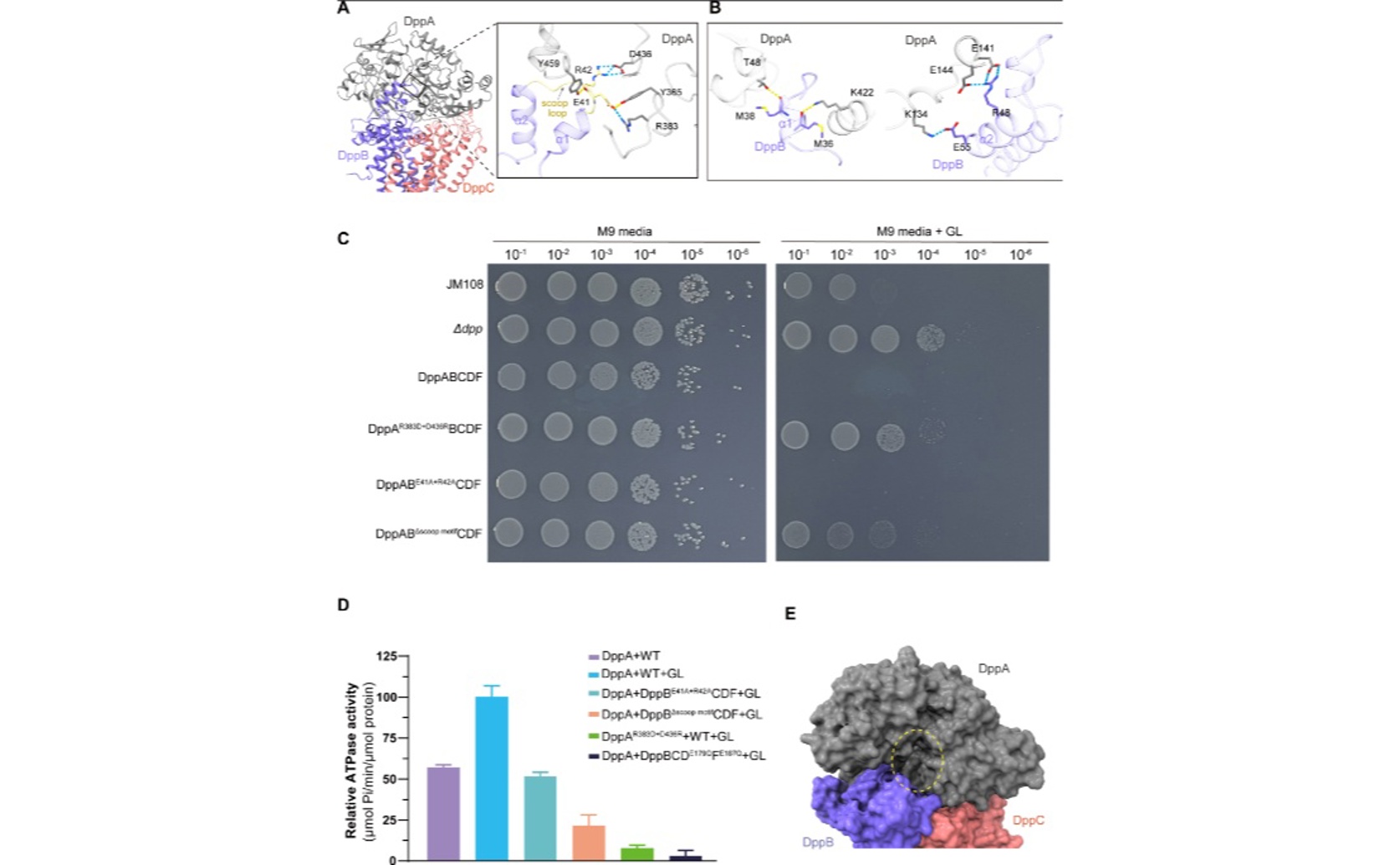
The periplasmic scoop motif of DppB in Escherichia coli is essential for efficient dipeptide import, as shown by bacterial complementation assays (c) and ATPase activity measurements (d) demonstrating that mutations disrupting the scoop loop–DppA interaction or deletion of the scoop motif impair substrate transport, likely by failing to seal the outward-facing cavity and prevent dipeptide escape into the periplasm (e).
Key Findings
- Scientists in Beijing uncovered how a crucial protein in E. coli helps the bacteria take in nutrients and resist antibiotics
- They discovered that this protein requires both a specific binding partner and energy to function, controlling substance movement into the cell
- These insights may lead to new antibiotics that block the protein, helping to fight antibiotic-resistant bacteria
References
Main Study
1) Structural characterization of the ABC transporter DppABCDF in Escherichia coli reveals insights into dipeptide acquisition
Published 7th March, 2025
https://doi.org/10.1371/journal.pbio.3003026
Related Studies
2) The role of bacterial ATP-binding cassette (ABC) transporters in pathogenesis and virulence: Therapeutic and vaccine potential.
3) The Antibiotic Negamycin Crosses the Bacterial Cytoplasmic Membrane by Multiple Routes.
4) High-level pacidamycin resistance in Pseudomonas aeruginosa is mediated by an opp oligopeptide permease encoded by the opp-fabI operon.
Related Articles
 1st March, 2025 | Greg Howard