FhpA Protein Essential for Fungal Growth, Toxin Production, and Stress Handling

Greg Howard
5th March, 2025

FhpA Protein Essential for Fungal Growth, Toxin Production, and Stress Handling

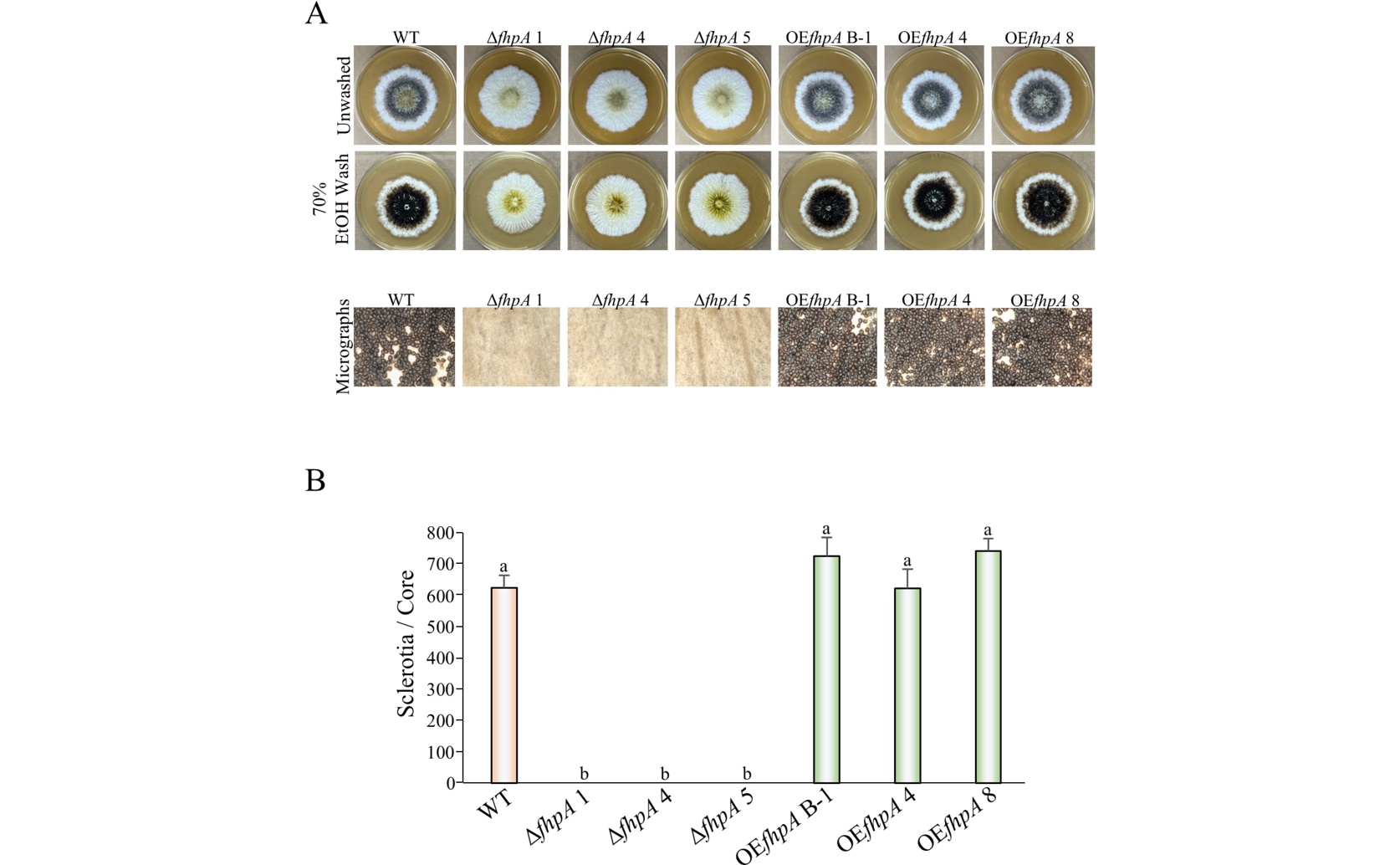
Loss of fhpA completely abolishes sclerotial formation in Aspergillus flavus, demonstrating that this forkhead transcription factor is essential for sexual survival structure development and supporting the study’s conclusion that fhpA is a key regulator of fungal morphogenesis.

Image adapted from: Lohmar et al. / CC0 1.0 (Source)

Key Findings

  • Researchers in the United States found that changing the fhpA gene in Aspergillus flavus lowers harmful toxin levels in crops like corn
  • Disabling fhpA also reduced the fungus’s ability to produce spores and survive harsh conditions
  • Increasing fhpA made the fungus more sensitive to environmental stresses, showing its role in toxin production and resilience
Aflatoxins produced by the fungus Aspergillus flavus pose significant challenges to agriculture and public health. These toxins contaminate crops like corn, leading to substantial economic losses and health risks, especially in developing countries[2][3]. Understanding the regulation of aflatoxin production is crucial for developing strategies to mitigate these impacts. A recent study conducted by researchers at the United States Department of Agriculture and the University of California Riverside[1] has shed light on the genetic mechanisms controlling aflatoxin production in Aspergillus flavus. The study focused on forkhead transcription factors, a family of proteins that play key roles in regulating various biological processes in eukaryotic organisms, including fungi[4]. Through bioinformatic analysis of the Aspergillus flavus genome, the researchers identified four potential forkhead transcription factor genes. They concentrated on one specific gene, AFLA_005634, which is a homolog of the fhpA/fkhA gene found in Aspergillus nidulans. By genetically disrupting the fhpA gene, the team observed significant changes in the fungus's behavior. Specifically, the disruption led to a decrease in asexual spore production and a reduction in the production of aflatoxin B1, a potent and harmful toxin. Additionally, the loss of the fhpA gene resulted in the complete cessation of sclerotial formation, structures that help the fungus survive unfavorable conditions. To further explore the role of fhpA, the researchers overexpressed this gene in Aspergillus flavus. This overexpression made the fungus more sensitive to sodium chloride, indicating that fhpA plays a role in the organism's response to osmotic stress. Interestingly, disrupting the fhpA gene did not affect the fungus's ability to respond to other osmotic stress agents tested. Both disrupting and overexpressing fhpA increased the fungus's sensitivity to menadione, an agent that induces oxidative stress. These findings suggest that fhpA is integral not only to the morphological and chemical development of Aspergillus flavus but also to its ability to manage stress. The implications of this study are significant. By identifying fhpA as a key regulator of aflatoxin production and other vital processes in Aspergillus flavus, researchers can better understand how this fungus adapts and thrives under various conditions. This knowledge is essential for developing targeted strategies to control aflatoxin contamination in crops. Given the economic burden outlined in previous studies[2], effective management of aflatoxin production could help mitigate substantial financial losses in the corn industry. Furthermore, the health impacts discussed in earlier research[3] highlight the importance of controlling aflatoxin levels to protect human populations, particularly in regions where exposure is widespread and regulation is limited. Understanding the genetic regulation of toxin production opens avenues for creating fungal strains with reduced aflatoxin output or for developing inhibitors that can suppress toxin synthesis without harming the crop. The study also builds on existing knowledge of forkhead transcription factors[4], demonstrating their versatile roles in organismal regulation. The discovery that fhpA can influence both toxin production and stress responses underscores the complexity of genetic regulation in fungi. This insight may inspire further research into other transcription factors and their potential roles in managing agricultural pathogens and their byproducts. In conclusion, the research led by the United States Department of Agriculture and the University of California Riverside provides valuable insights into the genetic regulation of aflatoxin production in Aspergillus flavus. By pinpointing fhpA as a critical regulator, the study lays the groundwork for future strategies aimed at reducing aflatoxin contamination, thereby protecting both economic interests and public health.

AgricultureGeneticsMycology

References

Main Study

1) The putative forkhead transcription factor FhpA is necessary for development, aflatoxin production, and stress response in Aspergillus flavus

Published 3rd March, 2025

https://doi.org/10.1371/journal.pone.0315766


Related Studies

2) Potential economic losses to the US corn industry from aflatoxin contamination.

https://doi.org/10.1080/19440049.2016.1138545


3) Human aflatoxicosis in developing countries: a review of toxicology, exposure, potential health consequences, and interventions.

Journal: The American journal of clinical nutrition, Issue: Vol 80, Issue 5, Nov 2004


4) DNA-binding specificity changes in the evolution of forkhead transcription factors.

https://doi.org/10.1073/pnas.1310430110


Related Articles

An unhandled error has occurred. Reload 🗙