Using Purified Plant Enzyme on Natural Beads for Biotech Applications

Jim Crocker
7th January, 2025

Using Purified Plant Enzyme on Natural Beads for Biotech Applications

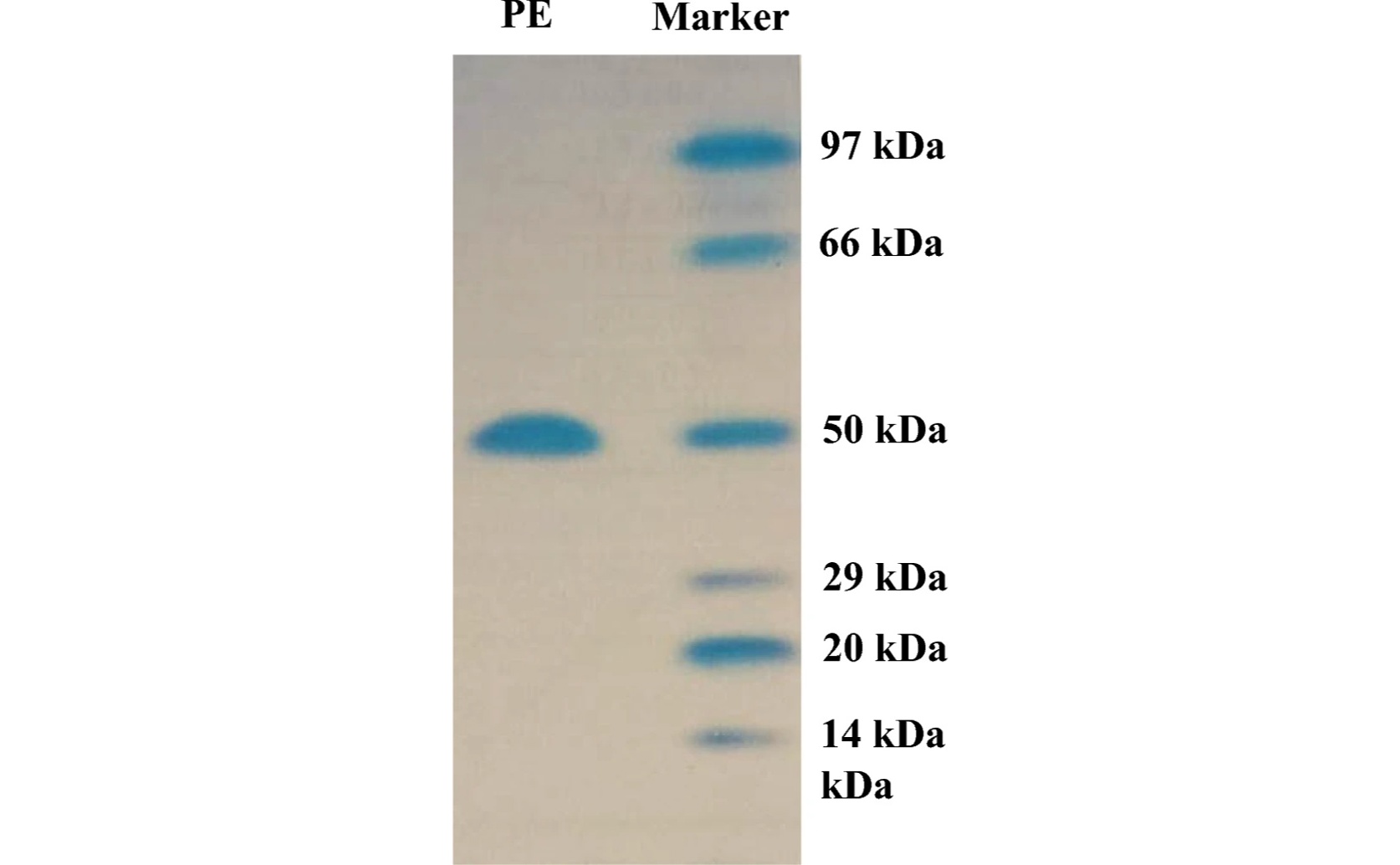
SDS-PAGE analysis confirmed the successful purification of pectinase from Aspergillus nidulans, revealing a single protein band which demonstrates the enzyme's purity and corresponds to a molecular weight of 50 kDa.

Image adapted from: El-Shora et al. / CC BY (Source)

Key Findings

  • The study by Mansoura University, Egypt, focused on isolating and purifying pectinase from Aspergillus nidulans
  • The purified pectinase showed high activity and purity, with a specific activity of 400 units mg^-1 protein
  • Immobilizing the enzyme on chitosan and calcium alginate improved its stability and reusability, with chitosan-immobilized pectinase being more stable at higher temperatures
  • The immobilized pectinase effectively clarified orange, mango, and pineapple juices, enhancing their clarity and antioxidant properties
Microbial pectinases are enzymes that degrade pectin, a polysaccharide found in plant cell walls. These enzymes play a crucial role in the food industry, particularly in juice clarification, which is a cost-effective process to enhance the clarity and quality of fruit juices. The current study conducted by Mansoura University, Egypt, focused on the isolation, immobilization, and characterization of pectinase from Aspergillus nidulans (Eidam) G. Winter (AUMC No. 7147)[1]. The researchers employed a series of purification steps, including ammonium sulphate precipitation, DEAE-cellulose, and Sephadex G-200 chromatography, to purify the enzyme. The final specific activity of the purified pectinase was 400 units mg^-1 protein, with a 125-fold purification and a yield of 30.4%. The homogeneity of the purified pectinase was confirmed by SDS-PAGE, which revealed a single band with a molecular weight of 50 kD. Immobilization of enzymes is a technique used to enhance their stability and reusability. In this study, chitosan and calcium alginate were used to immobilize pectinase, achieving immobilization efficiencies of 85.7% and 69.4%, respectively. The thermostability of both free and chitosan-immobilized pectinase was tested at various temperatures (50, 55, 60, and 65 °C). The half-lives (t1/2) of the free and chitosan-immobilized enzymes at 65 °C were 23.83 and 28.64 minutes, respectively, indicating that the immobilized enzyme was more stable at higher temperatures. The effectiveness of the immobilized pectinase in juice clarification was demonstrated by treating orange, mango, and pineapple juices. The treated juices showed greater clarity compared to the untreated ones. Additionally, the antioxidant activities of the juices, measured by 1, 1-diphenyl-2-picrylhydrazyl and 2, 2'-azino-bis 3-ethylbenzothiazoline-6-sulfonate scavenging activities, increased following treatment with pure pectinase. The amounts of total phenolics and total flavonoids in the juices also increased, which are beneficial compounds known for their antioxidant properties. The findings of this study support the use of fungal pectinase in the food industry due to its strong affinity for pectin and its ability to enhance juice clarity and antioxidant properties. This aligns with previous research on the application of microbial pectinases in juice clarification. For instance, a study on pectinase from Bacillus subtilis showed that the enzyme could effectively clarify orange and apple juices, making the process cost-effective for food industries[2]. Similarly, another study demonstrated the potential of pectin lyase from Penicillium italicum in macerating plant tissues under acidic conditions, highlighting its stability and usefulness in the food industry[3]. Furthermore, the current study expands on previous findings by demonstrating the benefits of enzyme immobilization. Immobilized enzymes offer advantages such as improved stability and reusability, which can lead to cost savings and enhanced process efficiency in industrial applications. In conclusion, the research conducted by Mansoura University provides valuable insights into the purification, immobilization, and application of pectinase from Aspergillus nidulans. The study highlights the enzyme's potential in juice clarification and its benefits in enhancing the nutritional quality of fruit juices. These findings contribute to the growing body of knowledge on the use of microbial pectinases in the food industry, supporting their cost-effective and efficient application in juice processing.

BiotechBiochemMycology

References

Main Study

1) Immobilization of purified pectinase from Aspergillus nidulans on chitosan and alginate beads for biotechnological applications.

Published 4th January, 2025

https://doi.org/10.1186/s12934-024-02603-x


Related Studies

2) Production and Purification of Pectinase from Bacillus subtilis 15A-B92 and Its Biotechnological Applications.

https://doi.org/10.3390/molecules27134195


3) Pectin Lyase Activity in a Penicillium italicum Strain.

Journal: Applied and environmental microbiology, Issue: Vol 56, Issue 12, Dec 1990


Related Articles

An unhandled error has occurred. Reload 🗙