How Female Scorpions Choose Shelters Based on Size and Smell

Greg Howard
3rd November, 2024

How Female Scorpions Choose Shelters Based on Size and Smell

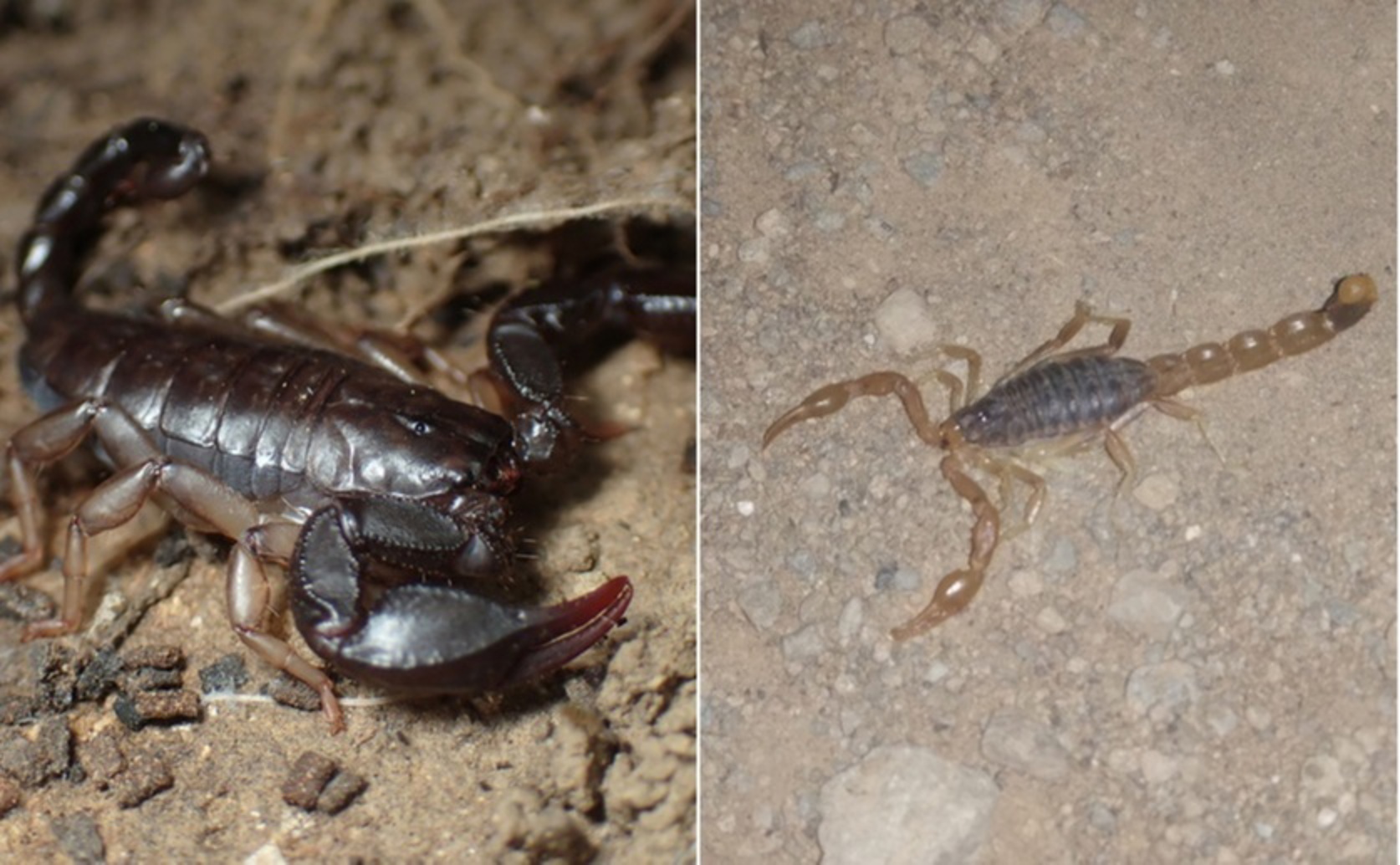
This study reveals that while both Euscorpius italicus (left) and Mesobuthus eupeus (right) prefer larger shelters, their responses to scents differ significantly, reflecting adaptations to their distinct Mediterranean and semi-arid habitats.

Composite: Natural Science News / CC BY. [Sources]
Adapted from photos by:

Key Findings

  • The study from Ulm University found that scorpions prefer larger shelters for better thermal stability
  • The scent of other scorpions had little to no effect on shelter choice, but prey scent attracted M. eupeus, while rosemary oil repelled E. italicus
  • Scorpions rely on their pectines and pedipalps to detect shelter size and scent, and impairing these organs reduces their ability to choose shelters effectively
Shelter selection is a crucial aspect of an animal's survival strategy. This study from Ulm University[1] investigates the shelter preferences of female scorpions, specifically E. italicus and M. eupeus, focusing on the influence of shelter size and scent. The researchers aimed to determine the role of chemosensation in shelter selection, which has been an underexplored area in scorpion behavior. The study utilized a two-choice shelter test in rectangular open field arenas. The shelters varied in size (large, small) and scent (none, conspecific: male or female, attractive: prey, aversive: rosemary oil). The scorpions' interactions with the shelters were video-recorded for 13 hours, covering the entire night phase, as scorpions are nocturnal creatures. The results indicated a clear preference for larger shelters among both species. This preference aligns with previous findings that scorpions select larger retreat sites for thermal stability[2]. Interestingly, the scent of conspecifics (other scorpions of the same species) had minor or no influence on shelter selection. This suggests that while physical characteristics of shelters are crucial, chemical cues from conspecifics are less important in this context. However, significant differences were observed in the response to prey and rosemary oil scents. M. eupeus displayed a strong attraction to prey scent, while E. italicus was less interested in prey but actively repelled by rosemary oil. This divergence likely reflects their different habitats: M. eupeus inhabits semi-arid climates where prey is scarce, making the scent of prey a valuable cue. In contrast, E. italicus, from Mediterranean climates where rosemary is abundant, might have evolved an aversion to this scent as a defensive mechanism. The study also explored the sensory organs involved in these preferences by conducting impairment experiments. The pectines and pedipalps, which serve as mechanosensors and chemosensors, were found to be essential. When either of these organs was impaired, the scorpions' ability to detect shelter size and scent was significantly reduced. This finding is consistent with previous research on the sensory abilities of scorpions, which highlighted the role of pectines in chemosensory processing[3][4]. The pectines, comb-like structures located ventrally behind the fourth walking legs, contain thousands of bimodal peg sensillae that are crucial for detecting chemical and mechanical cues from the environment[3]. This study further confirms the importance of these structures in shelter selection, as scorpions rely on them to evaluate potential shelters based on size and scent. In summary, this research from Ulm University provides valuable insights into the shelter selection behavior of scorpions. It highlights the importance of shelter size and the role of chemosensation in this process. The findings also underscore the significance of the pectines and pedipalps in detecting environmental cues, building on previous studies[2][3][4]. These discoveries enhance our understanding of scorpion behavior and sensory ecology, offering a foundation for future research in this field.

EnvironmentAnimal ScienceEvolution

References

Main Study

1) Shelter selection in females of two scorpion species depends on shelter size and scent.

Published 2nd November, 2024

https://doi.org/10.1007/s00359-024-01721-6


Related Studies

2) Reliable Refuge: Two Sky Island Scorpion Species Select Larger, Thermally Stable Retreat Sites.

https://doi.org/10.1371/journal.pone.0168105


3) Structure of the pecten neuropil pathway and its innervation by bimodal peg afferents in two scorpion species.

https://doi.org/10.1371/journal.pone.0243753


4) Mechanosensory pathways of scorpion pecten hair sensillae-Adjustment of body height and pecten position.

https://doi.org/10.1002/cne.25384


Related Articles

An unhandled error has occurred. Reload 🗙