Healing and Gut Health Benefits of Ubiquinol in Radiation-Damaged Intestines

Jim Crocker
20th July, 2024

Healing and Gut Health Benefits of Ubiquinol in Radiation-Damaged Intestines

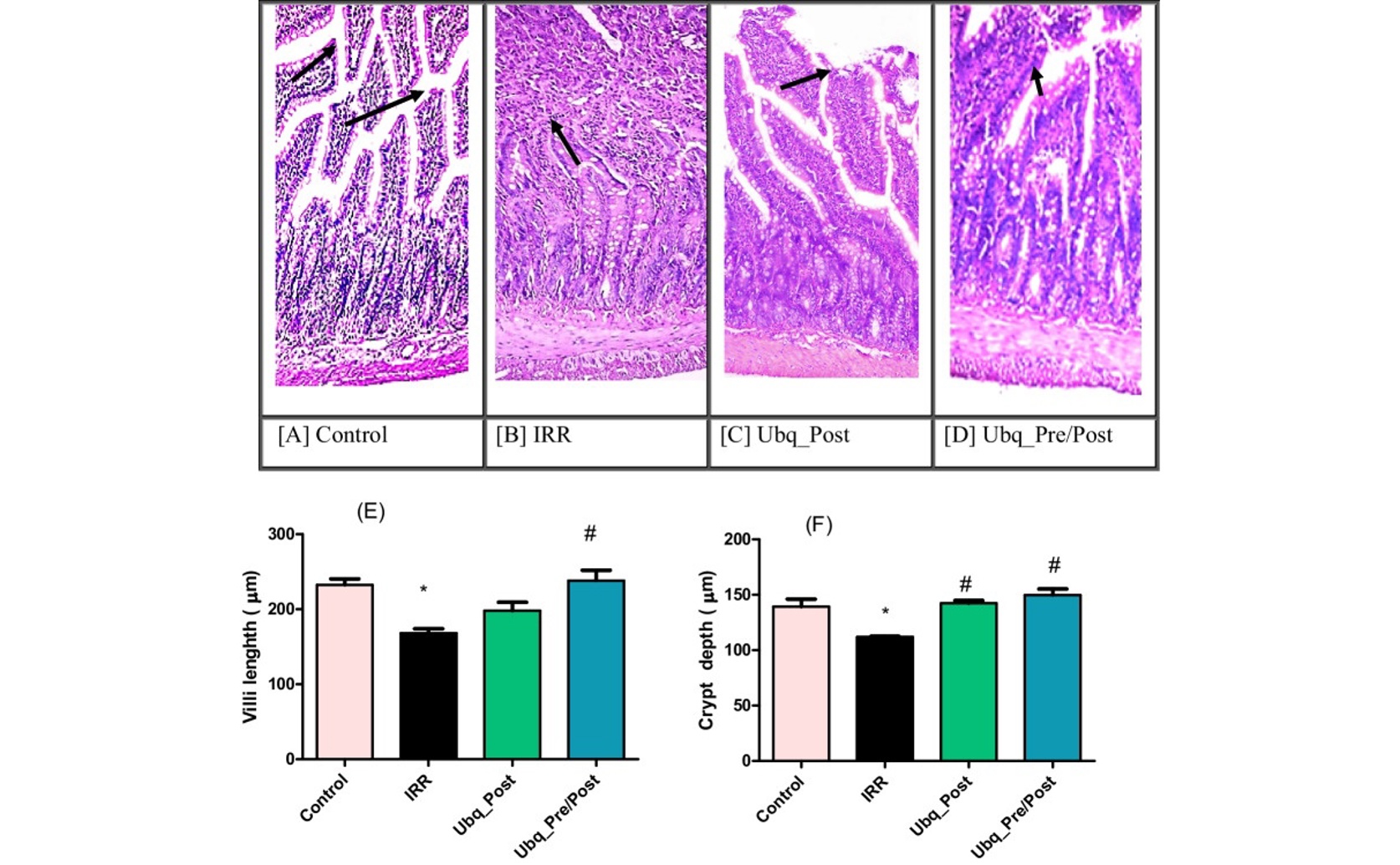
Treatment with ubiquinol demonstrates a key gastroprotective effect by significantly mitigating the severe intestinal damage caused by gamma radiation (b), thereby preserving villi length (e) and crypt depth (f) and restoring tissue structure (c, d) to a state more comparable to healthy controls (a).

Image adapted from: Eraqi et al. / CC BY (Source)

Key Findings

  • The study by Cairo University investigated the effects of ubiquinol on radiation-induced intestinal damage in male albino rats
  • Ubiquinol treatment significantly reduced intestinal damage and inflammation caused by radiation
  • Ubiquinol helped restore the balance and diversity of gut microbiota in irradiated rats
Radiation enteritis is a common and debilitating side effect for patients undergoing radiotherapy, significantly affecting their quality of life. The gut microbiota, which consists of a vast array of microorganisms living in the intestines, plays a crucial role in maintaining intestinal health. However, the impact of radiation on these gut microorganisms remains poorly understood. A recent study conducted by Cairo University[1] addresses this gap by investigating the protective effects of ubiquinol (Ubq), a potent antioxidant, on radiation-induced intestinal damage and its influence on gut microbiota. The study involved male albino rats divided into four groups: a control group, an irradiated group (IRR), a group receiving ubiquinol post-irradiation (Ubq_Post), and a group receiving ubiquinol both before and after irradiation (Ubq_Pre/Post). The researchers aimed to understand whether ubiquinol could mitigate the adverse effects of radiation on the gut and restore the balance of gut microbiota. Histopathological examination of intestinal tissues revealed severe damage in the irradiated group, which was significantly alleviated in the ubiquinol-treated groups. The Ubq-treated groups exhibited enhanced tissue regeneration, increased goblet cells, and higher expression of intestinal alkaline phosphatase, indicating improved intestinal health. The study also measured various biochemical markers. In the irradiated group, levels of intestinal interleukin-1β, caspase-3, nitric oxide metabolites, and thiobarbituric reactive substances were significantly elevated, indicating inflammation and oxidative stress. Treatment with ubiquinol brought these markers back to near-healthy levels. Notably, the Ubq_Pre/Post group showed elevated levels of peroxisome proliferator-activated receptor (PPAR-γ), suggesting heightened protective benefits. Interestingly, the study also observed a reduction in serum insulin levels in irradiated rats, which improved following ubiquinol treatment. This finding aligns with previous research indicating that radiation can impair pancreatic function, leading to reduced insulin secretion and potential diabetes risk[2]. The observed improvement in insulin levels suggests that ubiquinol may have an anti-inflammatory effect on pancreatic tissue, offering additional protective benefits. Fecal microbiota profiling revealed significant dysbiosis, or microbial imbalance, in the irradiated group, characterized by reduced bacterial diversity. This aligns with earlier findings where high doses of radiation led to significant alterations in gut microbiome composition in nonhuman primates[3]. However, the ubiquinol-treated groups showed a re-modulation of the gut microbiota, restoring bacterial diversity and balance to levels comparable to the control group. This restoration is crucial, as a balanced gut microbiota is essential for maintaining overall gut health and function. The findings from this study underscore the potential of ubiquinol as a therapeutic agent to protect against radiation-induced enteritis and restore gut microbiota balance. Given the increasing number of cancer survivors who have undergone radiation therapy and are at risk of long-term intestinal adverse effects[4], these results are particularly promising. The study highlights the importance of exploring microbiome-modulating therapies to mitigate the adverse effects of radiation and improve the quality of life for cancer patients. In conclusion, the research conducted by Cairo University demonstrates that ubiquinol has significant gastroprotective effects against radiation-induced enteritis and can restore gut microbiota diversity and balance. These findings pave the way for future studies to further explore ubiquinol's therapeutic potential and its application in clinical settings to benefit patients undergoing radiotherapy.

MedicineHealthBiochem

References

Main Study

1) Gastroprotective and microbiome-modulating effects of ubiquinol in rats with radiation-induced enteropathy

Published 19th July, 2024

https://doi.org/10.1186/s42523-024-00320-9


Related Studies

2) Risk of endocrine pancreatic insufficiency in patients receiving adjuvant chemoradiation for resected gastric cancer.

https://doi.org/10.1016/j.radonc.2013.04.013


3) Changes in the gut microbiome community of nonhuman primates following radiation injury.

https://doi.org/10.1186/s12866-021-02146-w


4) Radiation enteropathy--pathogenesis, treatment and prevention.

https://doi.org/10.1038/nrgastro.2014.46


Related Articles

An unhandled error has occurred. Reload 🗙