How Environment and Genetics Affect Harvest Dates in Sugar Beet Varieties

Jenn Hoskins
13th July, 2024

How Environment and Genetics Affect Harvest Dates in Sugar Beet Varieties

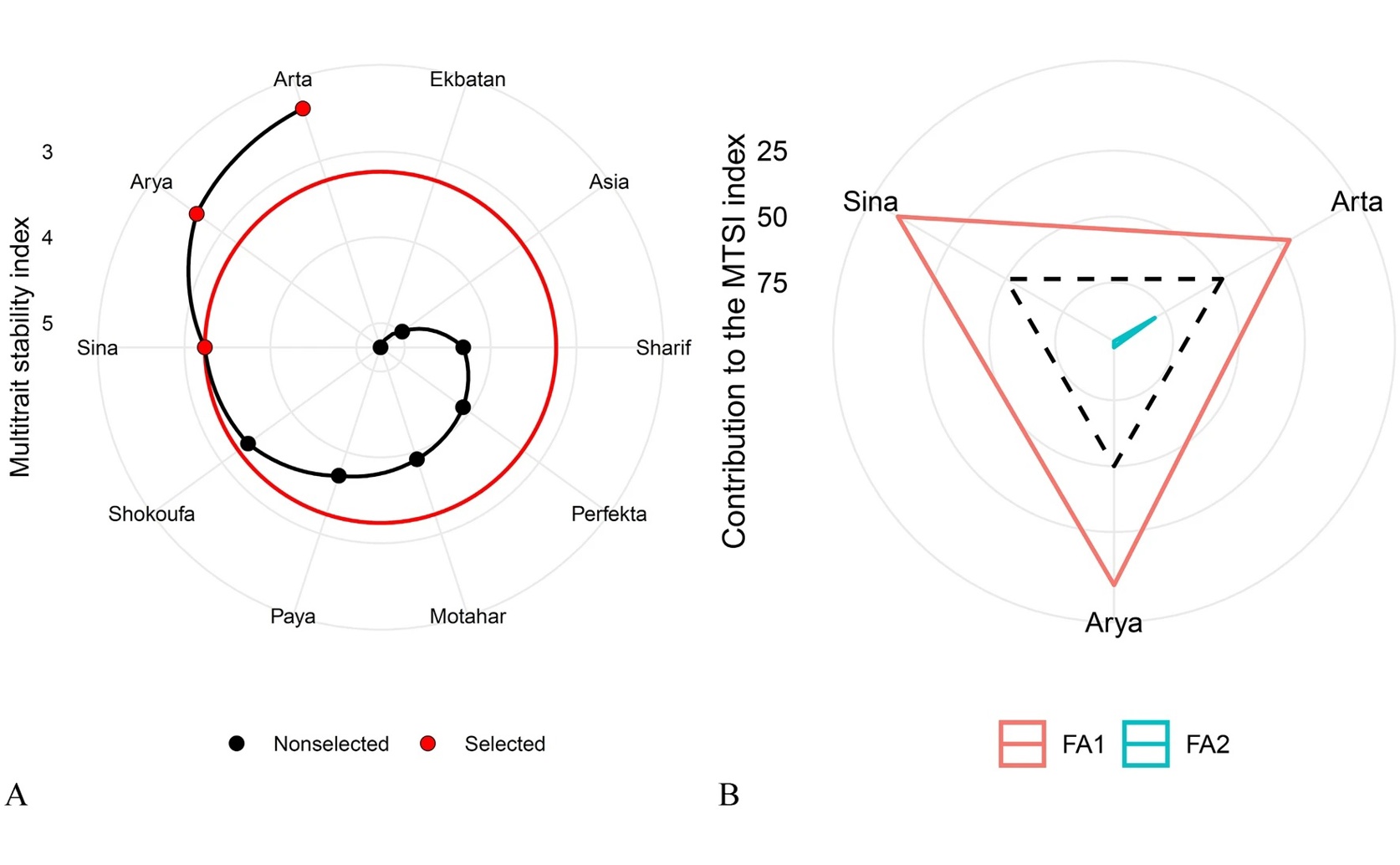
Analysis using the multi-trait stability index identified the sugar beet (Beta vulgaris) cultivars Arta, Arya, and Sina as the most stable and ideal across all measured traits, based on their overall ranking (a) and the contribution of different trait factors to their stability (b).

Image adapted from: Hemayati et al. / CC BY (Source)

Key Findings

  • The study by AREEO evaluated the impact of different harvest dates on the yield stability of sugar beet cultivars
  • Environmental conditions, genotypes, and harvest dates significantly influenced sugar beet traits
  • Cultivars Shokoufa and Arya were identified as stable and high-yielding across different environments
  • Harvest dates in October and November showed higher yields, suggesting these as optimal times for harvesting
Sugar beet, a crucial crop for sugar production, faces challenges in optimizing yield and stability across varying environmental conditions. A recent study conducted by the Agricultural Research, Education and Extension Organization (AREEO)[1] evaluated the impact of different harvest dates on the yield stability of commercially grown sugar beet cultivars. This research aimed to identify optimal harvest times and stable cultivars to enhance sugar production efficiency. The study utilized a split-plot design within a randomized complete block design over three years. The main plot included 10 sugar beet cultivars, while the subplot involved four harvest dates: August 13 (HD1), September 7 (HD2), October 3 (HD3), and November 12 (HD4). The findings revealed that environmental conditions, genotypes, and harvest dates significantly influenced various traits of sugar beet. Yearly environmental variations and their interactions with genotypes and harvest dates had substantial impacts on all measured traits at the 1% probability level. The study's additive main effect and multiplicative interaction analysis focused on white sugar yield (WSY), demonstrating that both genotype and environment's additive effects, as well as the genotype-environment interaction, were significant at the 1% probability level. Among the cultivars, Shokoufa and Arya were identified as desirable due to their high WSY and low first interaction principal component (IPC1) values, indicating stability across different environments. Additionally, the third (HD3) and fourth (HD4) harvest dates showed higher yields than the average, suggesting these times as optimal for harvesting. The results of this study align with previous research on sugar beet improvement. For instance, earlier studies have demonstrated the importance of genetic diversity and environmental adaptability in enhancing sugar beet yield and resilience. One study highlighted the potential of wild beet relatives in breeding programs for stress tolerance[2]. This research emphasized the genetic and physiological diversity among wild beet populations, which can be harnessed to improve cultivated sugar beet's resistance to drought and salinity stress[3]. Such genetic resources are invaluable for developing cultivars that can maintain high yields under varying environmental conditions. Moreover, advancements in protein extraction from sugar beet by-products have shown promising results for the food industry. A study on enzyme-assisted extraction methods reported significantly improved protein yields and physicochemical properties, making sugar beet protein concentrates suitable for food applications[4]. These findings highlight the multifaceted value of sugar beet, not only as a sugar source but also as a protein resource, thereby enhancing its economic viability. In summary, the recent study by AREEO underscores the importance of considering environmental conditions, genotype variations, and optimal harvest times to maximize sugar beet yield stability. By identifying stable and high-yielding cultivars like Shokoufa and Arya, and optimal harvest dates such as HD3 and HD4, this research provides valuable insights for sugar beet cultivation strategies. Additionally, integrating genetic diversity from wild beet relatives and optimizing by-product utilization can further bolster sugar beet's resilience and economic potential.

AgricultureEnvironmentGenetics

References

Main Study

1) Genotype by environment interaction and stability analysis for harvest date in sugar beet cultivars.

Published 11th July, 2024

https://doi.org/10.1038/s41598-024-67272-7


Related Studies

2) Genetic and Genomic Tools to Asssist Sugar Beet Improvement: The Value of the Crop Wild Relatives.

https://doi.org/10.3389/fpls.2018.00074


3) Genetic Diversity and Physiological Performance of Portuguese Wild Beet (Beta vulgaris spp. maritima) from Three Contrasting Habitats.

https://doi.org/10.3389/fpls.2016.01293


4) Optimization of enzyme assisted extraction of protein from the sugar beet (Beta vulgaris L.) leaves for alternative plant protein concentrate production.

https://doi.org/10.1016/j.foodchem.2020.127673


Related Articles

An unhandled error has occurred. Reload 🗙