
How Bacillus Faecalis and Biochar Help Reduce Arsenic Toxicity in Corn
Jim Crocker
12th July, 2024


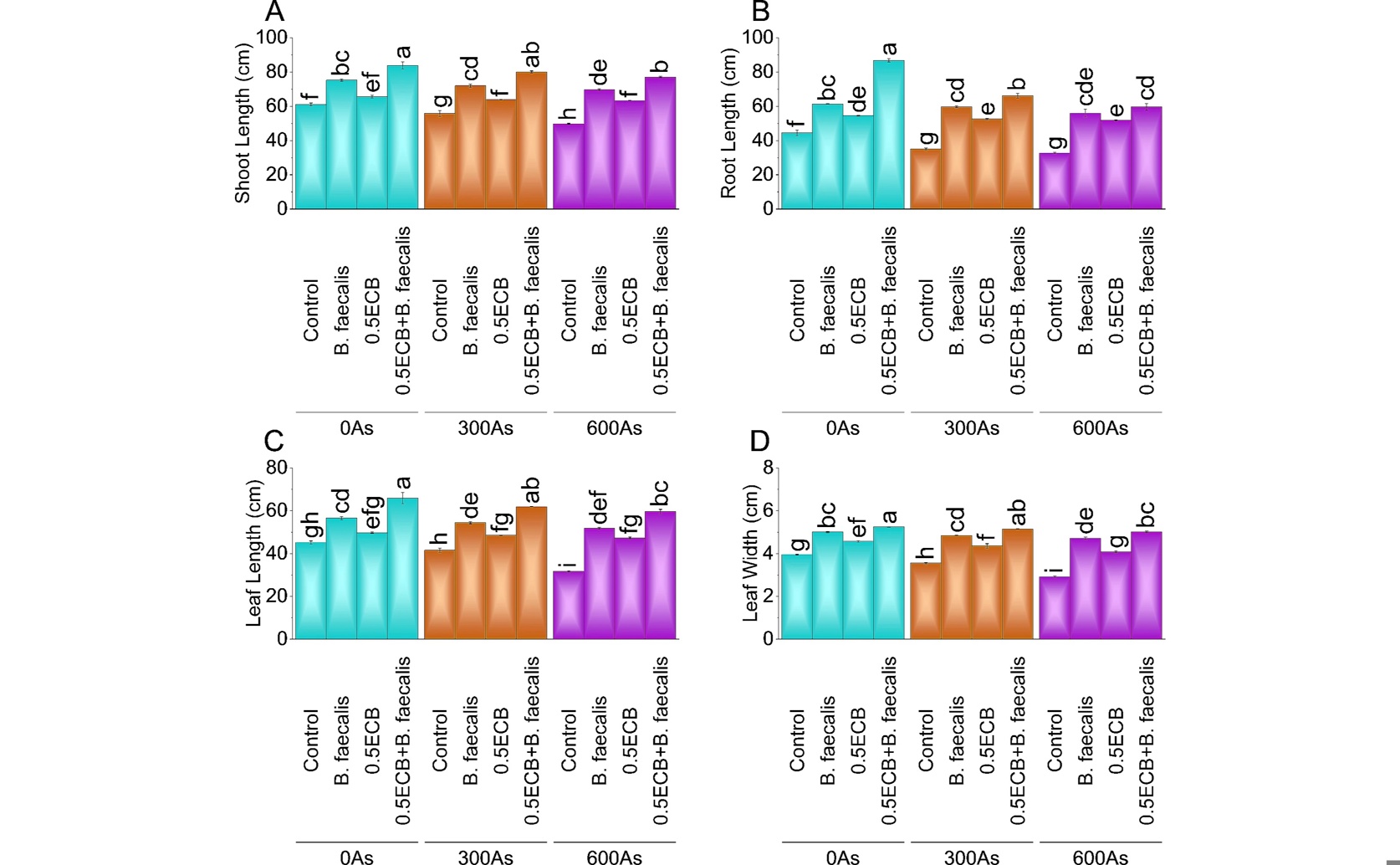
Applying a combination of Bacillus faecalis and composted biochar most effectively promoted key morphological traits in maize, including shoot length (A), root length (B), leaf length (C), and leaf width (D), mitigating the stunting effects of arsenic toxicity.
Key Findings
- Researchers at Jinggangshan University found that combining rhizobacteria and composted biochar (ECB) significantly improves maize growth under arsenic stress
- The combined treatment of ECB and Bacillus faecalis increased maize plant height, shoot length, root length, and biomass by up to 99% compared to the control
- This treatment also boosted chlorophyll content and essential nutrient uptake, enhancing the photosynthetic capacity and overall health of maize plants under arsenic stress
AgricultureEnvironmentPlant Science
References
Main Study
1) Unveiling the efficacy of Bacillus faecalis and composted biochar in alleviating arsenic toxicity in maize
Published 11th July, 2024
https://doi.org/10.1186/s12870-024-05372-2
Related Studies
2) Unveiling the potential of A. fabrum and γ-aminobutyric acid for mitigation of nickel toxicity in fenugreek.
3) Minimization of heavy metal toxicity in radish (Raphanus sativus) by strigolactone and biochar.
Related Articles
 29th June, 2024 | Greg Howard