Eco-Friendly Sulfur Fertilizer Boosts Growth and Salt Resilience in Faba Beans

Jim Crocker
27th June, 2024

Eco-Friendly Sulfur Fertilizer Boosts Growth and Salt Resilience in Faba Beans

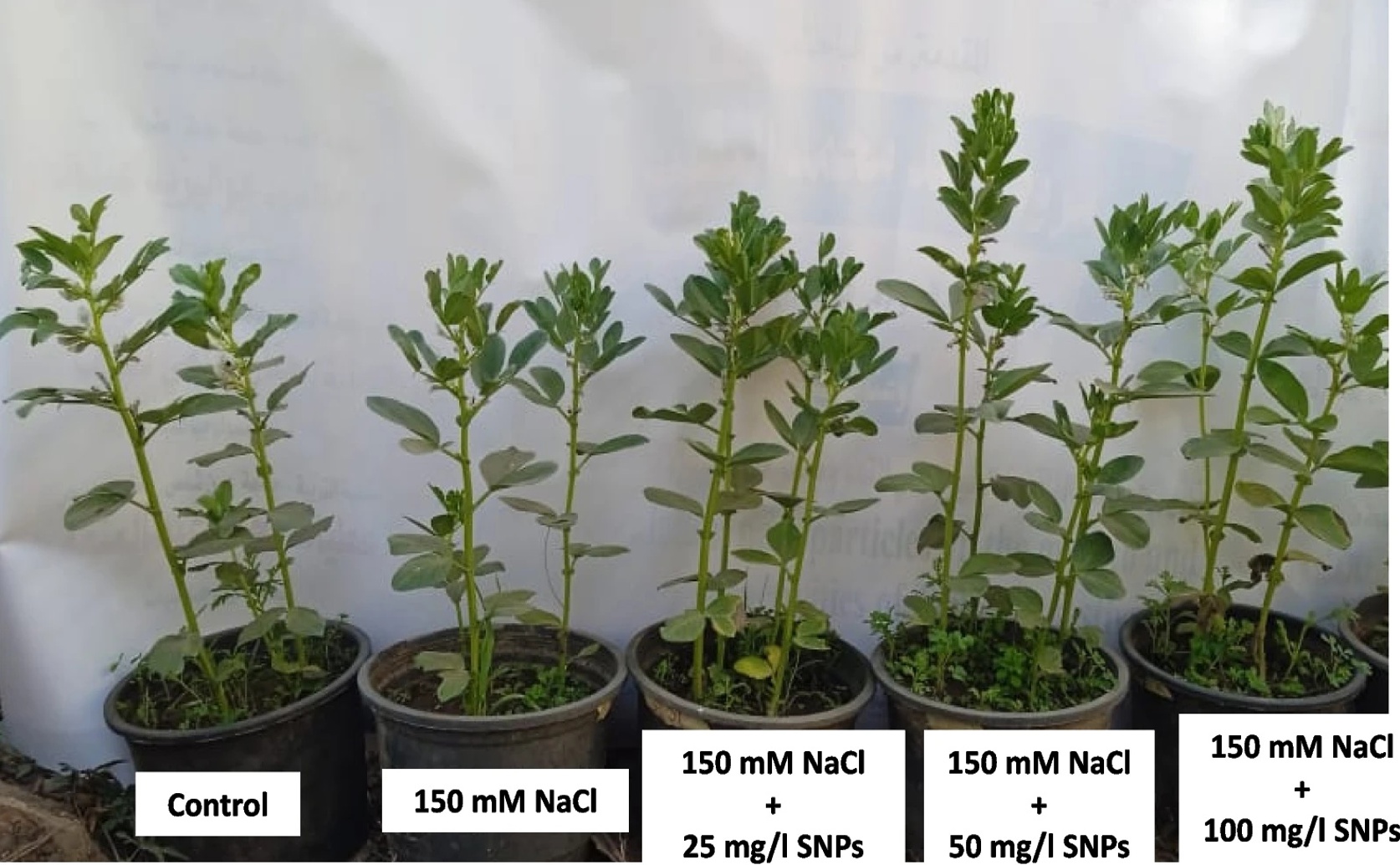
The application of sulfur nanoparticles as a foliar spray visibly counteracts the stunting effects of salinity on the growth of Vicia faba plants, with the 50 mg/l concentration showing the most significant recovery.

Image adapted from: Khalifa et al. / CC BY (Source)

Key Findings

  • Researchers from Al Azhar University developed a nanofertilizer that helps faba beans grow better under salty conditions
  • The nanofertilizer releases essential nutrients and boosts the plant's ability to handle salt stress
  • Faba beans treated with the nanofertilizer showed improved growth and reduced damage from oxidative stress compared to untreated plants
Salinity is a significant environmental stressor that adversely affects crop productivity worldwide. The growing use of saline water for irrigation, exacerbated by climate change, underscores the need for solutions to enhance plant tolerance to salt stress. Researchers from Al Azhar University have developed a dual-functional nanofertilizer that not only releases essential micronutrients but also improves salt stress resilience in faba bean (Vicia faba L.)[1]. Salinity stress limits plant growth by disrupting various physiological and biochemical processes. It induces the overproduction of reactive oxygen species (ROS), which can damage cellular components, leading to reduced plant growth and yield[2][3]. Plants have evolved several adaptive mechanisms to combat salinity stress, including the synthesis of osmolytes and phytohormones that help stabilize osmotic differences and regulate protein functioning[2]. Additionally, the antioxidant defense system plays a crucial role in detoxifying ROS to protect plants from oxidative damage[3]. The study from Al Azhar University aims to address these challenges by developing a nanofertilizer that serves a dual purpose: providing essential micronutrients and enhancing salt stress resilience in faba beans. This approach builds on previous research highlighting the importance of plant growth-promoting rhizobacteria (PGPR) and genetic variability in enhancing plant tolerance to salinity[4][5]. However, the current study takes a novel approach by integrating nanotechnology with plant nutrition and stress management. Nanofertilizers are engineered to release nutrients in a controlled manner, improving nutrient uptake efficiency and reducing environmental impact. In this study, the researchers designed a nanofertilizer that releases a specific micronutrient essential for plant growth while simultaneously enhancing the plant's ability to withstand salinity stress. This dual functionality is achieved through the incorporation of nanoparticles that interact with the plant's physiological processes, promoting growth and stress resilience. The researchers conducted experiments to evaluate the effectiveness of the nanofertilizer on faba beans grown under saline conditions. They measured various growth parameters, including plant height, leaf area, and biomass, as well as physiological indicators such as chlorophyll content and ROS levels. The results showed that plants treated with the nanofertilizer exhibited significantly improved growth and reduced oxidative stress compared to untreated plants. The study also explored the underlying mechanisms by which the nanofertilizer enhances salt stress resilience. The researchers found that the nanofertilizer promoted the accumulation of osmolytes and activated the antioxidant defense system, thereby reducing ROS levels and mitigating oxidative damage. These findings align with previous research on the roles of osmolytes and antioxidants in plant stress tolerance[2][3]. Moreover, the nanofertilizer's ability to release micronutrients in a controlled manner ensures that plants receive a steady supply of essential nutrients, which is crucial for maintaining growth and productivity under stress conditions. This aspect of the study addresses the challenge of nutrient uptake under saline conditions, where high salt concentrations can interfere with nutrient absorption[5]. In conclusion, the dual-functional nanofertilizer developed by researchers at Al Azhar University represents a promising solution for enhancing plant growth and salt stress resilience. By integrating nanotechnology with plant nutrition and stress management, this innovative approach offers a sustainable way to improve crop productivity in saline environments. The study not only builds on previous research but also provides a new direction for future investigations into the use of nanofertilizers in agriculture.

AgricultureBiotechPlant Science

References

Main Study

1) Green synthesis of a dual-functional sulfur nanofertilizer to promote growth and enhance salt stress resilience in faba bean

Published 26th June, 2024

https://doi.org/10.1186/s12870-024-05270-7


Related Studies

2) Salt stress resilience in plants mediated through osmolyte accumulation and its crosstalk mechanism with phytohormones.

https://doi.org/10.3389/fpls.2022.1006617


3) Regulation of Reactive Oxygen Species and Antioxidant Defense in Plants under Salinity.

https://doi.org/10.3390/ijms22179326


4) Coping with salt stress-interaction of halotolerant bacteria in crop plants: A mini review.

https://doi.org/10.3389/fmicb.2023.1077561


5) Impacts of salinity stress on crop plants: improving salt tolerance through genetic and molecular dissection.

https://doi.org/10.3389/fpls.2023.1241736


Related Articles

An unhandled error has occurred. Reload 🗙