Plant Extracts Help Control Onion Rot Disease in Greenhouses

Jim Crocker
15th June, 2024

Plant Extracts Help Control Onion Rot Disease in Greenhouses

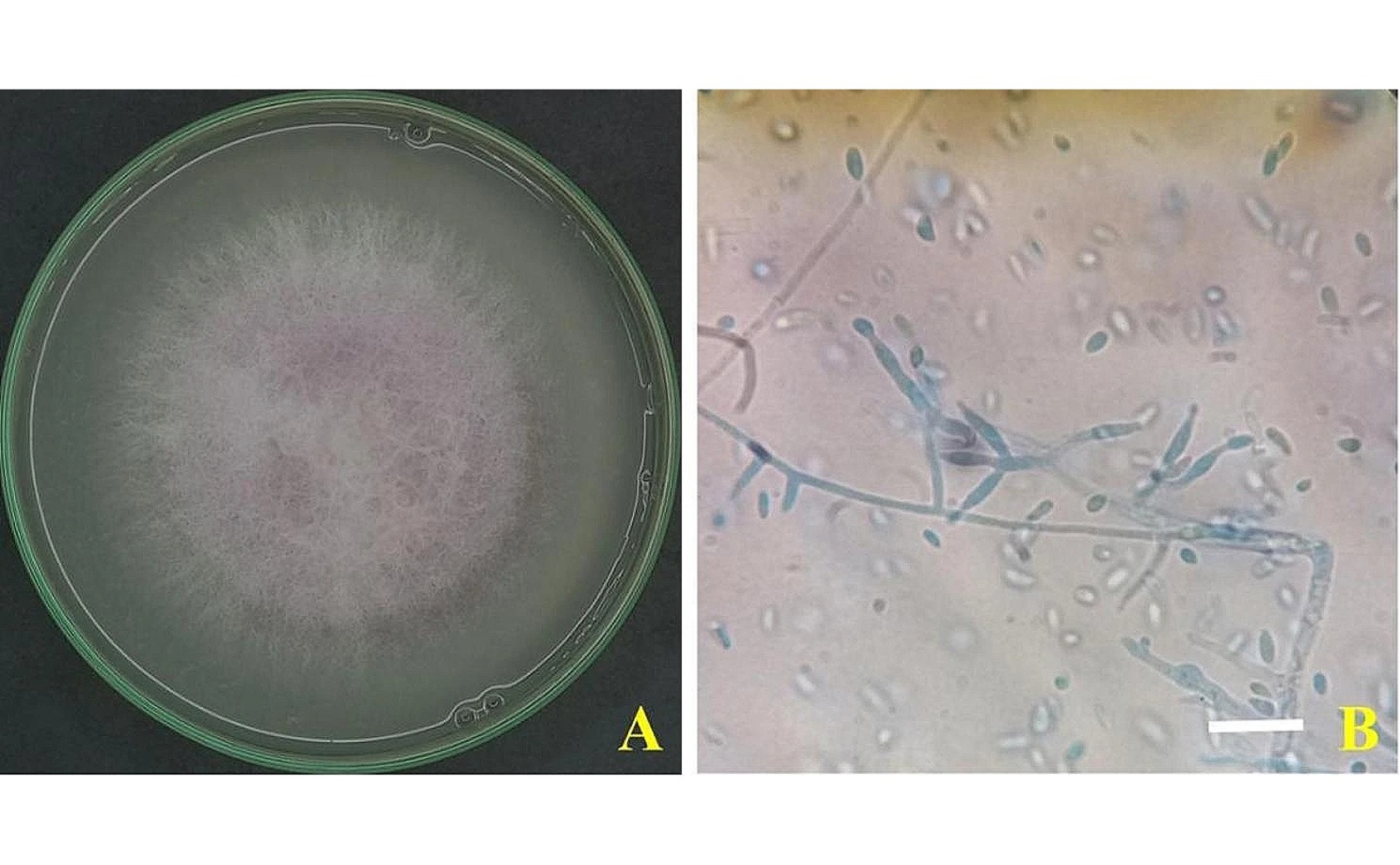
The fungus causing onion basal rot disease was identified as Fusarium oxysporum based on its macroscopic colony growth (a) and characteristic microscopic structures (b).

Image adapted from: Hegazy et al. / CC BY (Source)

Key Findings

  • Researchers at Al-Azhar University found that clove extract (Syzygium aromaticum) was the most effective in inhibiting Fusarium oxysporum growth by 63.3%
  • The clove extract not only reduced disease severity in onion plants but also promoted healthier growth, increasing both fresh and dry weights
  • The study suggests that combining plant extracts could be a viable strategy for improving onion plant productivity and combating fungal diseases
Onion basal rot, caused by the pathogen Fusarium oxysporum, is a significant problem for Allium cepa L., one of Egypt's most important vegetable crops. Researchers at Al-Azhar University (Assiut Branch) conducted a study to evaluate the effectiveness of various methanolic plant extracts in combating this pathogen both in vitro and in a greenhouse setting[1]. This study focused on extracts from Artemisia absinthium leaves, Calotropis procera latex, Moringa oleifera seeds, and Syzygium aromaticum cloves. The study found that the methanolic extract of Syzygium aromaticum (clove) exhibited the highest inhibition of Fusarium oxysporum growth at 63.3%, while Artemisia absinthium showed the lowest inhibition impact at 41.1%. Gas chromatography-mass spectroscopy (GC-MS) analysis revealed that the clove extract contained 82 important compounds, including acetaldehyde, hydroxy-, 2-propanone, and 1,1,3,3-tetrachloro- (42.71%), as well as 1,2-ethanediol and methyl alcohol (34.01%). These compounds are likely responsible for the extract's significant antifungal activity. This finding aligns with previous studies that have demonstrated the antimicrobial properties of S. aromaticum. For instance, a study found that S. aromaticum showed better antifungal effects against Candida albicans compared to nystatin, a commonly used antifungal drug[2]. This suggests that clove extracts have a broad spectrum of antifungal activity, making them a versatile tool in plant and human health. The study also assessed the impact of these extracts on the growth and productivity of onion plants. The results showed that the disease severity was significantly reduced by 20% when a mixture of plant extracts and Dovex 50% was used, whereas the use of A. absinthium extract increased disease severity by 62.22%. Additionally, the fresh and dry weights of onion plants were considerably higher under the clove extract treatment compared to the infected control. This indicates that clove extract not only combats the pathogen but also promotes healthier plant growth. The positive effects of these plant extracts can be attributed to their rich content of active ingredients, including amino acids, vitamins, minerals, antioxidants, and enzymes. These components likely contribute to the overall health and resilience of the plants, making them better equipped to fend off pathogens. The study's findings suggest that a combination of plant extracts could be a viable strategy for improving the growth and productivity of onion plants. This is particularly important given the increasing problems associated with fungal diseases and the limitations of conventional antifungal treatments, such as high costs, side effects, and resistance[2]. However, more research is needed to understand the exact mechanisms by which these plant extracts promote plant development and to optimize the concentration and timing of their application. Interestingly, the study's findings also relate to earlier research on the antimicrobial activity of tea tree oil and its components. It was found that terpinen-4-ol, the principal active component of tea tree oil, was more effective on its own than when combined with other components of the oil[3]. This highlights the importance of identifying and isolating the most potent compounds in plant extracts for maximum efficacy. In conclusion, the study by Al-Azhar University provides valuable insights into the potential of plant extracts as natural antifungal agents and growth promoters for onion plants. The use of Syzygium aromaticum clove extract, in particular, shows promise in combating Fusarium oxysporum and enhancing plant health. This research opens the door for further studies to optimize the use of plant extracts in agriculture, potentially offering a sustainable and effective alternative to conventional chemical treatments.

AgricultureBiochemPlant Science

References

Main Study

1) Effectiveness of some plant extracts in biocontrol of induced onion basal rot disease in greenhouse conditions.

Published 14th June, 2024

https://doi.org/10.1186/s13568-024-01721-4


Related Studies

2) The comparative study of antifungal activity of Syzygium aromaticum, Punica granatum and nystatin on Candida albicans; an in vitro study.

https://doi.org/10.1016/j.mycmed.2014.07.001


3) Interactions between components of the essential oil of Melaleuca alternifolia.

Journal: Journal of applied microbiology, Issue: Vol 91, Issue 3, Sep 2001


Related Articles

An unhandled error has occurred. Reload 🗙