
Combining fruit tree varieties for better spring bloom timing
Jenn Hoskins
24th January, 2026


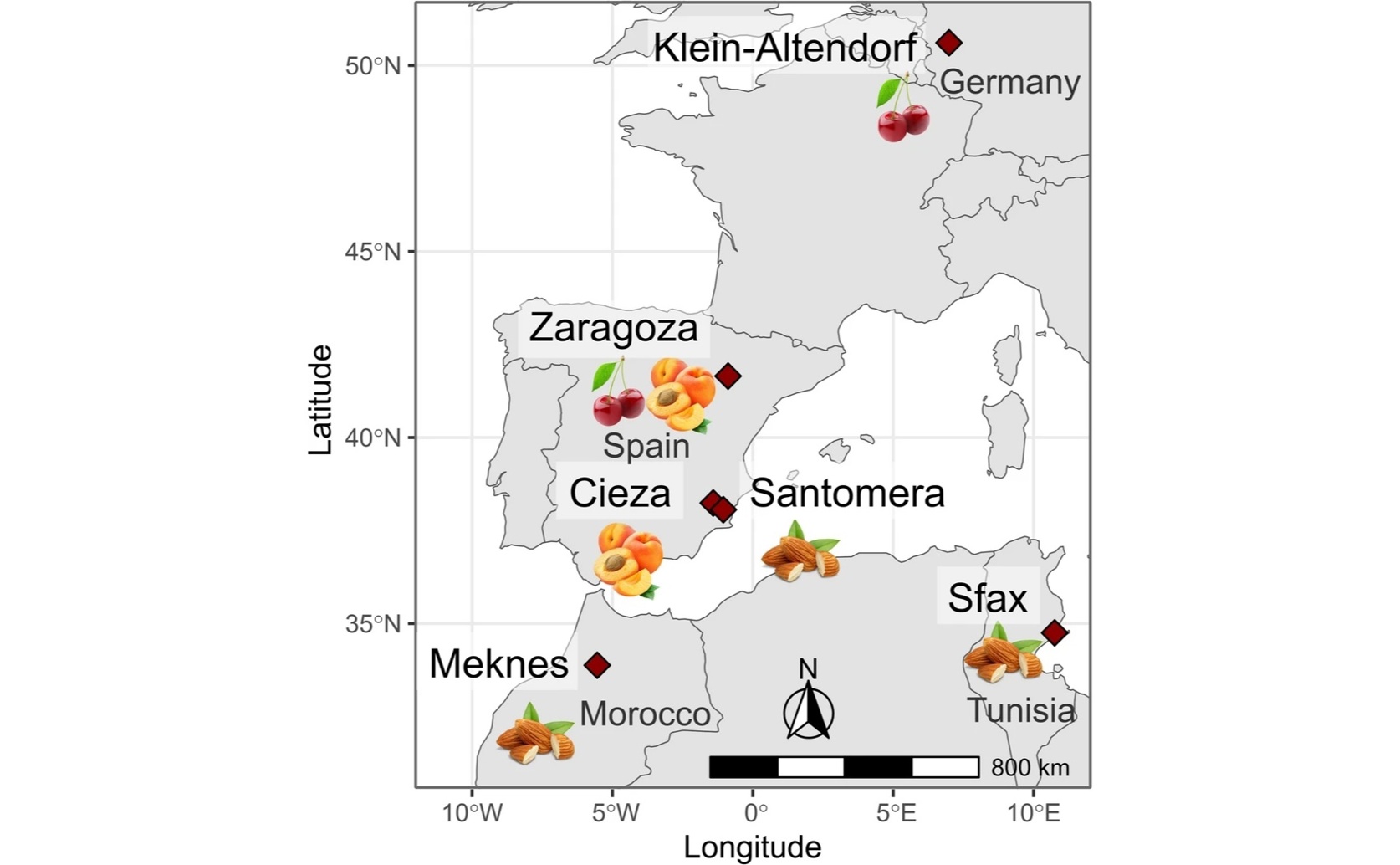
This study evaluated different spring phenology modeling approaches using bloom records for almond (Prunus dulcis), apricot (Prunus armeniaca), and sweet cherry (Prunus avium) collected from diverse climatic regions in the Mediterranean and Germany.
Key Findings
- This study focused on almond, apricot, and sweet cherry trees across Mediterranean regions and Germany to improve spring flowering predictions
- A new “combined-fitting” method, pooling data from multiple cultivars within a species, didn’t improve prediction accuracy but required less data per cultivar
- While the combined-fitting approach didn’t outperform traditional methods, it offers a practical solution for modeling flowering when data is limited and allows for easier comparison of cultivars
FruitsAgriculturePlant Science
References
Main Study
1) Combining temperate fruit tree cultivars to fit spring phenology models
Published 21st January, 2026
https://doi.org/10.1007/s00484-025-03068-2
Related Studies
2) Can phenological models predict tree phenology accurately in the future? The unrevealed hurdle of endodormancy break.
3) Reducing the uncertainty on chilling requirements for endodormancy breaking of temperate fruits by data-based parameter estimation of the dynamic model: a test case in apricot.
4) A unified model for budburst of trees.
Journal: Journal of theoretical biology, Issue: Vol 207, Issue 3, Dec 2000
Related Articles
 26th September, 2025 | Jim Crocker