
Gene variation in a virus protein affects its ability to evade plant defenses
Jenn Hoskins
6th January, 2026


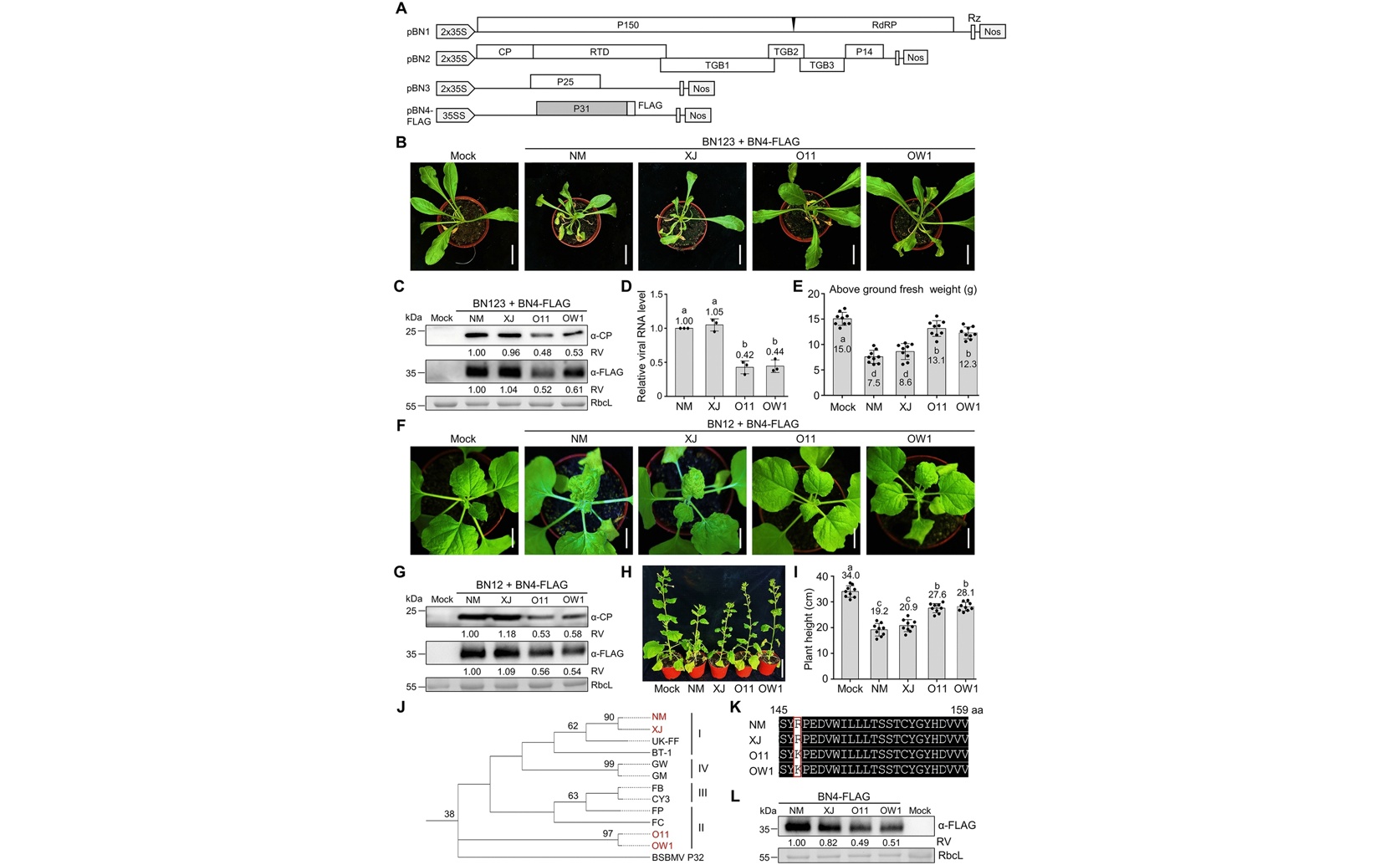
A single amino acid variation in the P31 protein (j) confers higher virulence to Chinese isolates (NM, XJ) of Beet necrotic yellow vein virus (Benyvirus necrobetae) compared to Japanese and German isolates (O11, OW1), leading to more severe symptoms in host plants (a, e, g), greater viral accumulation (b, c, f), and increased P31 protein stability (k).
Key Findings
- BNYVV isolates from China (Inner Mongolia and Xin Jiang) cause more severe sugar beet disease symptoms than those from Japan and Germany
- A single amino acid difference in a viral protein (P31) explains the difference in virulence, with Arg-147 in Chinese isolates leading to higher viral protein levels
- The plant protein HRD1 recognizes and degrades the P31 protein from less virulent isolates, but the Arg-147 variant of P31 evades this degradation process
References
Main Study
1) Natural genetic variation of a single amino acid in beet necrotic yellow vein virus P31 protein modulates evasion of plant ubiquitination-mediated antiviral immunity
Published 2nd January, 2026
https://doi.org/10.1371/journal.ppat.1013840
Related Studies
2) Crop antiviral defense: Past and future perspective.
3) Determinants of Virus Variation, Evolution, and Host Adaptation.
4) Plant immune responses against viruses: how does a virus cause disease?
5) Turnip yellows virus variants differ in host range, transmissibility, and virulence.
Related Articles
 26th November, 2025 | Greg Howard