How a plant extract eases psoriasis symptoms, as shown in lab studies

Jenn Hoskins
16th December, 2025

How a plant extract eases psoriasis symptoms, as shown in lab studies

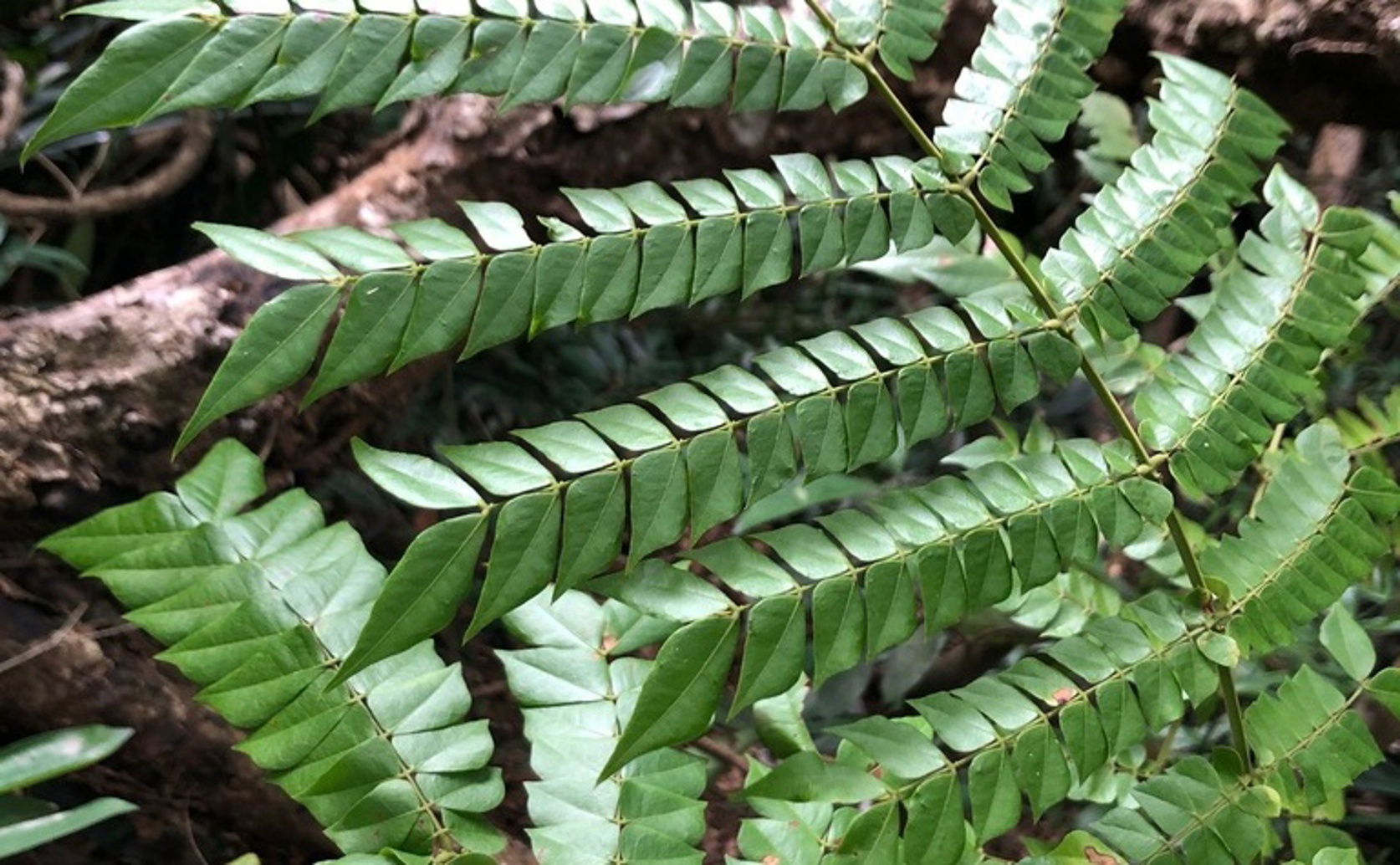
Pithecellobium clypearia, also known as Archidendron clypearia.

Photo adapted from: smriti / CC BY (Source)

Key Findings

  • In mice with psoriasis-like symptoms, treatment with Pithecellobium clypearia reduced skin inflammation and scaling
  • The plant appears to work by influencing genes involved in cell growth, programmed cell death, and energy production within skin cells
  • Key genes affected by P. clypearia include those related to immune response (GzmA), cellular stress (Hspa1a, Hspa1b), and mitochondrial function (mt-Nd4l, mt-Nd5, mt-Nd6)
Psoriasis is a chronic skin condition affecting millions worldwide, characterised by raised, inflamed patches of skin. While treatments exist to manage symptoms, a cure remains elusive[2]. This is because psoriasis isn't a simple disease; it’s a complex interplay of genetics, the immune system, and environmental factors. Genetic predisposition, particularly the HLA-C∗06:02 allele, increases risk, but triggers like streptococcal infections, stress, and lifestyle factors also play a role[2]. The condition’s pathology centres around an overactive immune response, specifically involving cytokines like IL-17 and IL-23, leading to rapid skin cell growth[2]. Researchers at Shanghai University of Traditional Chinese Medicine, Guizhou Medical University, and Kansai Medical University recently investigated the potential of Pithecellobium clypearia Benth., a plant traditionally used in Chinese medicine for conditions like tonsillitis and pharyngitis, as a treatment for psoriasis[1]. Previous work by the same team showed P. clypearia could improve psoriasis-like symptoms in mice, and identified some key metabolic changes associated with its effects. However, the precise mechanisms by which the plant exerts its therapeutic action were unknown. The study focused on understanding how P. clypearia impacts the molecular processes within skin cells during psoriasis. To do this, they created a psoriasis model in mice by applying a cream containing imiquimod (IMQ) to their backs – IMQ is known to trigger an immune response mimicking psoriasis. They then compared gene activity in mice treated with P. clypearia to those without treatment, using a technique called RNA sequencing. RNA sequencing essentially maps all the genes that are ‘turned on’ or ‘turned off’ in a cell, providing a snapshot of its activity. This analysis revealed 26 genes that were significantly different between the two groups. These genes were then further examined using several computational tools. Gene Ontology (GO) analysis identified the biological processes these genes were involved in, while Kyoto Encyclopedia of Genes and Genomes (KEGG) pathway analysis pinpointed the specific molecular pathways affected. Protein-protein interaction (PPI) network analysis showed how these genes interact with each other, creating a network of interconnected activity. The results highlighted several key pathways that appear to be modulated by P. clypearia. These included the MAPK signaling pathway, which is crucial for cell growth and inflammation; the unfolded protein response, a cellular mechanism dealing with stressed proteins; and the hedgehog signaling pathway, involved in cell development and tissue maintenance. Interestingly, pathways related to energy metabolism – specifically oxidative phosphorylation and NADH dehydrogenase activity – were also affected. Further investigation revealed specific genes that appear central to P. clypearia’s effects. Hspa1a and Hspa1b (heat shock proteins) showed altered expression, potentially related to the plant’s ability to manage cellular stress. Bcl2 (an anti-apoptotic protein) and GzmA (a pro-apoptotic protein) also showed changes, suggesting P. clypearia may influence programmed cell death. Asns, Trib3, Slc7a5, and Chac1, along with mitochondrial genes mt-Nd4l, mt-Nd5, and mt-Nd6, were also identified as important players. These findings were confirmed using quantitative real-time PCR (qPCR), a technique used to precisely measure the levels of specific gene transcripts. The study suggests that P. clypearia may reduce inflammation in psoriasis by influencing genes involved in energy production, cell growth, and programmed cell death. This is particularly interesting given the link between psoriasis and cardiometabolic syndrome[2], as disruptions in energy metabolism are often seen in these related conditions. While the study doesn't explain how P. clypearia affects these genes, it provides a valuable starting point for further research. It's also worth noting the potential role of infections in psoriasis development. Recurrent tonsillitis in children has been linked to an increased risk of developing the condition[3], and P. clypearia has traditional uses in treating tonsillitis. This raises the possibility that the plant’s anti-inflammatory effects could be particularly beneficial in individuals where infection is a contributing factor. The current study, by identifying the molecular pathways involved, provides a basis for understanding how P. clypearia might exert these effects, and for exploring its potential as a targeted therapy for psoriasis.

HerbsMedicineGenetics

References

Main Study

1) Therapeutic mechanism of Pithecellobium clypearia Benth. on imiquimod-induced psoriasis revealed by tissue transcriptomics in mice

Published 12th December, 2025

https://doi.org/10.1371/journal.pone.0333197


Related Studies


3) Tonsillitis and pediatric psoriasis: Cohort and cross-sectional analyses of offspring from the Danish National Birth Cohort.

https://doi.org/10.1016/j.jaad.2019.08.010


Related Articles

An unhandled error has occurred. Reload 🗙