Ginseng leaf extract boosts growth, quality and energy use in young fish

Jenn Hoskins
17th November, 2025

Ginseng leaf extract boosts growth, quality and energy use in young fish

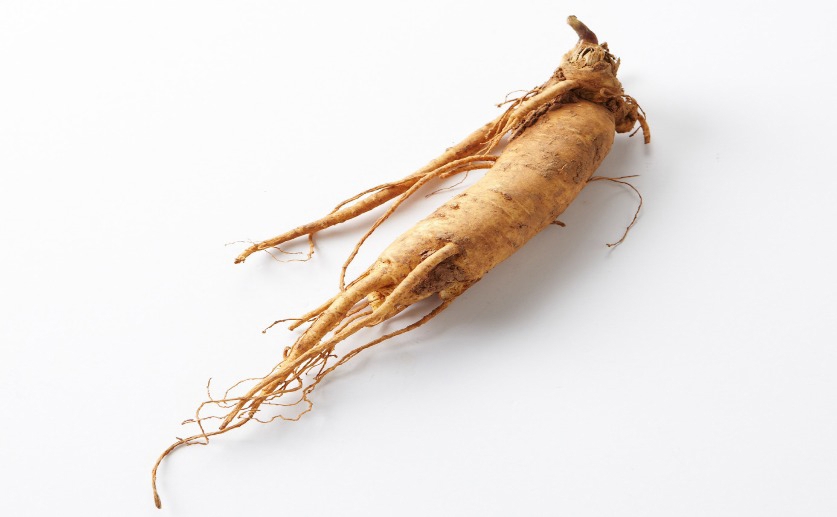
Insam / Korean ginseng (Panax ginseng)

Photo adapted from: 국립국어원 / CC BY SA (Source)

Key Findings

  • This study, conducted on grass carp in China, found that adding Korean ginseng leaf polysaccharides (PGLP) to their feed improved growth and muscle quality
  • PGLP supplementation enhanced muscle texture—hardness, springiness, and chewiness—by increasing the number of muscle fibers, a process called hyperplasia
  • PGLP boosted energy metabolism in muscle tissue, increasing key energy molecules and enzyme activity, ultimately improving mitochondrial function for more efficient energy production
Improving fish quality is increasingly important as consumer expectations rise. Researchers at Sichuan Agricultural University[1] have been investigating plant-derived polysaccharides – complex carbohydrates found in plants – as a way to enhance the quality of fish flesh. Their recent work focuses on polysaccharides extracted from the leaves of Panax ginseng, commonly known as Korean ginseng. These leaf polysaccharides (PGLP) are potentially a more cost-effective alternative to those derived from the ginseng root, which are already known to have beneficial properties. The study addressed the gap in knowledge regarding the effects of PGLP on grass carp, a commercially significant fish species in Asia. While ginseng root polysaccharides have demonstrated immune-boosting effects in other fish species[2], the specific impact of PGLP on growth and flesh quality remained unclear. To investigate this, the researchers fed 540 grass carp diets supplemented with varying concentrations of PGLP – 0, 100, 200, 300, 400, or 500 mg per kilogram of feed – over a 60-day period. They then assessed the fish’s growth, muscle composition, and various indicators of muscle function and energy metabolism. The results showed that PGLP supplementation improved several key aspects of the grass carp. Fish fed PGLP exhibited better growth performance and improved muscle nutritional composition. Importantly, the texture of the fish muscle was also enhanced, with improvements in hardness, springiness, cohesiveness, and chewiness – all desirable qualities for consumers. This improvement in texture was linked to an increase in the number of muscle fibers, a process called hyperplasia. The study also revealed how PGLP influences the energy metabolism within the muscle tissue. PGLP increased the levels of important energy-related molecules like creatine, glycogen, pyruvate, and acetyl-CoA. These molecules are crucial for providing energy to muscle cells. Simultaneously, PGLP boosted the activity of key enzymes involved in energy production – creatine kinase, pyruvate kinase, phosphofructokinase, and hexokinase – while reducing the activity of lactate dehydrogenase and lactate levels, indicating a more efficient energy process. Further investigation showed that PGLP positively impacted the mitochondria, often referred to as the “powerhouses” of cells. The researchers observed increased protein expression of the components of mitochondrial complexes I–V, which are essential for energy production. PGLP also promoted mitochondrial biogenesis (the creation of new mitochondria) and fusion (the merging of mitochondria), while reducing autophagy (a cellular self-cleaning process) and fission (the splitting of mitochondria). These changes suggest that PGLP enhances the overall function and health of mitochondria within the muscle cells. Interestingly, these findings build upon earlier research into ginseng polysaccharides. Studies have shown that water-soluble polysaccharides from different parts of the ginseng plant – roots, flowers, and leaves – possess antioxidant properties[3]. While the current study didn’t directly focus on antioxidant effects, the observed improvements in energy metabolism and mitochondrial function could indirectly contribute to reduced oxidative stress within the muscle tissue. Furthermore, research on polysaccharides from ginseng flower buds identified specific structural features and their ability to interact with galectin-3[4], a protein involved in various cellular processes. Although the specific interaction of PGLP with galectin-3 wasn’t investigated, understanding the structural characteristics of PGLP could reveal further mechanisms of action. Similarly, a study on leaf polysaccharides demonstrated antimetastatic activity by activating immune cells[5], suggesting a broader range of potential benefits from ginseng leaf components. The researchers at Sichuan Agricultural University concluded that supplementing grass carp feed with 100–200 mg/kg of PGLP optimizes growth performance and flesh quality. This provides a practical recommendation for aquaculture and a foundation for further research into how nutrition can be used to improve fish flesh quality.

NutritionPlant ScienceAnimal Science

References

Main Study

1) A new vision of Panax ginseng leaf polysaccharide function: multiple roles in improving growth, flesh quality and muscle energy metabolism of sub-adult grass carp (Ctenopharyngodon idella)

Published 14th November, 2025

https://doi.org/10.1186/s40104-025-01256-z


Related Studies

2) Chinese yam polysaccharide induces the differentiation and natural antibody secretion of IgM+ B cells to prevent Aeromonas hydrophila infection in grass carp.

https://doi.org/10.1016/j.ijbiomac.2025.140263


3) Antioxidant activities of the oligosaccharides from the roots, flowers and leaves of Panax ginseng C.A. Meyer.

https://doi.org/10.1016/j.carbpol.2014.02.035


4) Analysis of pectin from Panax ginseng flower buds and their binding activities to galectin-3.

https://doi.org/10.1016/j.ijbiomac.2019.01.129


5) Polysaccharides from ginseng leaves inhibit tumor metastasis via macrophage and NK cell activation.

https://doi.org/10.1016/j.ijbiomac.2017.05.055


Related Articles

An unhandled error has occurred. Reload 🗙