How ocean conditions impact the success of coral restoration efforts

Jim Crocker
6th November, 2025

How ocean conditions impact the success of coral restoration efforts

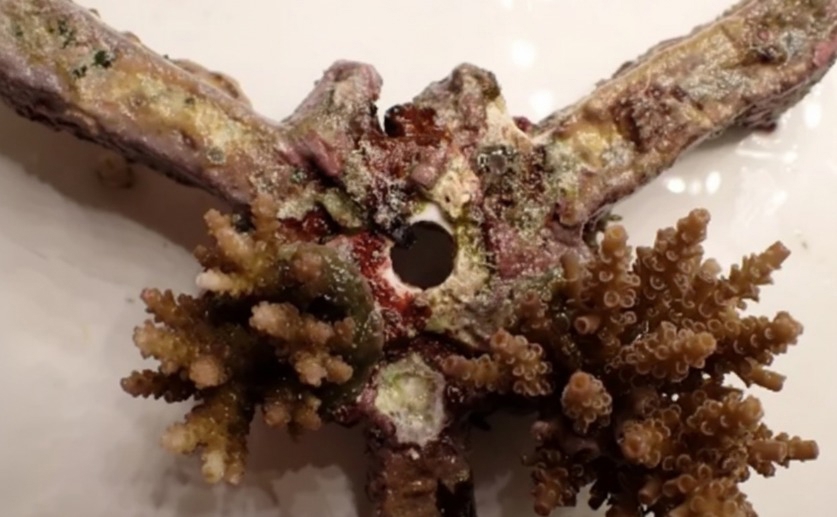
Young Acropora corals successfully grow on an engineered seeding device at Heron Reef, more than two years after being deployed to test new reef restoration methods.

Image adapted from: Jurriaans et al. / CC BY (Source)

Key Findings

  • This study on the Great Barrier Reef investigated how wave energy impacts coral survival during reef restoration efforts
  • Surprisingly, broad wave energy measurements weren’t strong predictors of coral survival, suggesting localized conditions matter more
  • Coral survival varied more between individual seeding devices than between different locations on the same reef, highlighting the importance of microhabitats
Coral reefs are vital ecosystems facing increasing threats from climate change and other disturbances. Reef restoration efforts, such as coral gardening and seeding, aim to help rebuild damaged reefs, but success rates vary considerably. A key factor influencing restoration success is understanding where corals will thrive, and this often relies on predicting the impact of environmental conditions, particularly wave energy. The Australian Institute of Marine Science recently conducted a study[1] to investigate how wave energy affects the survival and growth of corals used in reef restoration. The study focused on three species of Acropora coral – A. millepora, A. hyacinthus, and A. cf. kenti – deployed on specially designed seeding devices at three different reefs on the Great Barrier Reef: Moore Reef, Davies Reef, and Heron Reef. These devices allow corals to be outplanted (transplanted) and monitored. Researchers tracked the survival and growth of the corals over a period of 1.5 to 2 years. The results showed significant differences in survival rates not only between the three reefs, but also within each reef, and among the different coral species. A. millepora at Moore Reef had the highest average survival (32% after 554 days), followed by A. hyacinthus at Davies Reef (24% after 527 days). A. hyacinthus and A. cf. kenti at Heron Reef had lower survival rates (13% and 23% respectively, after 834 days). Surprisingly, the researchers found that broad-scale environmental factors like wave energy, water flow, sedimentation, and the existing benthic (seafloor) community composition didn’t consistently predict coral survival. While these factors are known to influence coral reef ecosystems[2], their predictive power in this restoration context was limited, and any effects observed diminished over time. This finding is particularly interesting when considered alongside earlier research on coral vulnerability to hydrodynamic disturbances[3]. That work demonstrated how coral shape and size influence their ability to withstand wave action and storms. However, the current study suggests that simply knowing the overall wave energy at a site isn’t enough to guarantee coral survival during restoration. Instead, the study highlighted the importance of “fine-scale” factors – variations in conditions at the level of individual seeding devices. Coral size and survival varied more between devices than between different locations on the same reef, suggesting that localized conditions play a crucial role. The importance of localized conditions aligns with observations from remote reefs like Kingman and Palmyra[2], where wave energy significantly impacts coral distribution. On Kingman Reef, for example, hard coral cover decreased and became more clustered in areas with higher wave energy, likely due to physical damage. However, the current study indicates that this relationship isn’t straightforward in restoration settings. The researchers suggest that transient, short-term factors – conditions that change rapidly – are also important. Furthermore, the study builds on research showing how even subtle changes in seafloor topography can significantly boost coral larval settlement[4]. That study demonstrated that millimeter-scale ridges on the seafloor create areas of calmer water that increase the chances of coral larvae attaching and surviving. While the current study didn’t directly examine seafloor topography, it reinforces the idea that microhabitats – small-scale variations in the environment – can be critical for coral survival, especially during early life stages. The findings of this study have important implications for reef restoration. They suggest that relying solely on broad-scale environmental models to guide restoration efforts is unlikely to be effective. Instead, a more flexible, site-specific approach is needed, one that focuses on matching coral species to suitable microhabitats and continuously monitoring local conditions to support long-term survival. Seeding devices show promise as a scalable restoration tool, but their success hinges on careful species selection and ongoing monitoring.

EnvironmentEcologyOceanography

References

Main Study

1) Wave energy and other environmental drivers as predictors of seeded-coral performance on the great barrier reef

Published 3rd November, 2025

https://doi.org/10.1038/s41598-025-22199-5


Related Studies

2) Benthic communities at two remote Pacific coral reefs: effects of reef habitat, depth, and wave energy gradients on spatial patterns.

https://doi.org/10.7717/peerj.81


3) Ecological consequences of major hydrodynamic disturbances on coral reefs.

Journal: Nature, Issue: Vol 444, Issue 7118, Nov 2006


4) Millimeter-scale topography facilitates coral larval settlement in wave-driven oscillatory flow.

https://doi.org/10.1371/journal.pone.0274088


Related Articles

An unhandled error has occurred. Reload 🗙