Pesticide exposure linked to energy problems in cells mirroring ALS symptoms

Jenn Hoskins
15th October, 2025

Pesticide exposure linked to energy problems in cells mirroring ALS symptoms

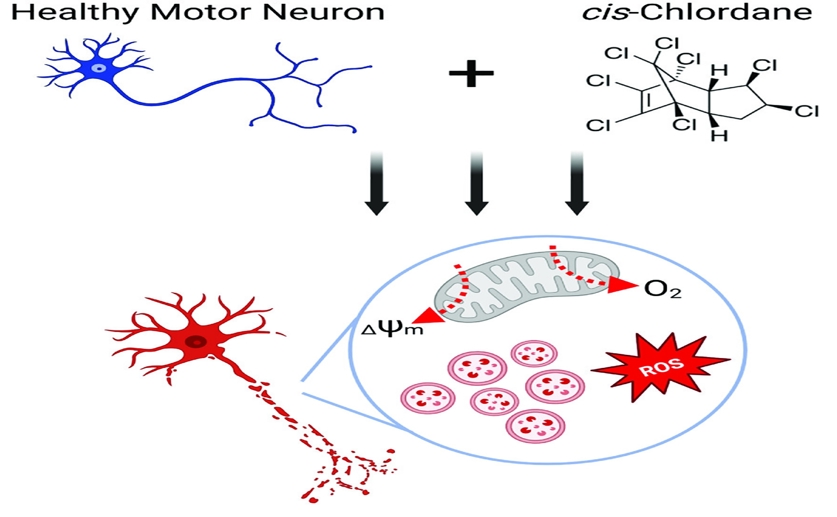
cis-Chlordane treatment causes motor neurons to reduce their oxygen consumption rate, decreases mitochondrial membrane potential (ΔΨm), and increases lysogenic vesicles and ROS in the cell.

Image adapted from: Clackson et al. / CC BY (Source)

Key Findings

  • This study, using stem cell-derived motor neurons, found that exposure to cis-chlordane, an organochlorine pesticide, induces changes resembling those seen in ALS
  • Cis-chlordane disrupts motor neuron function by causing mitochondrial dysfunction, specifically reducing oxygen consumption and ATP production, alongside increased oxidative stress
  • The pesticide triggers an ER stress response and increases autophagy in motor neurons, potentially as a cellular attempt to cope with the mitochondrial damage, but doesn’t increase protein aggregation
Amyotrophic Lateral Sclerosis (ALS) is a progressive disease affecting nerve cells in the brain and spinal cord, leading to muscle weakness, paralysis, and eventually death. While some cases have a clear genetic link, the majority do not, suggesting environmental factors play a significant role in its development. Identifying these factors is crucial for understanding and potentially preventing the disease. Epidemiological studies have long suggested a possible connection between pesticide exposure and ALS[2]. However, pinpointing specific pesticides and how they contribute to the disease has been challenging, with earlier research yielding inconsistent results. Recent research from Wesleyan University and the University of Tehran[1] has focused on a specific organochlorine pesticide, cis-chlordane, and its impact on motor neurons – the nerve cells that control muscle movement and are specifically affected in ALS. Previous work by the same group showed that cis-chlordane is toxic to these cells, mimicking some of the characteristics of ALS in laboratory settings. This new study aimed to understand how cis-chlordane causes this damage. The researchers used stem cells, which have the ability to develop into various cell types, including motor neurons. They grew these motor neurons in the lab and exposed them to cis-chlordane. To comprehensively assess the effects, they employed several advanced techniques. Bulk RNA sequencing was used to measure changes in gene activity within the cells. Live imaging allowed them to observe cellular processes in real-time. Immunofluorescent labeling highlighted specific proteins within the cells, and real-time metabolic assays measured the cells’ energy production. The results revealed a significant disruption in the function of mitochondria, the “powerhouses” of the cells. Cis-chlordane exposure led to increased production of reactive oxygen species (ROS) – unstable molecules that can damage cells. Simultaneously, the cells’ ability to consume oxygen and produce ATP (adenosine triphosphate), the primary energy source for cells, was reduced. Furthermore, the mitochondrial membrane potential, essential for energy production, was lost. These changes collectively indicate severe mitochondrial dysfunction. These findings are particularly noteworthy because mitochondrial dysfunction is a common feature observed in ALS patients[3]. The study suggests that cis-chlordane may induce damage to motor neurons through this mitochondrial pathway, creating a cellular environment similar to that seen in the disease. This builds on earlier observations linking various pesticides – including paraquat, maneb, and organophosphates – to neurodegenerative diseases, with a common thread being their ability to disrupt mitochondrial function and induce oxidative stress[3]. The initial meta-analysis[2] highlighted a link between pesticide exposure and ALS in men, but lacked specificity regarding the particular pesticides involved. This new research narrows the focus to organochlorine pesticides, specifically cis-chlordane, providing a more targeted avenue for investigation. While the earlier meta-analysis on Alzheimer’s disease also pointed to a positive association between pesticide exposure and the disease[4], the specific mechanisms differed, highlighting the complex ways in which pesticides can impact the nervous system. The research emphasizes the importance of considering cumulative, long-term exposure to pesticides, as even low-dose exposure can generate lasting toxic effects[4]. The Wesleyan University and University of Tehran study doesn’t prove that cis-chlordane causes ALS in humans, but it provides strong evidence that it can induce key pathological features of the disease in motor neurons. This suggests that future research investigating the role of pesticides in ALS development should prioritize organochlorine molecules, and further explore the mechanisms by which they disrupt mitochondrial function.

HealthGeneticsBiochem

References

Main Study

1) Exposure to the organochlorine pesticide cis-chlordane induces ALS-like mitochondrial perturbations in stem cell-derived motor neurons

Published 14th October, 2025

https://doi.org/10.1371/journal.pone.0332422


Related Studies

2) Pesticide exposure as a risk factor for amyotrophic lateral sclerosis: a meta-analysis of epidemiological studies: pesticide exposure as a risk factor for ALS.

https://doi.org/10.1016/j.envres.2012.06.007


3) Pesticides exposure as etiological factors of Parkinson's disease and other neurodegenerative diseases--a mechanistic approach.

https://doi.org/10.1016/j.toxlet.2014.01.039


4) Pesticide exposure and risk of Alzheimer's disease: a systematic review and meta-analysis.

https://doi.org/10.1038/srep32222


Related Articles

An unhandled error has occurred. Reload 🗙