Sugar Genes Control How Bacteria Affect Our Blood Vessels

Jenn Hoskins
27th June, 2025

Sugar Genes Control How Bacteria Affect Our Blood Vessels

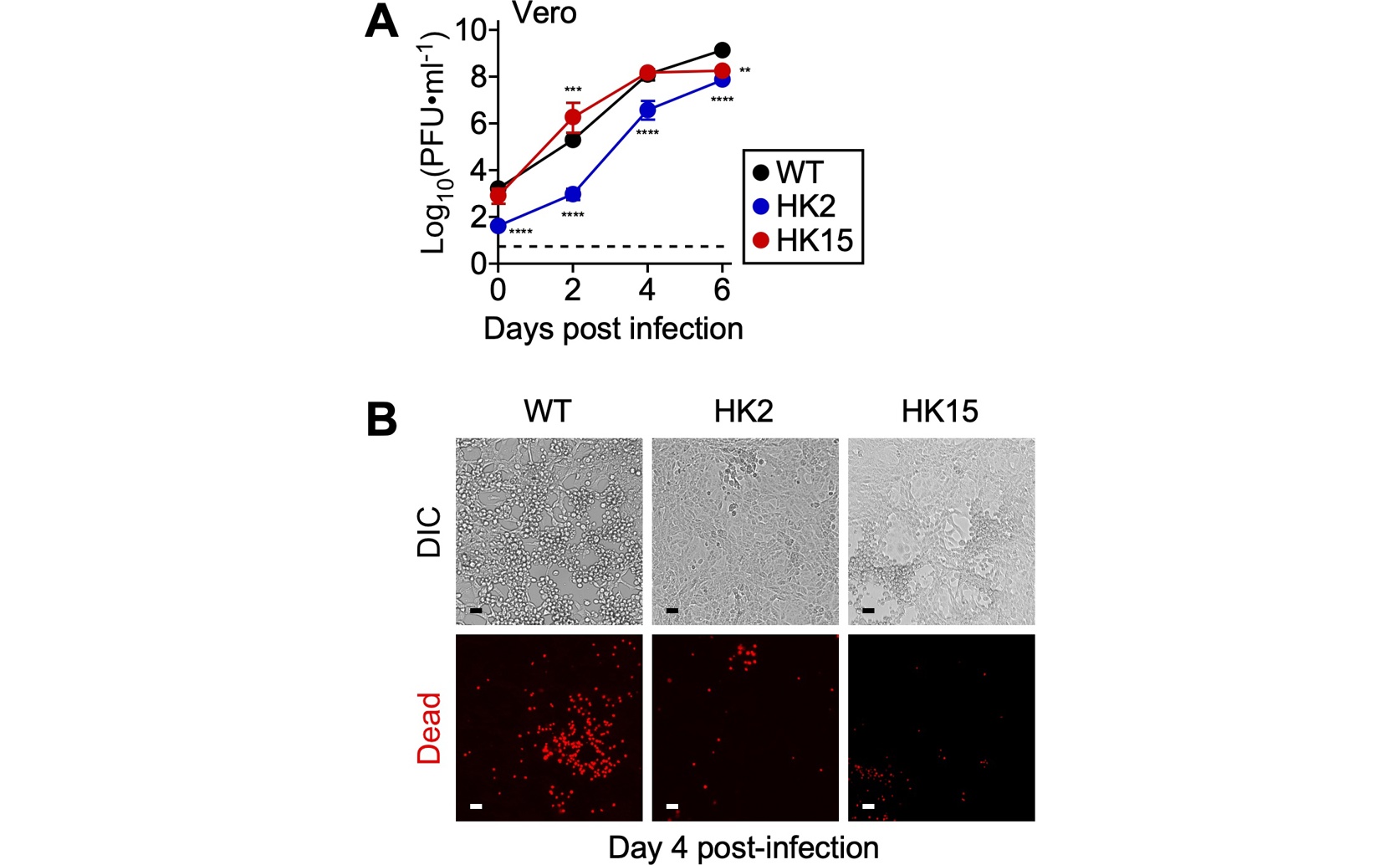
Assessing the impact of pso mutations in Vero cells revealed that the variant HK2 exhibits significantly impaired intracellular replication (a) and reduced cytopathology (b) compared to wild-type Rickettsia conorii, demonstrating the operon's critical role in mediating pathogen invasion and growth.

Image adapted from: Mishra et al. / CC BY (Source)

Key Findings

  • Scientists at Stony Brook University and VCU discovered that a specific bacterial gene system, pso, allows Rickettsia to evade the immune system and cause severe infections in blood vessel cells
  • Disrupting pso made Rickettsia unable to infect cells properly, triggering a strong immune response that quickly eliminated them, thus preventing the disease
  • Remarkably, this weakened Rickettsia variant, unable to cause disease, successfully acted as a live vaccine, providing strong protection against lethal spotted fever in mice
Rickettsia species are a group of bacteria responsible for diseases like Rocky Mountain spotted fever, which can be severe and even fatal. These bacteria are unique because they are "obligate intracellular pathogens," meaning they can only survive and multiply inside the cells of a host. Their primary targets in the human body are endothelial cells, the specialized cells that line the inside of blood vessels. When Rickettsia infects these cells, it causes widespread inflammation of the blood vessels, a condition known as systemic vasculitis. For the bacteria to establish a successful infection, they must not only find a way to obtain nutrients within the host cell's cytoplasm but also cleverly evade the host's innate immune system – the body's immediate, non-specific defense mechanism. A key challenge for these pathogens is how they manage to hide their own components, such as lipopolysaccharides (LPS) and peptidoglycan fragments, which are parts of their cell walls that typically trigger strong immune responses, from being detected by the host during their replication. Recent research conducted by scientists at Stony Brook University and VCU[1] has shed light on how pathogenic Rickettsia species achieve this immune evasion. Their study focused on a specific group of genes called the polysaccharide synthesis operon, or pso. This pso operon is responsible for creating a crucial sugar molecule called O-antigen (O-Ag) and ensuring that other surface proteins on the bacteria are properly assembled. These surface structures are the first point of contact between the bacteria and the host cell, and they play a vital role in how the immune system recognizes the pathogen. To understand the pso operon's role, the researchers created a modified version of Rickettsia conorii, a species similar to the one causing Rocky Mountain spotted fever. This modified variant, named HK2, had a disrupted pso operon due to a genetic alteration called a transposon insertion, which essentially inactivates the genes. When they tested HK2, they found it had a significantly reduced ability to stick to and invade microvascular endothelial cells – the very cells it needs to infect. Even more striking, despite its low numbers inside the cells, HK2 triggered a much stronger immune response. It caused the infected endothelial cells to produce high levels of proinflammatory cytokines and chemokines, which are signaling molecules that promote inflammation and attract other immune cells. This heightened immune alarm led to the premature death of the infected cells, a process known as programmed cell death. Furthermore, the HK2 variant showed poor survival in bone marrow-derived macrophages, which are specialized immune cells designed to engulf and destroy foreign invaders. In a mouse model of spotted fever, the inability of HK2 to suppress the immune response in endothelial cells and resist the killing mechanisms of macrophages resulted in its rapid elimination from the body. This rapid clearance of the bacteria meant that HK2, unlike its virulent counterparts, could not cause disease. This finding aligns with previous studies that have explored how virulent Rickettsia strains survive inside host cells. For instance, earlier work[2] compared a virulent Rickettsia rickettsii strain (Sheila Smith) with an attenuated, less harmful strain (Iowa) and a non-pathogenic one. That study found that only the virulent strain could effectively replicate in human dermal microvascular endothelial cells. It also showed that while both virulent and attenuated strains could trigger an immune response, the virulent strain's response was delayed and less intense. The virulent strain also showed characteristics of delayed programmed cell death, allowing it more time to multiply. This earlier research[2] identified specific bacterial proteins, RARP2 and RapL, that help virulent Rickettsia suppress the host's immune response, particularly the production of interferon-beta, and enhance cell survival. The current study expands on this by identifying pso as another critical mechanism that contributes to Rickettsia's ability to delay host cell death and evade immune detection. The ability of Rickettsia to shield its immune-stimulating components, like LPS, is crucial for its survival. As highlighted in a review of innate immunity[3], mammalian cells have evolved sophisticated ways to detect bacterial components, with LPS being a major trigger for immune responses. Bacteria, in turn, have developed various strategies to counteract these detection mechanisms. The pso operon's role in building the O-antigen and correctly assembling surface proteins directly contributes to this shielding, preventing the host's immune sensors from recognizing the pathogen too early. The interaction between Rickettsia and endothelial cells is particularly complex. Endothelial cells are not merely passive targets; they play an active role in modulating inflammation and regulating the movement and function of immune cells[4]. Recent single-cell studies have even identified specific subtypes of endothelial cells that express genes related to immune functions like phagocytosis (engulfing foreign particles), antigen presentation (displaying parts of pathogens to immune cells), and recruiting immune cells[4]. These "immunomodulatory ECs" (IMECs) have more significant functions in immunity than previously recognized. The new findings demonstrate that pathogenic Rickettsia actively dampens the immune stimulation from these very endothelial cells, effectively subverting their immunomodulatory capacity to its advantage. Remarkably, the HK2 variant, which was unable to cause disease, proved to be a highly effective live-attenuated vaccine. When tested, it elicited a strong protective immune response against lethal spotted fever. This means that by understanding how Rickettsia evades the immune system through the pso operon, scientists have not only uncovered a fundamental aspect of bacterial pathogenesis but also identified a promising candidate for a new vaccine. This work underscores the critical importance of the pso operon in allowing Rickettsia to avoid immune surveillance during its replication inside endothelial cells, ultimately delaying host cell death and escaping the body's defenses.

HealthGeneticsBiochem

References

Main Study

1) Polysaccharide synthesis operon modulates Rickettsia-endothelial cell interactions

Published 26th June, 2025

https://doi.org/10.1371/journal.ppat.1013277


Related Studies

2) Rickettsia rickettsii virulence determinants RARP2 and RapL mitigate IFN-β signaling in primary human dermal microvascular endothelial cells.

https://doi.org/10.1128/mbio.03450-23


3) A cross-disciplinary perspective on the innate immune responses to bacterial lipopolysaccharide.

https://doi.org/10.1016/j.molcel.2014.03.012


4) Immunomodulation by endothelial cells - partnering up with the immune system?

https://doi.org/10.1038/s41577-022-00694-4


Related Articles

An unhandled error has occurred. Reload 🗙