Useful bacteria found inside Japanese ginseng seeds fight infections

Jenn Hoskins
12th October, 2025

Useful bacteria found inside Japanese ginseng seeds fight infections

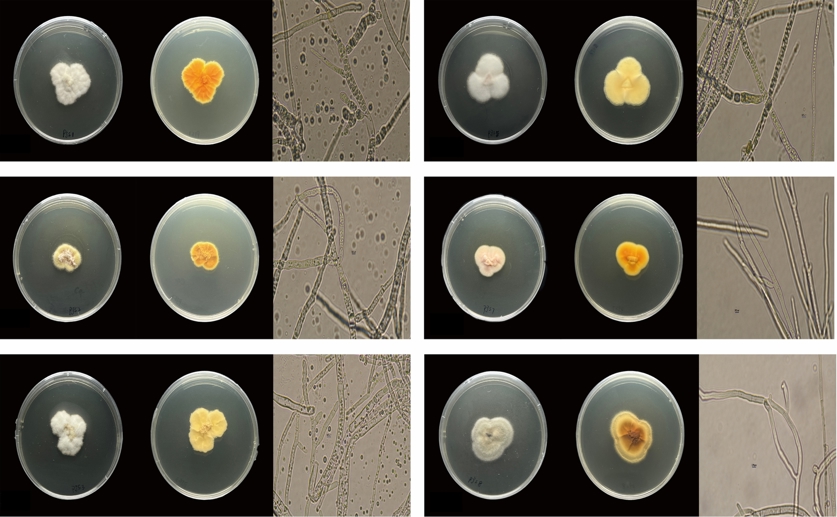
Characterization of colonies of the endophytic fungi in the seeds of Panax japonicus.

Image adapted from: Jin et al. / CC BY (Source)

Key Findings

  • Researchers isolated ten microbes—seven fungi and three bacteria—from Panax japonicus seeds in Guizhou Province, China
  • Specific bacterial genera, Enterobacteriaceae and Pseudomonas, were identified as potential growth-promoting microbes within the seeds
  • While some fungal isolates showed limited antibacterial activity, their metabolites did not, suggesting the microbes themselves, not released compounds, are responsible for any observed effects
Research conducted by scientists at Guizhou Normal University, Anshun University, and the University of Duhok[1] has focused on identifying beneficial microbes within the seeds of Panax japonicus, a plant with medicinal properties, with the goal of understanding how these microbes can improve seed germination. The success of a plant often hinges on successful seed germination, and increasingly, research points to the crucial role of internal microbes – termed endophytes – in this process. Endophytes are bacteria and fungi that live inside plant tissues without causing apparent disease. They can offer a range of benefits, including enhanced growth, increased resistance to stress, and improved nutrient uptake. Understanding which endophytes are present, and what functions they perform, is a key step in harnessing their potential for agricultural applications. Previous work has demonstrated the importance of root-associated bacteria in plant health, particularly in combating diseases like Fusarium wilt in cucumber[2]. This research showed that specific bacterial genera, such as Massilia, Pseudomonas, and Enterobacteriaceae, were consistently associated with resistant cucumber plants, and that combinations of these bacteria could significantly reduce disease severity. The study began with optimizing a method for disinfecting Panax japonicus seeds. A common challenge in endophyte research is ensuring that the microbes identified are truly from within the seed, and not contaminants from the environment. The researchers found that a combination of 30 seconds in 75% alcohol followed by 9 minutes in 1% mercuric chloride (HgCl2) resulted in the lowest contamination rate of 3.33%, highlighting the importance of HgCl2 concentration in effective seed sterilization. Following successful disinfection, the team isolated ten endophyte species from the seeds: seven fungi and three bacteria. The fungi were identified as belonging to the Fusarium genus (four strains), with single strains of Fusarium reticulatum and Fusarium sarcochroum, and Alternaria alternata. The three bacterial strains were identified as belonging to the Enterobacteriaceae and Pseudomonas genera. Interestingly, while Fusarium species and Alternaria alternata were readily isolated, they did not appear to be dominant factors in the plant’s growth. Further investigation revealed that some of the fungal endophytes possessed antibacterial activity. Specifically, PjZ4 showed activity against Escherichia coli, while PjZ3, PjZ4, PjZ5, and PjZ7 exhibited activity against Bacillus subtilis. However, none of the fungi demonstrated activity against Staphylococcus aureus. Crucially, the metabolites (chemical products) produced by either the fungal or bacterial endophytes did not show any antibacterial activity, suggesting the observed effects were due to the microbes themselves, rather than compounds they release. The most significant finding was the identification of Enterobacteriaceae and Pseudomonas as growth-promoting endophytes. This aligns with earlier research[2] which highlighted the role of Pseudomonas in improving plant resistance and overall health. The study by[2] also showed that specific strains of Enterobacteriaceae could be isolated as antagonistic bacteria, and that combinations of these bacteria significantly reduced disease incidence. The current study builds on this by identifying these genera as key players within the seeds of Panax japonicus itself. The research provides a foundational understanding of the microbial community within Panax japonicus seeds and identifies potential targets for future studies aimed at improving seed germination and plant growth. By pinpointing specific endophytes, scientists can now investigate their mechanisms of action and explore their potential use in sustainable agriculture.

MedicineBiotechPlant Science

References

Main Study

1) Isolation, identification and antibacterial activity of endophytes from the seeds of Panax japonicus

Published 9th October, 2025

https://doi.org/10.1371/journal.pone.0330436


Related Studies

2) The Co-Association of Enterobacteriaceae and Pseudomonas with Specific Resistant Cucumber against Fusarium Wilt Disease.

https://doi.org/10.3390/biology12020143


Related Articles

An unhandled error has occurred. Reload 🗙