
New Deep Learning System Automatically Spots Sea Snot Using Satellite Data
Jim Crocker
26th September, 2025


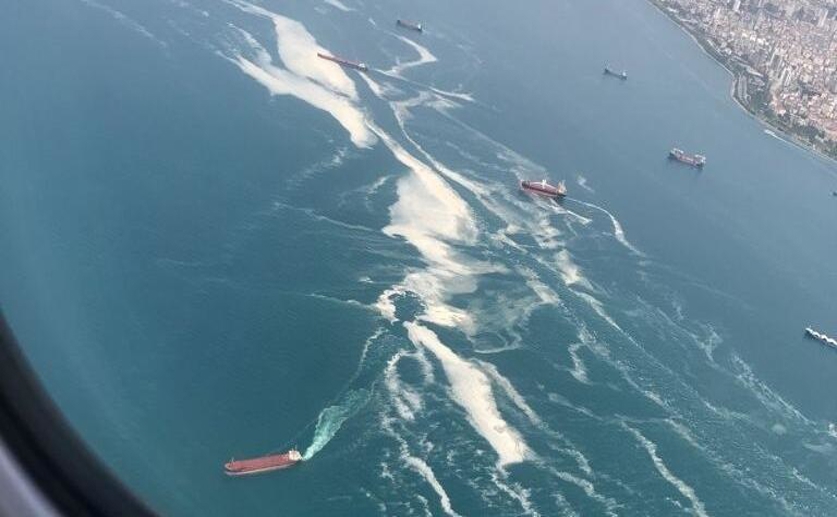
Aerial photo of marine mucilage ("sea snot")
Key Findings
- This study, focused on the Marmara Sea, aimed to automatically detect mucilage formations (“sea snot”) using Sentinel-1 satellite data to aid timely intervention
- Researchers successfully used deep learning and machine learning models, achieving 96% to 100% accuracy in identifying mucilage-covered areas from clear water
- VH polarization data from Sentinel-1 proved more effective than VV polarization for mucilage detection, likely due to its ability to capture the widespread nature of the blooms
EnvironmentEcologyMarine Biology
References
Main Study
1) A hybrid deep learning framework combining transformer and logistic regression models for automatic marine mucilage detection using sentinel-1 SAR data: A case study in Armutlu-Zeytinbağı, Marmara Sea
Published 25th September, 2025
https://doi.org/10.1371/journal.pone.0330721
Related Studies
2) Detection of mucilage phenomenon in the Sea of Marmara by using multi-scale satellite data.
3) Daily monitoring of marine mucilage using the MODIS products: a case study of 2021 mucilage bloom in the Sea of Marmara, Turkey.
4) Review of deep learning: concepts, CNN architectures, challenges, applications, future directions.
5) Monitoring phycocyanin in global inland waters by remote sensing: Progress and future developments.
Related Articles
 22nd August, 2025 | Jim Crocker