Improving Coral Spawn Collection: How Technique and Timing Affect Larval Quality

Greg Howard
15th September, 2025

Improving Coral Spawn Collection: How Technique and Timing Affect Larval Quality

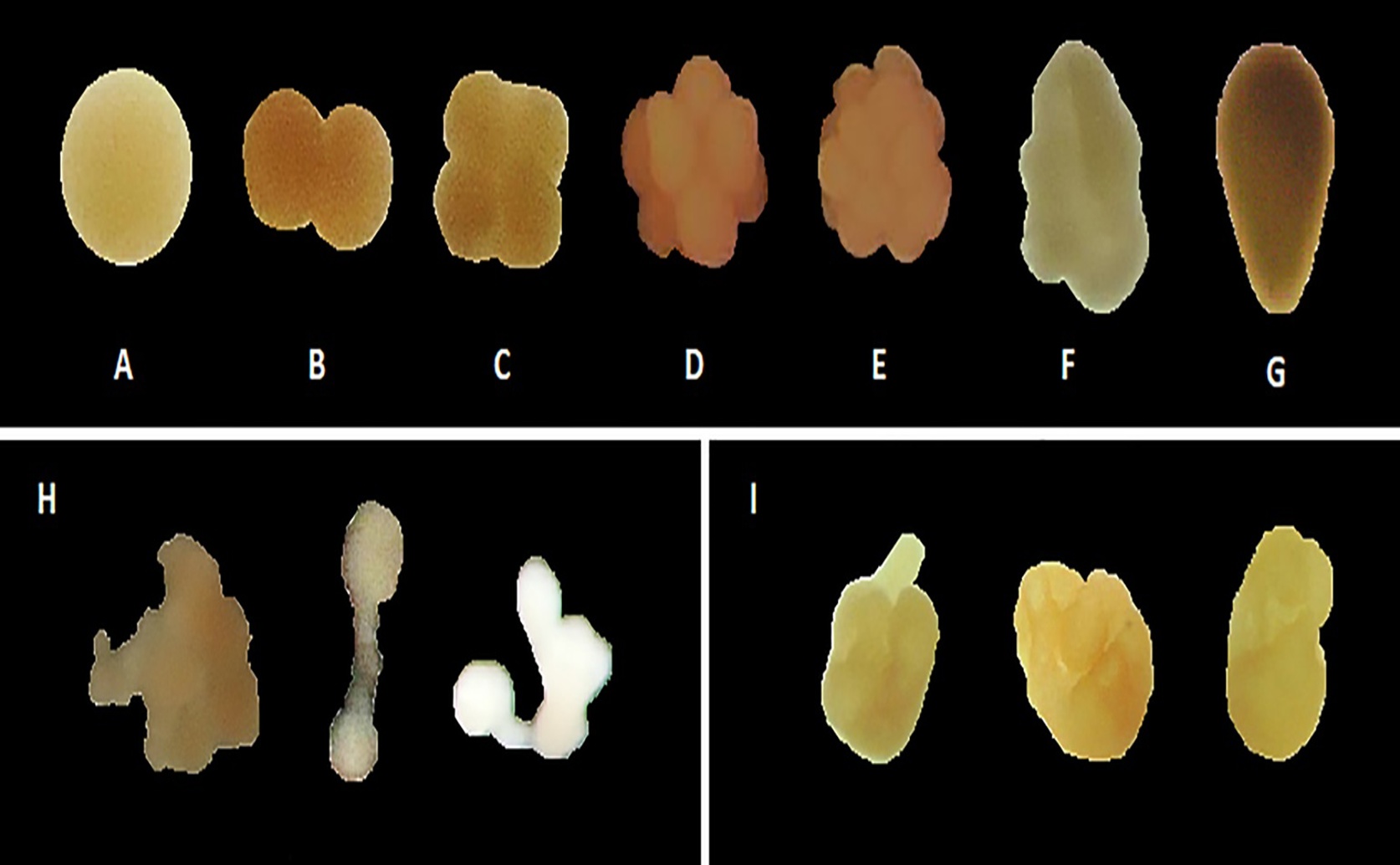
Comparing normal Acropora sp. developmental stages (a–g) with fragmented embryos (h) and deformed larvae (i) established the baseline used to demonstrate that net and pump collection methods cause significant physical damage when utilized during sensitive stages of embryogenesis.

Image adapted from: Langley et al. / CC BY (Source)

Key Findings

  • On the Great Barrier Reef, collecting coral spawn immediately after fertilization (within one hour) minimizes embryo damage regardless of collection method
  • Net and pump collection methods cause more embryo fragmentation and deformities than bucket collection, especially if collection is delayed beyond one hour post-fertilization
  • Larval size and settler size are greatest when spawn is collected early (within one hour), while deformed larvae have significantly lower settlement rates
Coral reefs are vital ecosystems facing increasing threats from climate change and human activity. A major challenge to reef conservation is the widespread degradation of coral populations, hindering their natural ability to recover. Successful reproduction and the establishment of new coral colonies – recruitment – are essential for reef health. However, natural recruitment is often limited, prompting the development of active restoration techniques, such as assisting coral larvae to settle on damaged reefs[2]. A recent study by researchers at Southern Cross University, CSIRO Environment, and University of the Ryukyus[1] investigated a key bottleneck in large-scale coral restoration: the collection of coral spawn. Mass spawning events provide a concentrated source of coral larvae, known as propagules, for restoration efforts. However, these events are short-lived, and the methods used to collect spawn can potentially harm the delicate developing embryos and larvae. The study focused on comparing three common collection methods – buckets, nets, and diaphragm pumping – and assessing their impact on embryo and larval quality. The researchers found that when spawn was collected was far more important than how it was collected. Collecting spawn within the first hour after fertilisation, before the embryo began to divide into multiple cells (cleavage), resulted in minimal damage regardless of the method used. This is a critical finding, as it suggests that rapid collection immediately after spawning can significantly reduce stress on the developing embryos. However, delaying collection beyond the first hour led to increasing levels of embryo fragmentation, particularly with net and pump techniques. Fragmentation rates exceeded 45% when embryos were more than 8 cells old, significantly reducing the size of the resulting larvae. This aligns with observations from other studies highlighting the sensitivity of early-stage coral development to physical disturbance[2]. While net collections yielded larger larvae overall compared to pumped samples, the larger larvae were also more prone to deformities. These deformities, in turn, led to a substantial reduction in settlement success – only 4% of deformed larvae successfully settled compared to 25% of healthy larvae. The findings build upon earlier research demonstrating the potential for mass larval settlement to enhance coral recovery[2]. However, addresses a previously understudied aspect: the impact of collection methods on the quality of the settled recruits. Simply supplying a large number of larvae is not enough; the larvae must be healthy and capable of establishing themselves on the reef. The study highlights the importance of considering the timing of collection to preserve larval integrity. Furthermore, the research complements work showing that coral fertilization success is dependent on local coral density[3]. While[3] focuses on the importance of close proximity for successful spawning, addresses the subsequent need to handle the resulting propagules carefully to maximize their chances of survival and contribution to reef recovery. The study provides practical guidance for scaling up coral reef restoration efforts. By emphasizing the importance of rapid collection immediately after spawning, it suggests that large-scale spawn collections can be conducted without compromising larval quality. This is a crucial step towards more effective and sustainable reef restoration practices.

EnvironmentEcologyMarine Biology

References

Main Study

1) Scaling up coral spawn collection: Impacts of method and timing on Acropora valida larval quality

Published 11th September, 2025

https://doi.org/10.1371/journal.pone.0331461


Related Studies

2) Enhanced larval supply and recruitment can replenish reef corals on degraded reefs.

https://doi.org/10.1038/s41598-017-14546-y


3) Allee effects limit coral fertilization success.

https://doi.org/10.1073/pnas.2418314121


Related Articles

An unhandled error has occurred. Reload 🗙