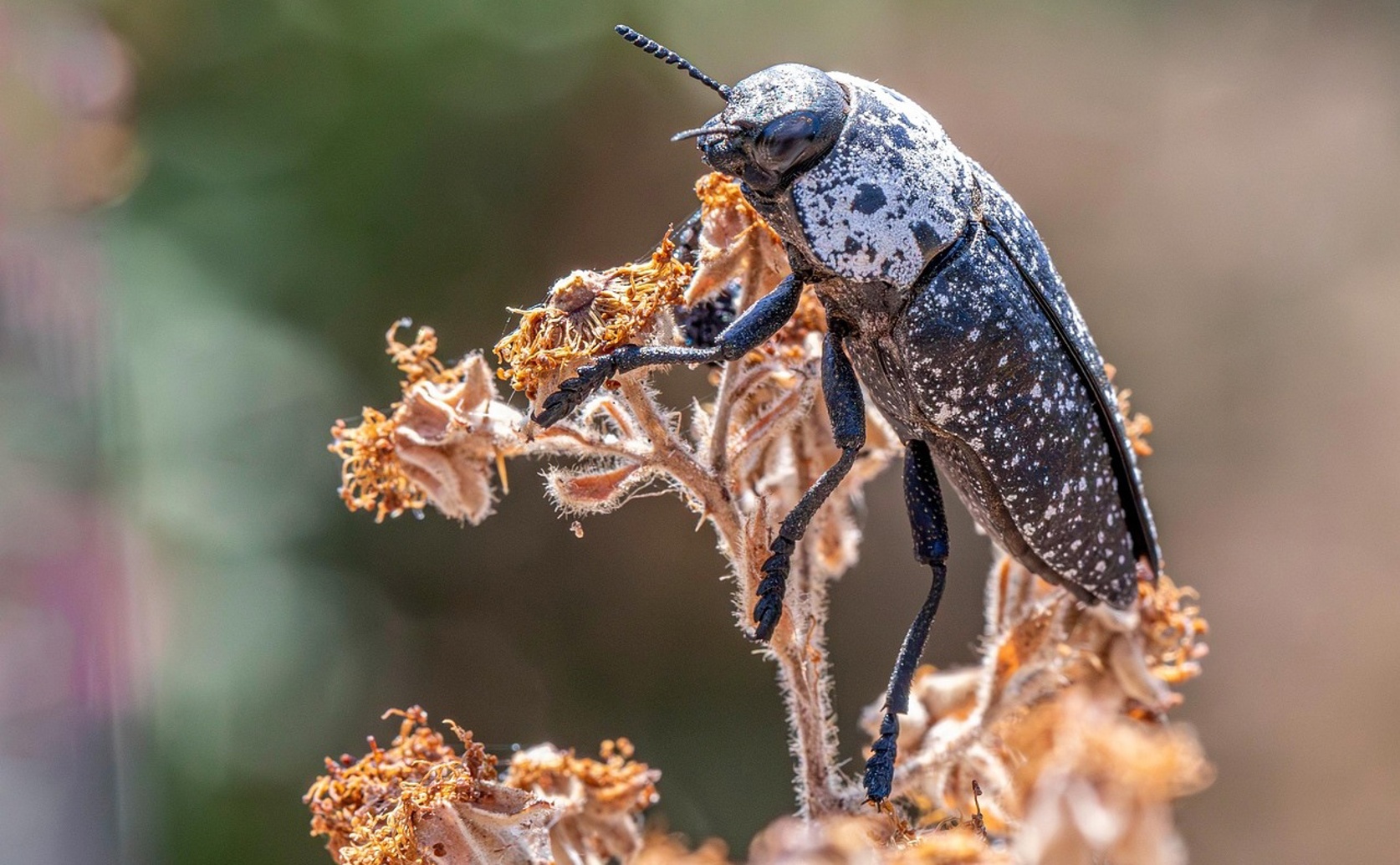
Mixed Crops Boost Beetle Variety More Than Single Crops

Greg Howard
26th September, 2025

Mixed Crops Boost Beetle Variety More Than Single Crops
Pixabay

Key Findings

  • In the Netherlands, strip cropping fields showed 15% more ground beetle species than fields with a single crop
  • Ground beetle numbers were 30% higher in strip-cropped fields compared to monocultures, likely due to more stable habitats
  • The increase in beetle diversity wasn’t from unique species, but a combination of communities from different crops growing together
Insect populations are declining globally, and agricultural practices are a significant driver of this loss. Insects are vital for healthy ecosystems, performing roles like pollination, pest control, and nutrient recycling. Monoculture farming – growing a single crop in a field – limits the habitats and food sources available to insects, contributing to their decline. Strip cropping, an alternative approach where different crops are grown in alternating narrow strips, offers a potential solution by creating a more diverse habitat. However, it remained unclear whether this method actually boosts insect biodiversity. Researchers from Wageningen University and Research[1] investigated whether strip cropping could increase the biodiversity of ground beetles, a group of insects crucial for agricultural ecosystems. Ground beetles are predators of common pests and are sensitive to changes in farming practices, making them useful indicators of environmental health. The study analysed four years of data collected from four organically managed experimental farms in the Netherlands. The findings revealed that strip-cropped fields supported, on average, 15% more ground beetle species and 30% more individual beetles compared to fields planted with a single crop (monocultures). This increase wasn’t due to unique beetle species thriving specifically in strip-cropped systems, but rather the merging of beetle communities that naturally prefer different crops. For instance, a field alternating between cabbage and wheat would host the beetle species associated with both crops, effectively combining two distinct communities. This research builds on earlier work demonstrating that habitat edges can influence insect movement and distribution[2]. Previous studies showed that some insects, like the carabid beetle Pterostichus melanarius, exhibit a preference for habitat interfaces, moving more readily from rye to oilseed radish than vice versa[2]. However, other research indicated that habitat boundaries can act as barriers to movement for ground beetles[3], with most beetles remaining within their initial habitat and rarely travelling more than a few meters. The current study suggests that strip cropping overcomes this barrier by effectively creating multiple, adjacent habitats within a single field, encouraging the coexistence of different beetle communities. The increase in ground beetle biodiversity observed through strip cropping is comparable to the gains achieved by switching from conventional to organic farming (+19% to +23%). This is significant because it demonstrates that strip cropping can be a highly effective biodiversity conservation method, particularly when considering that it doesn’t require taking land out of production. Many other biodiversity-enhancing measures, like planting flower strips or hedgerows, reduce the area available for growing crops. Strip cropping, in contrast, maintains the same level of crop production while simultaneously supporting a greater diversity of insect life. Furthermore, this research aligns with broader findings on the benefits of crop diversification[4]. A large-scale meta-analysis showed that increasing crop diversity enhances not only crop production but also associated biodiversity and ecosystem services like pest control and soil quality[4]. While different diversification strategies vary in their effectiveness, strip cropping presents a practical option for mechanized farming systems, addressing a key limitation of other approaches.

AgricultureEnvironmentEcology

References

Main Study

1) Strip cropping shows promising increases in ground beetle community diversity compared to monocultures

Published 23rd September, 2025

https://doi.org/10.7554/eLife.104762


Related Studies

2) Movement behaviour of the carabid beetle Pterostichus melanarius in crops and at a habitat interface explains patterns of population redistribution in the field.

https://doi.org/10.1371/journal.pone.0115751


3) Ground beetle movement is deterred by habitat edges: a mark-release-recapture study on the effectiveness of border crops in an agricultural landscape.

https://doi.org/10.1093/jisesa/ieae062


4) Positive but variable effects of crop diversification on biodiversity and ecosystem services.

https://doi.org/10.1111/gcb.15747


Related Articles

An unhandled error has occurred. Reload 🗙