Plant-Based Diet Linked to Lower Diabetes Risk and Reduced Emissions

Jenn Hoskins
17th September, 2025

Plant-Based Diet Linked to Lower Diabetes Risk and Reduced Emissions

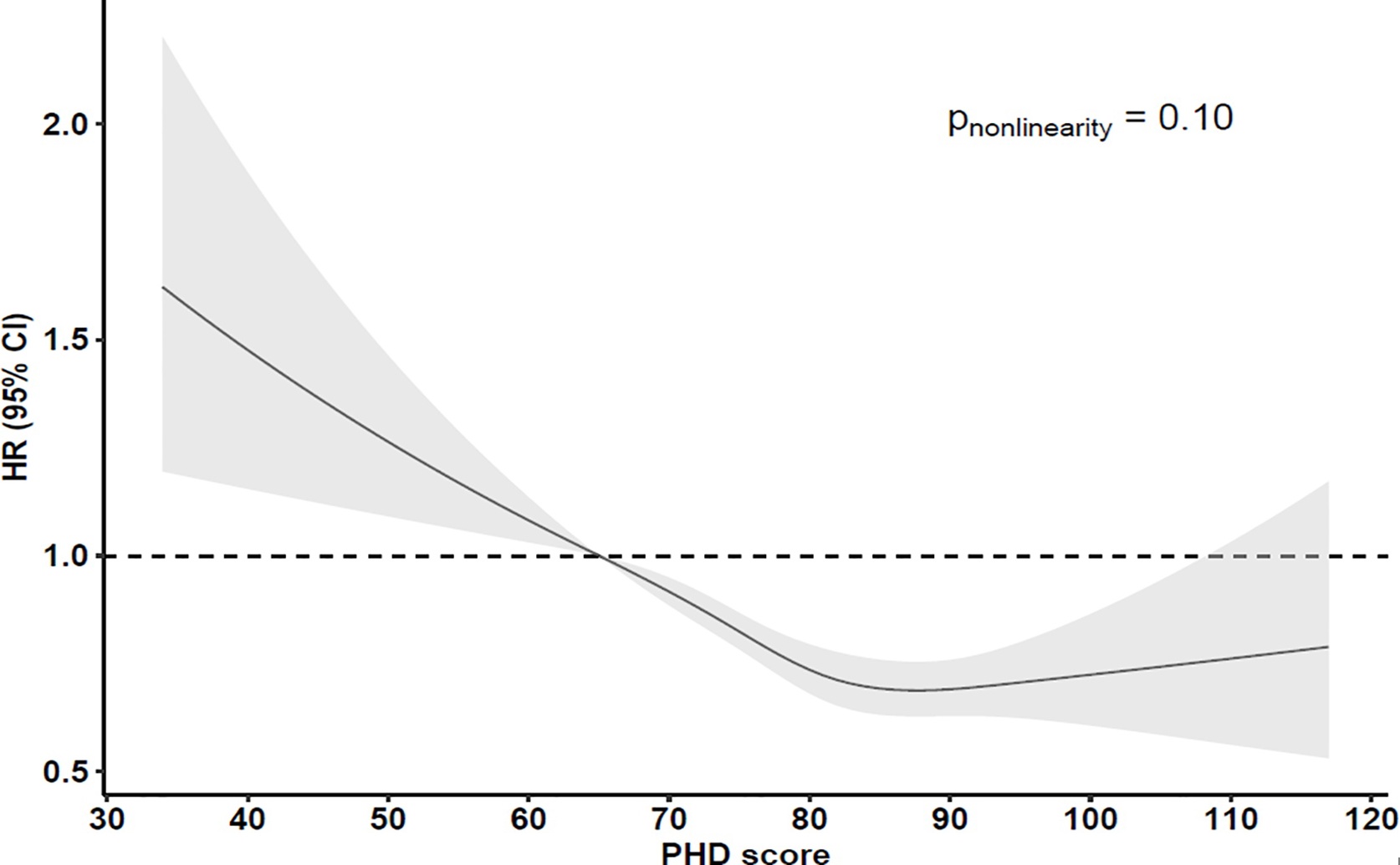
The analysis demonstrates a significant inverse association where greater adherence to the planetary health diet (PHD) corresponds to a progressively lower risk of developing type 2 diabetes.

Image adapted from: Sowah et al. / CC BY (Source)

Key Findings

  • In the UK, this study investigated the link between a ‘planetary health diet’ (PHD) and type 2 diabetes (T2D) risk over nearly 20 years
  • Higher adherence to the PHD was associated with a 32% lower risk of developing T2D, even considering lifestyle factors
  • Following the PHD was also linked to approximately 18% lower estimated greenhouse gas emissions, suggesting benefits for both health and the environment
Type 2 diabetes is a significant and growing global health concern, linked to lifestyle factors like diet[2]. Increasingly, populations are adopting diets high in processed foods, refined sugars, and meat, contributing not only to health problems but also to environmental issues like greenhouse gas emissions[2]. Researchers at the Medical Research Council Epidemiology Unit, Cambridge, along with collaborators from Steno Diabetes Center Aarhus, Aarhus University, University of Copenhagen, Washington State University, and Waymark, have investigated whether a ‘planetary health diet’ (PHD) could offer a solution to both these challenges[1]. The PHD, proposed as a dietary pattern beneficial for both human health and the environment, emphasizes plant-based foods while limiting certain animal products and highly processed items. The aim of the study by was to determine if following this diet is associated with a lower risk of developing type 2 diabetes and whether it correlates with reduced greenhouse gas emissions. The research involved analyzing data from 23,722 participants in the EPIC-Norfolk cohort study, a long-term investigation of health in the UK. Dietary information was collected at multiple time points – 1993-1997, 1998-2000, and 2004-2011 – using a detailed food frequency questionnaire. This allowed researchers to track changes in dietary habits over time. Participants were assessed on their adherence to the PHD, with a scoring system ranging from 0 to 140 points based on their intake of 13 food groups and two nutrients. The study followed participants for an average of 19.4 years, during which 3,496 new cases of type 2 diabetes were identified. The results showed a clear link between diet and disease risk. Individuals in the highest quintile of PHD adherence – meaning those whose diets most closely matched the recommended pattern (85.7–117.8 points) – had a 32% lower risk of developing type 2 diabetes compared to those in the lowest quintile (33.9–68.4 points). This association remained significant even after accounting for factors like age, lifestyle, energy intake, weight, and pre-existing health conditions. Importantly, the study also found that higher PHD adherence was associated with a reduction in estimated greenhouse gas emissions. Participants in the highest quintile had approximately 18% lower emissions compared to those in the lowest. This suggests that adopting a more sustainable diet isn't just good for personal health, but also for the planet. These findings align with earlier research demonstrating the health benefits of diets rich in plant-based foods and lower in animal products[2][3]. The Danish Diet, Cancer and Health cohort study, for example, showed that greater adherence to the EAT-Lancet diet – a similar plant-based dietary approach – was associated with a 22% lower risk of type 2 diabetes in a middle-aged Danish population[3]. Similarly, a study conducted in Malmö, Sweden, found an 18% lower risk of T2D among those with the highest adherence to the EAT-Lancet diet, even considering genetic predisposition to the disease[4]. The UK Biobank study further supports this, showing a 19% reduction in T2D risk with higher adherence to the EAT-Lancet diet pattern[5]. The research by builds on these previous investigations by explicitly linking dietary adherence not only to health outcomes, but also to environmental impact. The researchers estimated that 12.3% of type 2 diabetes cases could be prevented by improving dietary habits to reach at least the 80th percentile of PHD adherence. This highlights the potential for population-level interventions focused on promoting more sustainable eating patterns. It's important to note that this was an observational study, meaning it cannot definitively prove cause and effect. There is always the possibility of residual confounding factors that were not fully accounted for. However, the strong association observed, combined with the consistency of findings across multiple studies, provides compelling evidence for the benefits of the PHD.

NutritionHealthSustainability

References

Main Study

1) The association of the planetary health diet with type 2 diabetes incidence and greenhouse gas emissions: Findings from the EPIC-Norfolk prospective cohort study

Published 16th September, 2025

https://doi.org/10.1371/journal.pmed.1004633


Related Studies

2) Global diets link environmental sustainability and human health.

https://doi.org/10.1038/nature13959


3) Adherence to the EAT-Lancet diet is associated with a lower risk of type 2 diabetes: the Danish Diet, Cancer and Health cohort.

https://doi.org/10.1007/s00394-023-03090-3


4) Adherence to the EAT-Lancet diet, genetic susceptibility, and risk of type 2 diabetes in Swedish adults.

https://doi.org/10.1016/j.metabol.2023.155401


5) Association Between the EAT-Lancet Diet Pattern and Risk of Type 2 Diabetes: A Prospective Cohort Study.

https://doi.org/10.3389/fnut.2021.784018


Related Articles

An unhandled error has occurred. Reload 🗙