How Tin Levels Relate to Human Lifespan

Jim Crocker
15th September, 2025

How Tin Levels Relate to Human Lifespan

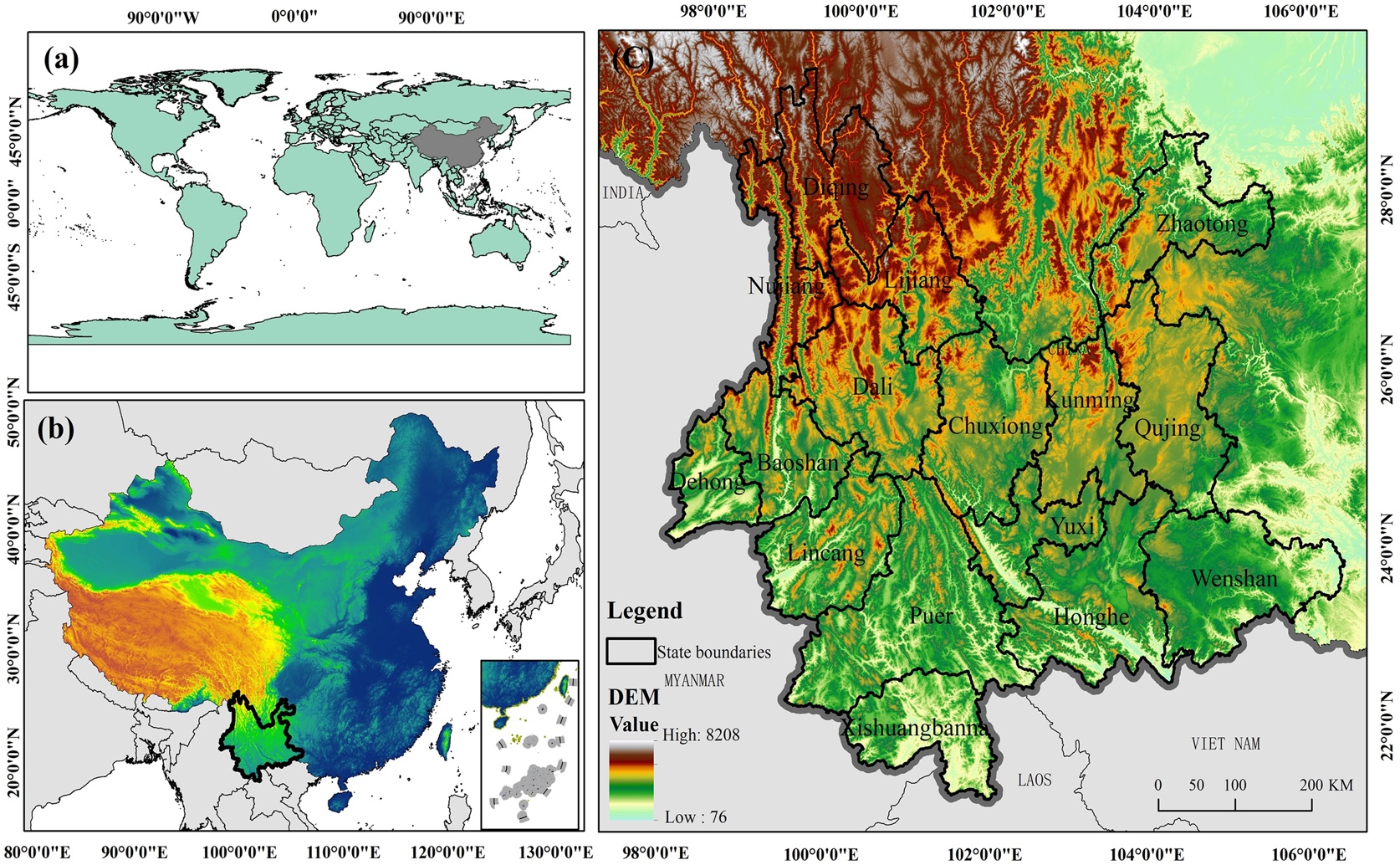
This map illustrates the geographical context of the research, depicting China’s location in Asia (a) and the specific position of Yunnan Province (b) and its regional boundaries (c), where a significant positive correlation was identified between environmental Sn background values and population longevity levels.

Image adapted from: Zhu et al. / CC BY (Source)

Key Findings

  • In Yunnan Province, China, areas with higher soil selenium levels tend to have a greater proportion of residents aged 65 and over
  • Higher selenium concentrations in the soil were significantly linked to a larger percentage of the population living to 90 years or older in the region
  • Research suggests a positive correlation between soil selenium levels and longevity, potentially due to selenium’s role in inhibiting cancer cell growth
The link between where people live and how long they live has been a topic of scientific interest for a long time. One element often considered is selenium (Sn), a trace element crucial for human health. While it’s known selenium plays a role in wellbeing, the extent to which selenium levels in the environment impact overall population longevity at a regional level wasn’t fully understood. A recent study by researchers at Yunnan Normal University & Southwest Forestry University[1] aimed to investigate this connection, specifically within Yunnan Province, China. The study focused on analyzing the relationship between the concentration of selenium in the soil – denoted as ω(Sn) – and two measures of longevity: the longevity index (LI%) and the ultra-octogenarian index. The longevity index represents the proportion of a population reaching 65 years or older, while the ultra-octogenarian index focuses on those living to 90 years or above. The research team used Arcgis spatial analysis, a type of geographical information system software, and mathematical statistics to examine the data from both geochemical surveys of Yunnan Province and census data. The results showed a clear connection: areas within Yunnan Province with higher concentrations of selenium in the soil also had higher LI% and ultra-octogenarian indexes. This suggests that selenium levels in the environment are associated with longer lifespans in the region. To quantify this relationship, the researchers used Spearman’s correlation coefficient, a statistical measure that assesses the strength and direction of association between two variables. They found a significant positive correlation (P<0.01) between ω(Sn) and both longevity measures, meaning as selenium levels increased, so did the proportion of older and ultra-octogenarian residents. Further analysis using linear regression confirmed that selenium levels consistently had a positive influence on the longevity index. While the impact on the ultra-octogenarian index was less pronounced, it was still considered significant, highlighting selenium’s role in healthy longevity. This research builds upon earlier work in China which demonstrated that environmental factors, particularly in specific regions, play a crucial role in longevity[2]. Specifically, the study[2] noted that centenarians (those over 100 years old) were more likely to be found in western regions, potentially due to environmental factors, while those aged 65+ were more influenced by economic conditions in eastern regions. The Yunnan study narrows this focus to a single element, selenium, and its potential contribution to these observed longevity patterns. The study also investigated this relationship at a more local scale – the county level within Yunnan Province – and found a consistent positive correlation between selenium levels and the longevity index. The researchers hypothesize this could be linked to selenium exposure through the natural environment influencing cancer incidence, a major factor impacting lifespan. This aligns with findings from other research[3] which indicates that environmental improvements and medical treatment can modify the influence of genetic and environmental factors on longevity. However, the researchers acknowledge that the exact mechanisms by which selenium impacts longevity remain unclear. They point to the need for further investigation into the biogeochemical cycling of selenium and its association with longevity, essentially how selenium moves through the environment and is absorbed by the human body. Interestingly, a separate study[4] also conducted in China, identified selenium as having a significant positive correlation with longevity index, alongside other elements like cobalt and a negative correlation with nickel and barium. This corroborates the findings of the Yunnan study, strengthening the evidence for selenium’s importance in longevity. Another study[5] focusing on Tuscany, Italy, found similar regional variations in longevity, with smaller mountain communities exhibiting higher rates of people reaching 90 years, and centenarians more common in larger cities. While not specifically focusing on selenium, the Tuscany study[5] highlighted the potential for environmental protection and specific regional factors to contribute to increased lifespan, a concept that the Yunnan study expands upon by pinpointing selenium as a key element.

EnvironmentNutritionHealth

References

Main Study

1) Relationship between Sn elemental background values and regional longevity levels—Data from Yunnan, China

Published 12th September, 2025

https://doi.org/10.1371/journal.pone.0332369


Related Studies

2) Effects of environmental factors on the longevous people in China.

https://doi.org/10.1016/j.archger.2010.10.012


3) Determinants of longevity: genetic, environmental and medical factors.

Journal: Journal of internal medicine, Issue: Vol 240, Issue 6, Dec 1996


4) Effects of soil trace elements on longevity population in China.

https://doi.org/10.1007/s12011-013-9673-0


5) Centenarians in Tuscany: The role of the environmental factors.

https://doi.org/10.1016/j.archger.2008.02.002


Related Articles

An unhandled error has occurred. Reload 🗙