Shade and Water Intake in Feedlot Cattle

Jenn Hoskins
13th September, 2025

Shade and Water Intake in Feedlot Cattle

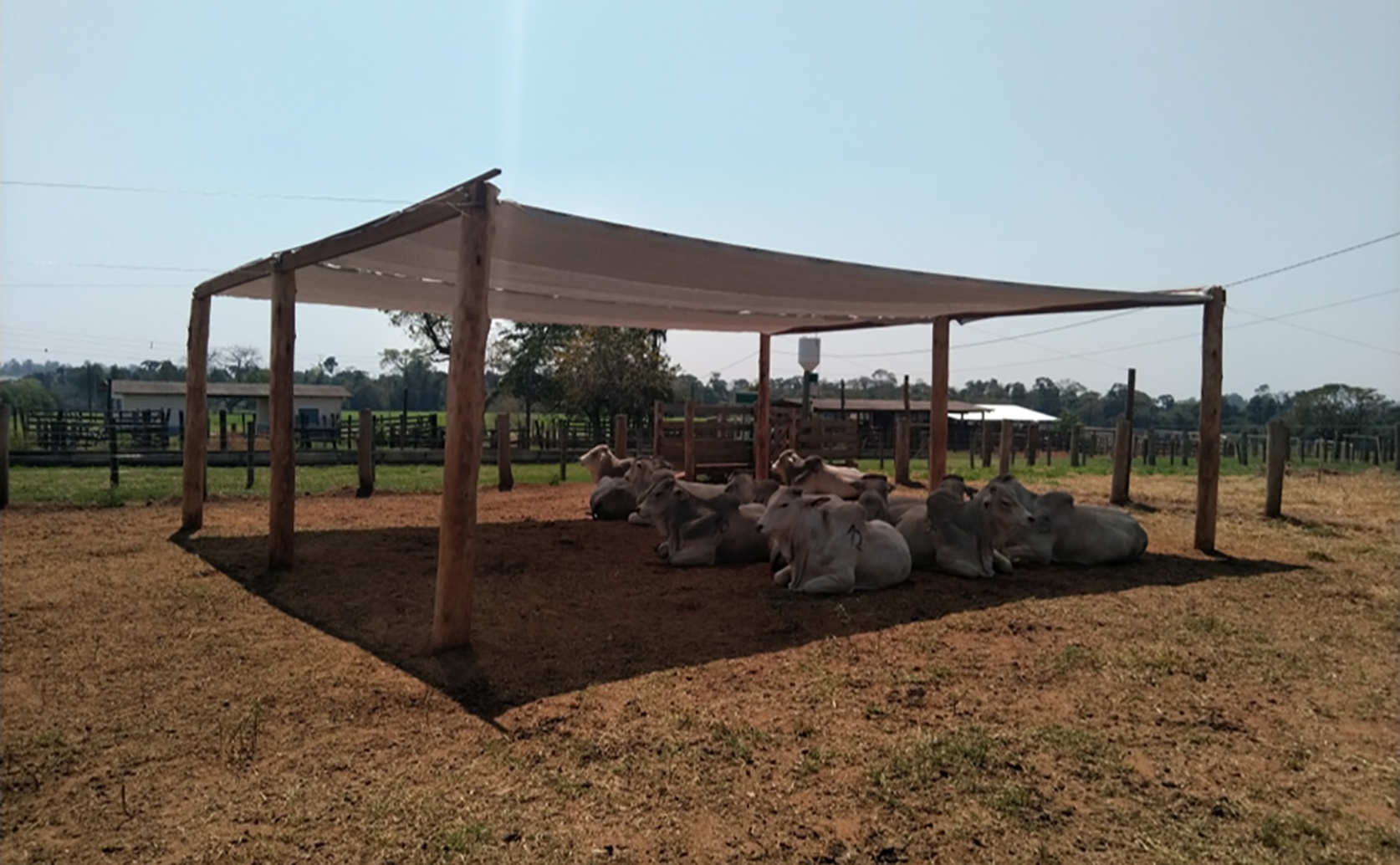
Structure used to provide shade.

Image adapted from: Rivero et al. / CC BY (Source)

Key Findings

  • In tropical Brazil, this study examined how shade affects water intake and behaviour of Nellore steers in feedlots
  • Steers without shade drank 8% more water daily, but visited the trough more often, drinking less each time, to regulate body temperature
  • Shade didn’t increase growth, but altered water resource management, reducing overall water demand per unit of body weight gain
Heat stress is a major limiting factor in beef production, particularly in tropical climates. Cattle are highly susceptible to overheating, which reduces their appetite, growth rate, and overall health. Finding effective and practical ways to mitigate heat stress is therefore crucial for maintaining both animal welfare and the economic viability of beef farming. One common strategy is providing shade, but understanding how shade impacts cattle behaviour and resource use – specifically water intake – is vital for optimising its implementation. A recent study by researchers at Embrapa Pecuaria Sudeste, Universidade de São Paulo, and Rothamsted Research[1] investigated the effects of shade on the water intake and drinking behaviour of Nellore steers, a breed common in tropical regions. The researchers monitored 47 steers, approximately 450 kg in weight, dividing them into two groups: a shaded group (+S) and a group with no shade (-S) over an 83-day period. Automated systems were used to precisely track individual water consumption, the frequency of visits to the water trough, and the amount of time spent drinking. The study revealed a surprising result: steers without shade consumed 8% more water per day (p<0.001) than those with access to shade. This initially seems counterintuitive. However, a closer look at drinking behaviour explained this difference. The unshaded steers made significantly more frequent trips to the water trough (p<0.001), but drank less water each time (p<0.001), and spent a remarkable 39% more time per day drinking (p<0.001). This suggests that the unshaded cattle were attempting to regulate their body temperature by frequently consuming smaller amounts of water throughout the day, a behaviour driven by the constant heat stress. Interestingly, despite these considerable differences in water intake and behaviour, there was no significant difference in average daily gain or overall feed intake between the two groups (p>0.05). This indicates that while shade doesn’t necessarily increase growth, it does alter how cattle manage their water resources. Environmental factors also played a key role. As expected, higher air temperatures prompted increased water intake in both groups, primarily through a rise in drinking frequency. Conversely, higher humidity levels reduced water intake, likely because cattle were already experiencing discomfort and didn't need to drink as frequently to cool down. These findings build upon earlier research demonstrating the benefits of shade structures in reducing heat stress in cattle[2][3][4]. Previous studies have shown that providing shade can improve final body weight, average daily gain, and hot carcass weight[2][3], and even enhance feed efficiency[2]. The study by[2] for example, investigated various shade structures and found that cattle housed under domes with fans (DCA) had 22 and 20 kg heavier final body weights compared to those under conventional shade, with improved profitability. The current study extends this understanding by focusing specifically on water consumption. It highlights that shade provision reduces water demand per unit of body weight gain, leading to improved water-use efficiency. This is particularly important in regions where water is a scarce resource. Furthermore, the study provides valuable insight into the behavioural responses of cattle to heat stress. The increased time spent drinking by unshaded steers suggests a greater energy expenditure and potential disruption to other essential behaviours like feeding and resting. Importantly, the research from[4] indicated that increasing shade allocation beyond a certain point (around 2.4 m²/animal) doesn’t necessarily lead to further improvements in performance. This aligns with the findings of, which suggest that the primary benefit of shade lies in optimising drinking behaviour and reducing overall water demand, rather than drastically increasing growth rates. The combination of shade and fans, as demonstrated in[2] and[4], appears to be the most effective strategy for mitigating heat stress and improving both animal performance and water-use efficiency.

AgricultureEnvironmentAnimal Science

References

Main Study

1) Shade provision and its influence on water intake and drinking behaviour of Nellore cattle in feedlot in a tropical environment

Published 12th September, 2025

https://doi.org/10.1371/journal.pone.0331238


Related Studies

2) Effects of heat stress mitigation strategies on feedlot cattle performance, environmental, and economic outcomes in a hot climate.

https://doi.org/10.1016/j.animal.2024.101257


3) The effects of shade on performance, carcass classes and behaviour of heat-stressed feedlot cattle at the finisher phase.

https://doi.org/10.1007/s11250-010-9740-x


4) The influence of shade allocation or total shade plus overhead fan on growth performance, efficiency of dietary energy utilization, and carcass characteristics of feedlot cattle under tropical ambient conditions.

https://doi.org/10.5713/ajas.19.0112


Related Articles

An unhandled error has occurred. Reload 🗙