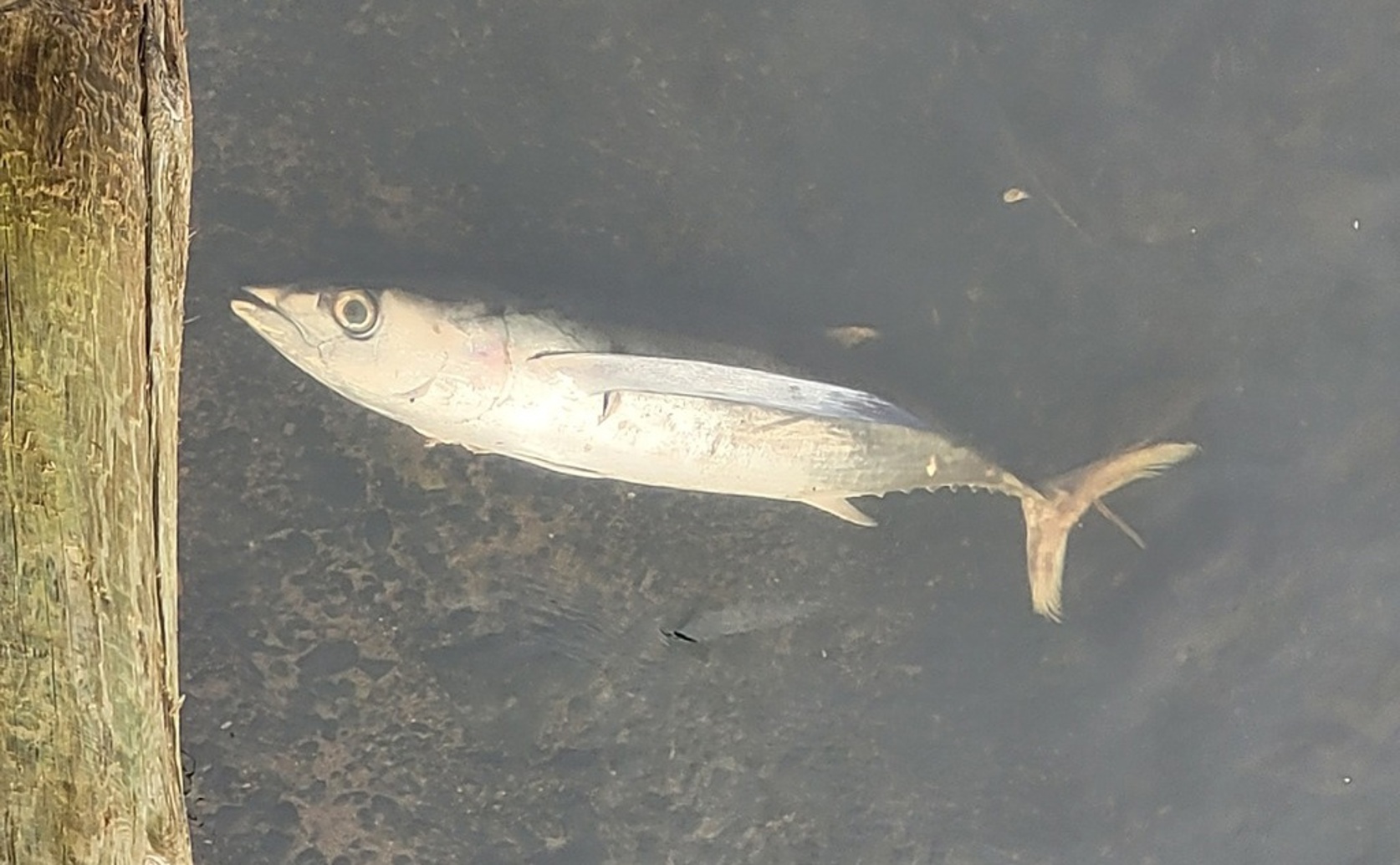
Ocean Conditions Affect Young Albacore Tuna Energy Levels

Greg Howard
13th September, 2025

Ocean Conditions Affect Young Albacore Tuna Energy Levels

Albacore (Thunnus alalunga)

Photo adapted from: Doug Miller / CC BY (Source)

Key Findings

  • Juvenile albacore tuna migrate to the California Current System (CCS) to feed before returning to spawning grounds
  • Albacore muscle energy content increases with body size and throughout the summer feeding season
  • Warmer sea surface temperatures in the CCS are linked to lower muscle energy content in albacore tuna
Juvenile albacore tuna migrate extensively across the North Pacific Ocean, relying on the California Current System (CCS) as a crucial summer feeding ground. The CCS is known for its fluctuating conditions, which can significantly impact how well these tuna forage and build up energy reserves. Recent research conducted by scientists at the University of California, Santa Cruz, the National Marine Fisheries Service, Scripps Institution of Oceanography, and Hawaii Pacific University[1] investigated the factors influencing the energy content of juvenile albacore muscle tissue, providing insights into their condition and potential vulnerability to environmental changes. Historically, understanding predator-prey relationships in open ocean systems has been a challenge. However, the development of comprehensive databases detailing the functional traits of pelagic species is aiding research[2]. This is important because knowing what prey species are available, and how they vary, is key to understanding what predators like tuna are consuming. The study by builds upon this foundation by directly examining the diet of albacore and linking it to their energy stores. The researchers analyzed stomach contents from albacore tuna collected over several years, revealing considerable variation in their diet. Some years saw a strong preference for anchovy, particularly in 2011 and 2022, while others showed increased sardine consumption, notably in 2022. This variability highlights the tuna’s adaptability, but also raises questions about the stability of their food supply. To determine what drives these energy levels, the team used a statistical modeling approach called a generalized additive model (GAM). This allowed them to assess the combined influence of several factors: the tuna’s size, the month it was sampled, its diet composition, and various environmental conditions. They measured muscle energy content using two indicators: the ratio of carbon to nitrogen (C:N) and ash-free dry weight (AFDW). While these two measures were correlated, the GAM revealed that sea surface temperature was the most important factor influencing muscle energy content. Specifically, albacore C:N levels increased with body size and during the earlier months of the year, coinciding with periods of higher upwelling – a process that brings nutrient-rich water to the surface. Conversely, C:N levels decreased as sea surface temperature rose. Interestingly, the energy density of the prey itself, or the overall chlorophyll-a concentration (an indicator of phytoplankton abundance), didn’t strongly predict muscle energy content. This suggests albacore tuna are somewhat resilient to fluctuations in prey composition and overall productivity. These findings are particularly relevant in the context of ongoing climate change. The California Current is experiencing more frequent and intense marine heat waves, leading to warmer sea surface temperatures. The research indicates that these warmer temperatures may negatively affect albacore body condition or reduce the overall value of the CCS as a foraging habitat. This study also connects with broader research on Pacific predators and their migratory patterns[3]. Tagging studies have revealed that the California Current is a critical area for many marine vertebrates, with predators often following seasonal migrations linked to prey distribution. Understanding the energy dynamics of key species like albacore is crucial for managing these large marine ecosystems effectively. Furthermore, the study’s findings contrast with some earlier observations regarding Chinook salmon foraging behavior[4]. While previous research suggested juvenile Chinook salmon reduce food intake during warm ocean regimes, this study demonstrates that albacore do not necessarily decrease foraging, but rather experience changes in energy content linked to environmental factors. This difference could be related to the differing physiological requirements and foraging strategies of the two species. The analysis of swordfish diets[5] also provides a useful comparison point. The variability in swordfish diet, influenced by factors like prey availability and body size, mirrors the interannual fluctuations observed in albacore. Both studies emphasize the importance of considering environmental factors when assessing the foraging ecology of top predators.

EcologyOceanographyMarine Biology

References

Main Study

1) Ocean conditions drive interannual variability in juvenile albacore tuna (Thunnus alalunga) muscle energy content in the California Current System

Published 11th September, 2025

https://doi.org/10.1371/journal.pone.0331436


Related Studies

2) The Pelagic Species Trait Database, an open data resource to support trait-based ocean research.

https://doi.org/10.1038/s41597-023-02689-9


3) Tracking apex marine predator movements in a dynamic ocean.

https://doi.org/10.1038/nature10082


4) Warming Ocean Conditions Relate to Increased Trophic Requirements of Threatened and Endangered Salmon.

https://doi.org/10.1371/journal.pone.0144066


5) Feeding ecology of broadbill swordfish (Xiphias gladius) in the California current.

https://doi.org/10.1371/journal.pone.0258011


Related Articles

An unhandled error has occurred. Reload 🗙