Salt Tolerance Helps Inform Spread of Invasive Species in Coastal Areas

Jenn Hoskins
28th April, 2025

Salt Tolerance Helps Inform Spread of Invasive Species in Coastal Areas

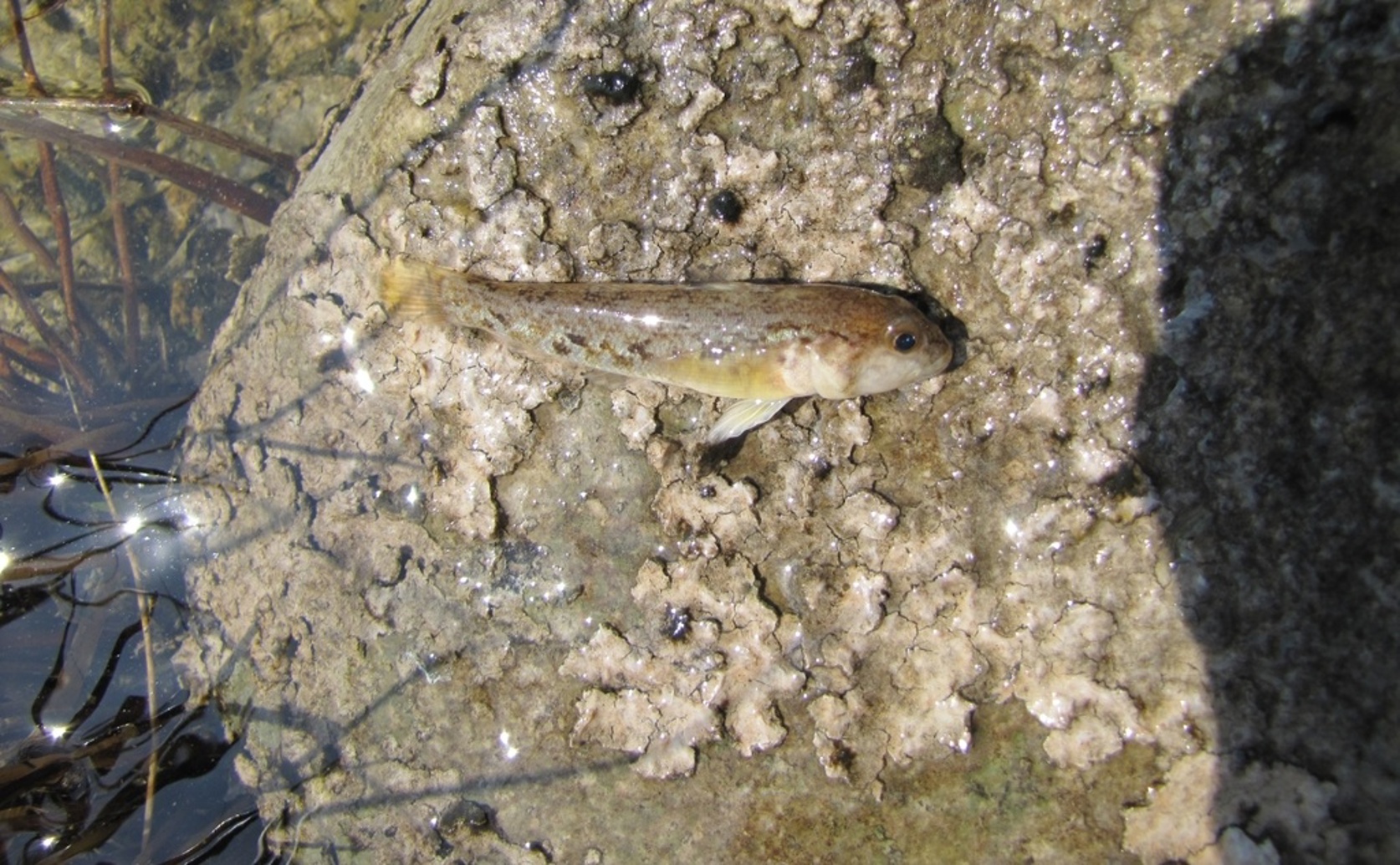
Round Goby (Neogobius melanostomus)

Photo adapted from: Steven Joyner / CC BY (Source)

Key Findings

  • In New York's Hudson River Estuary, round gobies can survive in saltier waters during colder months
  • Warmer temperatures reduce their ability to tolerate higher salinity, limiting their spread in summer
  • Long-term exposure to higher salinity levels negatively affects their growth and health, hindering establishment
The spread of invasive species poses significant challenges to ecosystems and local economies. One such invasive species, the round goby (Neogobius melanostomus), has been expanding its range in North America since its introduction to the Laurentian Great Lakes in the 1990s. A recent study conducted by researchers at Cornell University[1] investigates the potential for round goby to invade saline environments, specifically examining their tolerance to varying salinity and temperature conditions. Understanding these factors is crucial for predicting and managing the future spread of this species. Round gobies have already reached the Hudson River Estuary in New York by 2021, raising concerns about their ability to colonize additional coastal waters. The Cornell University study aimed to determine how changes in salinity and temperature affect the survival and expansion potential of adult round gobies. The research is particularly important because salinity levels can act as natural barriers to the spread of invasive species, and temperature fluctuations in temperate aquatic ecosystems add another layer of complexity to their distribution. In their experiments, the researchers exposed adult round gobies to increasing salinity levels while maintaining them at three different temperatures: 5°C (winter conditions), 20°C (preferred temperature), and 26°C (summer conditions). Salinity was gradually increased by 3 parts per thousand (ppt) each week, reaching a maximum of 33ppt. The gobies were monitored for signs of stress, such as changes in behavior and coloration, as well as mortality rates. The findings revealed significant differences in salinity tolerance based on temperature. At the lowest temperature of 5°C, 87% of the gobies survived at 30ppt, whereas only 7% survived at the highest temperature of 26°C. This suggests that round gobies are more likely to expand into higher salinity areas during colder months when their tolerance is higher. Additionally, the study explored the long-term effects of salinity on the health and growth of round gobies by maintaining them at sustained salinities of up to 21ppt for ten weeks at 20°C. The results showed that growth rates and liver size, which are indicators of overall health and energy reserves, were significantly lower at 21ppt compared to lower salinities. This indicates that prolonged exposure to higher salinity levels could limit the establishment and spread of round gobies in these environments. These findings build on previous research that highlights the importance of physiological and genetic factors in determining species distribution. For instance, a study on round gobies in Scandinavia’s largest cargo port[2] found genetic and phenotypic differences across a steep salinity gradient. Fish from high-salinity areas exhibited higher genetic diversity and better physiological performance in salty conditions, suggesting that multiple introductions and natural selection contribute to their adaptability. The Cornell study complements these findings by demonstrating how temperature interacts with salinity to influence survival rates, providing a more nuanced understanding of the factors driving the spread of round gobies. Moreover, the integration of physiological data into species distribution models, as discussed in an earlier study[3], enhances the reliability of predictions regarding invasive species under changing climate conditions. Traditional models often rely solely on statistical correlations between environmental variables and species presence, potentially overlooking critical biological interactions and physical limitations. By incorporating experimental data on salinity and temperature tolerance, the Cornell study exemplifies the approach suggested in[3], leading to more accurate and actionable projections. The implications of this research are significant for managing the spread of round gobies. The ability of these fish to survive and thrive in brackish waters of the Hudson River Estuary year-round, especially in colder months, means that regions such as the Harlem River and parts of Long Island Sound could become vulnerable to invasion. Understanding the seasonal patterns of tolerance can help in developing targeted management strategies, such as monitoring during specific times of the year when round gobies are more likely to expand. Furthermore, the study underscores the importance of considering both genetic diversity and environmental factors in managing invasive species. The genetic diversity observed in high-salinity populations, as reported in[2], suggests that these populations may have a higher capacity for adaptation and resilience. Combining genetic insights with physiological data provides a comprehensive framework for predicting invasion patterns and implementing effective control measures. In conclusion, the Cornell University study advances our understanding of how environmental factors like salinity and temperature influence the spread of invasive round gobies. By integrating experimental approaches with existing knowledge on genetic and phenotypic variation, the research provides valuable insights for predicting and managing the future distribution of this species in North American coastal waters. This approach aligns with the recommendations of prior studies to enhance species distribution models, ultimately contributing to more effective conservation and management efforts.

EcologyOceanographyMarine Biology

References

Main Study

1) Salinity tolerance of Round Goby: Informing invasion potential in North American coastal watersheds

Published 25th April, 2025

https://doi.org/10.1371/journal.pone.0316327


Related Studies

2) Invader at the edge - Genomic origins and physiological differences of round gobies across a steep urban salinity gradient.

https://doi.org/10.1111/eva.13437


3) Integrating experimental and distribution data to predict future species patterns.

https://doi.org/10.1038/s41598-018-38416-3


Related Articles

An unhandled error has occurred. Reload 🗙