New Compounds Fight Skin Infections With Both Antifungal And Antibacterial Power

Jim Crocker
8th September, 2025

New Compounds Fight Skin Infections With Both Antifungal And Antibacterial Power

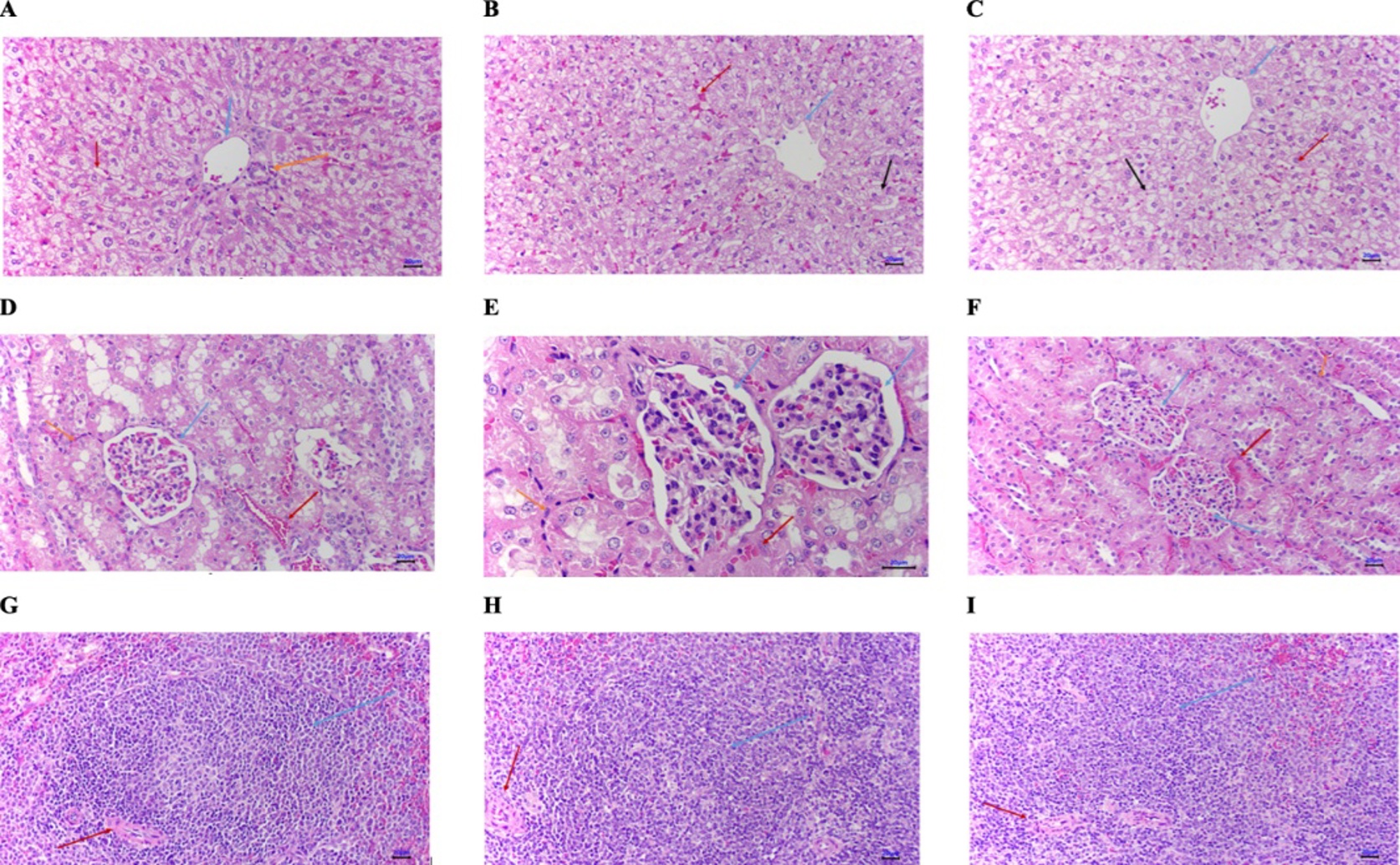
Histopathological examination of liver (a–c), kidney (d–f), and spleen (g–i) tissues from rabbits showed that application of IND-4,11K peptide cream caused no morphological alterations or signs of toxicity compared to the control group, confirming the subchronic safety of the formulation.

Image adapted from: Van et al. / CC BY (Source)

Key Findings

  • Researchers developed a modified Indolicidin peptide, named IND-4,11K, to improve its effectiveness against skin infections in rabbits
  • IND-4,11K demonstrated potent antibacterial and antifungal activity in laboratory tests against common skin infection microbes
  • A 1% cream formulation of IND-4,11K effectively reduced bacterial and fungal loads and promoted wound healing in infected rabbits, with no observed toxicity
The increasing resistance of bacteria and fungi to existing antibiotics poses a significant threat to public health, with infections – particularly those affecting the skin and soft tissues – becoming harder to treat. The World Health Organization (WHO) has identified antibiotic-resistant pathogens, like Staphylococcus aureus and Pseudomonas aeruginosa, as critical concerns. Alongside bacterial resistance, fungal infections, especially those caused by Candida albicans, are also becoming more common and difficult to manage. This creates an urgent need for new types of infection-fighting drugs. Antimicrobial peptides (AMPs) are naturally occurring molecules that offer a promising alternative to traditional antibiotics. They work by directly killing microbes and also by boosting the body’s immune system. Researchers at Vietnam Military Medical University, PHENIKAA University, Vinmec Times City International Hospital, and Qassim University[1] have been investigating these peptides as potential new treatments. Their recent work focuses on a peptide called Indolicidin, known for its ability to kill both bacteria and fungi. The study aimed to improve Indolicidin’s effectiveness and stability by creating a modified version, named IND-4,11K. This new peptide was tested in the laboratory against a range of microbes – both Gram-positive and Gram-negative bacteria, as well as Candida albicans. Gram-positive and Gram-negative refer to different structural characteristics of bacterial cell walls, which affect how easily antibiotics can penetrate them. The researchers then formulated IND-4,11K into a cream (0-2%) and tested it on rabbits to evaluate its performance in a living organism. A key advantage of AMPs, as highlighted in earlier research[2], is their ability to combat infections through multiple mechanisms. Some peptides, like cationic host defence peptides (CHDPs), directly kill microbes, while others enhance the immune response. The study builds on this understanding by seeking to optimize a single peptide for broad-spectrum activity. Interestingly, some AMPs target the bacterial membrane, while others, like buforin II, penetrate the cell and disrupt its internal processes by binding to DNA and RNA[3]. This is important because targeting multiple sites within the bacterial cell makes it more difficult for bacteria to develop resistance. Research on NK-18, a peptide derived from NK-Lysin, demonstrated that targeting both the membrane and DNA can be a successful strategy to overcome antibiotic resistance[4]. The research team found that IND-4,11K exhibited potent antimicrobial activity against all tested microbes in vitro. Furthermore, when applied as a cream to rabbits, it showed promising results in treating skin infections. This suggests that modified Indolicidin derivatives could be valuable dual-action agents for tackling resistant skin infections. Another relevant finding from previous studies[5] is that some AMPs, like Lactoferricin B like peptide (LBLP), don’t necessarily kill bacteria by directly destroying their membranes. Instead, they trigger a process called apoptosis – a form of programmed cell death – by generating reactive oxygen species (ROS). While IND-4,11K’s exact mechanism of action wasn’t fully explored in this study, the potential for similar metabolic disruption warrants further investigation. The work conducted by the researchers at Vietnam Military Medical University and collaborating institutions represents a significant step forward in the development of new antimicrobial therapies. The promising results obtained with IND-4,11K justify further preclinical studies to fully evaluate its safety and efficacy before it can be considered for clinical use in humans.

MedicineBiochemMycology

References

Main Study

1) Indolicidin derivatives as potent dual-action antifungal and antibacterial agents for the treatment of skin infections: A comprehensive study from in vitro to in vivo evaluation

Published 5th September, 2025

https://doi.org/10.1371/journal.pone.0331796


Related Studies

2) Antimicrobial host defence peptides: functions and clinical potential.

https://doi.org/10.1038/s41573-019-0058-8


3) Mechanism of action of the antimicrobial peptide buforin II: buforin II kills microorganisms by penetrating the cell membrane and inhibiting cellular functions.

Journal: Biochemical and biophysical research communications, Issue: Vol 244, Issue 1, Mar 1998


4) Two hits are better than one: membrane-active and DNA binding-related double-action mechanism of NK-18, a novel antimicrobial peptide derived from mammalian NK-lysin.

https://doi.org/10.1128/AAC.01619-12


5) Antibacterial action of lactoferricin B like peptide against Escherichia coli: reactive oxygen species-induced apoptosis-like death.

https://doi.org/10.1111/jam.14632


Related Articles

An unhandled error has occurred. Reload 🗙