Extend Goldenrod Flower Life Using Natural Oils

Jenn Hoskins
18th August, 2025

Extend Goldenrod Flower Life Using Natural Oils

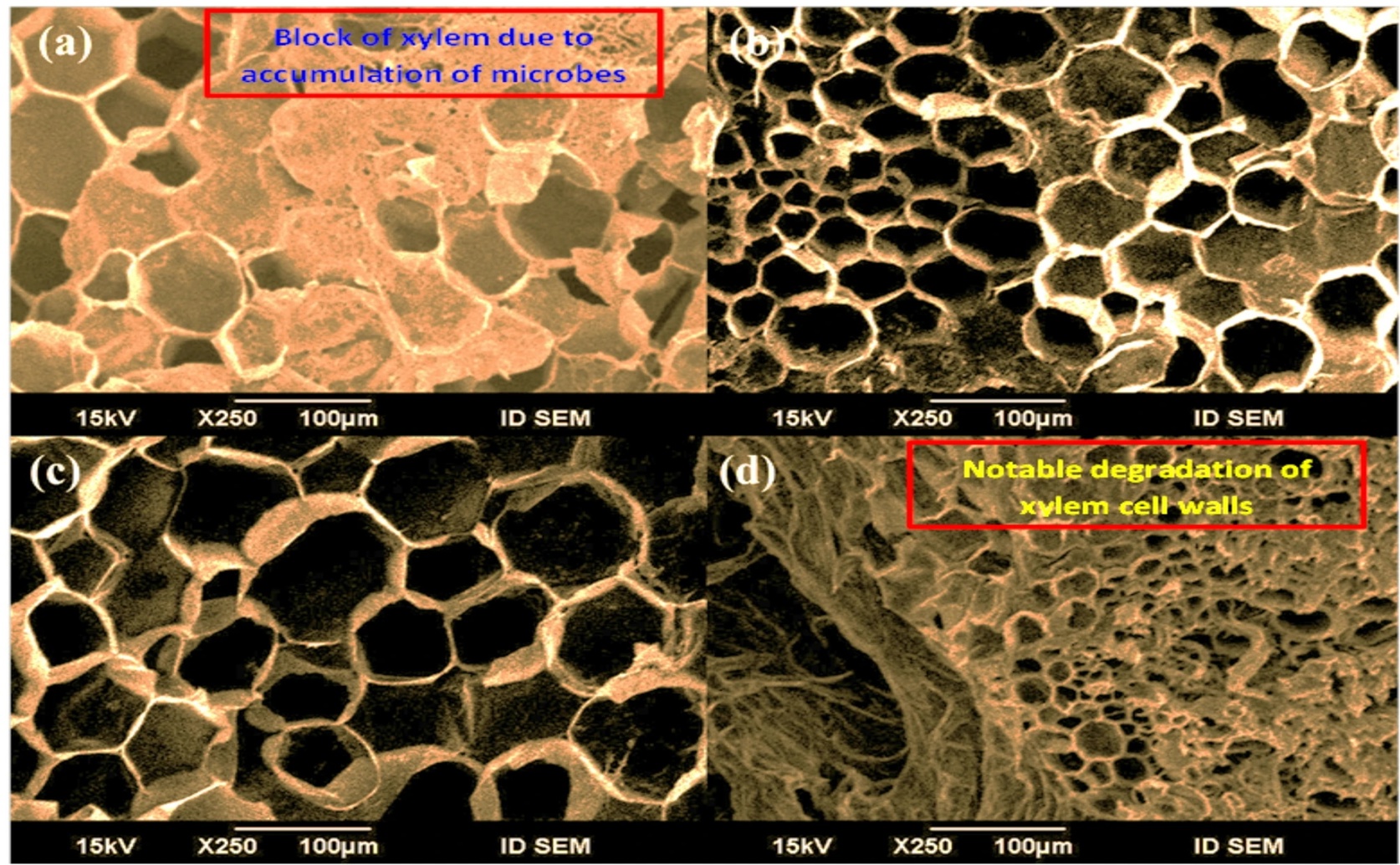
Scanning electron microscopy confirms that treating Solidago canadensis stems with essential oils (b–d) maintains xylem vessel clarity by preventing the severe bacterial obstruction and tissue degradation observed in the untreated control (a).

Image adapted from: El-Sayed et al. / CC BY (Source)

Key Findings

  • Research in Egypt found that natural essential oils, especially neem, significantly extend the freshness and vase life of Solidago cut flowers
  • Neem oil at 400 mg/L was most effective, improving water uptake, reducing harmful microbes, and keeping internal water channels clear
  • These oils also boost flower health by increasing beneficial plant compounds and reducing cellular damage, offering an eco-friendly alternative to chemicals
Maintaining the freshness and appeal of cut flowers after they are harvested is a significant challenge for the floriculture industry. Once flowers are cut, they are prone to rapid deterioration, largely due to the quick contamination of their holding solutions by microbes. These microorganisms can block the delicate internal water transport systems of the flowers, leading to wilting and a shortened vase life. Traditionally, chemical preservatives have been used to combat this issue, but there is a growing interest in finding more environmentally friendly and safer alternatives. Addressing this problem, recent research conducted by the National Research Centre (NRC)[1] investigated the effectiveness of natural essential oils as eco-friendly preservatives for Solidago canadensis cut flowers. The study explored the impact of eucalyptus, neem, and rosemary essential oils, each at concentrations of 200 and 400 milligrams per liter (mg L–1), on various aspects of flower quality, including their biological, physiological, and anatomical characteristics, and ultimately, their vase life. The findings demonstrated that all tested essential oils, at both concentrations, had a notable effect on extending how long the cut flowers remained fresh. Specifically, the longest vase life for Solidago was achieved when the flowers were placed in a preservative solution containing 400 mg L–1 of neem essential oil. This particular treatment significantly improved the flowers' ability to take up water from the vase and maintain their relative fresh weight, which is a measure of how well they retain water compared to their initial weight. Concurrently, it reduced both the total water lost by the flowers and the count of microbes in the holding solution. The study further revealed that the neem essential oil at 400 mg L–1 also led to higher levels of vital plant compounds in the flower spikes, such as chlorophyll, total phenols, flavonoids, and carotenoids. Chlorophyll is the green pigment essential for photosynthesis, while carotenoids contribute to yellow and orange hues. Phenols and flavonoids are compounds often associated with plant defense and antioxidant properties. Furthermore, the application of all natural oils resulted in decreased levels of malondialdehyde (MDA) and hydrogen peroxide (H2O2). These are common indicators of cellular damage and oxidative stress in plants, so their reduction suggests improved cellular health. From an anatomical perspective, the cut flowers treated with essential oils showed significantly clearer xylem vessels. Xylem vessels are the tiny tubes within the plant stem responsible for transporting water and nutrients from the solution up to the flower. When these vessels become clogged, often by microbial growth, water uptake is impeded, leading to wilting. The study observed considerably fewer bacteria within these vessels in treated flowers compared to untreated ones, indicating that the essential oils effectively prevented microbial plugging. This reduction in bacterial activity was also reflected in the overall microbial count in the holding solutions. Generally, the higher concentration of essential oils yielded better results than the lower concentration. These findings from the NRC study align with and expand upon previous research into natural preservatives for cut flowers. For instance, earlier work on Chrysanthemum 'Arctic Queen White' cut flowers found that thyme oil (500 mg/l) and clove oil (250 mg/l) significantly extended vase life, improved water uptake, and drastically reduced bacterial growth to less than 1 Colony Forming Unit per milliliter (C.F.U/ml)[2]. That study also noted that these treatments maintained the prime state of the xylem vessels, much like the current findings with Solidago. Similarly, research on Dendrobium orchids demonstrated that peppermint essential oil, combined with glucose, could prolong vase life up to 28 days[3]. This was attributed to a reduction in microbial plugging in the xylem vessels, as observed through scanning electron microscopy, and a significant decrease in microbial cell counts in the holding solution, dropping to less than 1 log CFU mL-1 compared to controls which had over 7 log CFU mL-1[3]. These consistent results across different flower types and various essential oils reinforce the potential of natural phyto-oils as a broad solution for the floriculture industry. The current study on Solidago further solidifies this evidence, highlighting neem oil at 400 mg L–1 as a particularly promising option. The collective evidence suggests that natural essential oils offer a clear, viable, and eco-friendly method to extend the vase life of cut flowers. By preventing microbial contamination and maintaining the plant's physiological health, these natural alternatives can replace synthetic chemicals, leading to significant economic and environmental benefits for flower growers and consumers alike.

HerbsAgriculturePlant Science

References

Main Study

1) Ameliorating quality and vase life of Solidago canadensis flowers via supplementation of eucalyptus, neem and rosemary as phyto-preserver oils

Published 14th August, 2025

Journal: BMC Plant Biology

Issue: Vol 25, Issue 1, 8 2025


Related Studies

2) Utilization of environmentally friendly essential oils on enhancing the postharvest characteristics of Chrysanthemum morifolium Ramat cut flowers.

https://doi.org/10.1016/j.heliyon.2021.e05909


3) Peppermint essential oil enhances the vase life of Dendrobium orchids.

https://doi.org/10.1016/j.heliyon.2024.e31636


Related Articles

An unhandled error has occurred. Reload 🗙