Water's Hidden Contents and Its Quality

Jenn Hoskins
8th August, 2025

Water's Hidden Contents and Its Quality

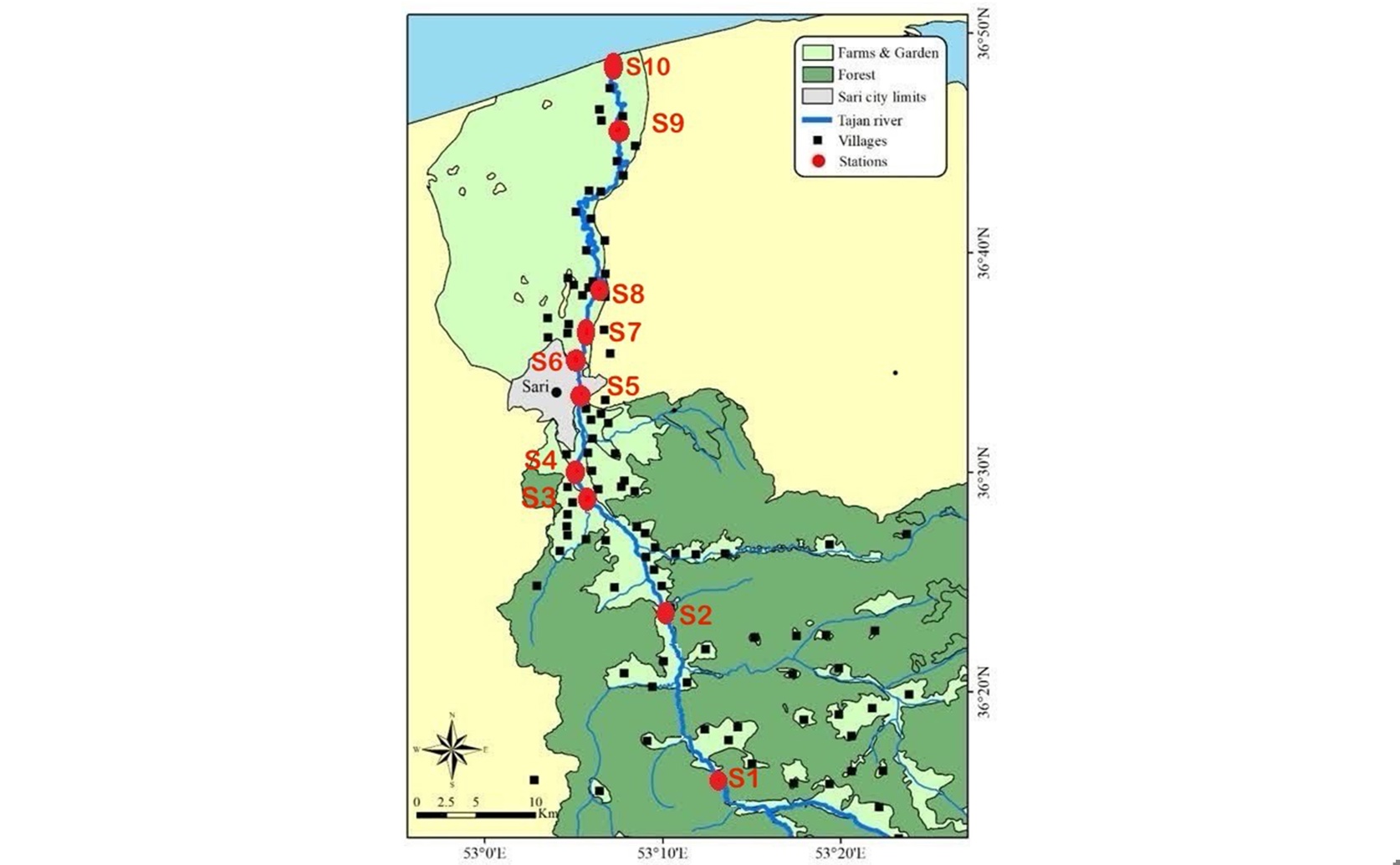
Location of sampling points along Tajan River.

Image adapted from: Zazouli et al. / CC BY (Source)

Key Findings

  • A study in Iran's Tajan River found significant seasonal changes in water quality and identified Station 7 as a pollution hotspot due to wastewater discharge
  • Using advanced "chemical fingerprinting," researchers identified seven types of dissolved organic matter, with one (C1) strongly indicating nutrient pollution and organic contamination
  • This "fingerprinting" method is a valuable new tool for monitoring river health, helping to pinpoint pollution sources and guide cleanup efforts
Rivers are vital arteries of our planet, constantly moving water, nutrients, and various substances across landscapes. Among these substances is dissolved organic matter (DOM), a complex mixture of carbon-based compounds that plays a critical role in the health of aquatic ecosystems. DOM influences how nutrients cycle through the water, how pollutants are transported, and even the types of microbial communities that thrive. Understanding the diversity of DOM and its impact on water quality is therefore essential for managing and protecting these crucial environments. A recent study conducted by researchers at Mazandaran University of Medical Sciences[1] delved into the characteristics of dissolved organic carbon (DOC), a key component of DOM, and its effects on water quality within the Tajan River watershed. This river, located in Iran, has previously been identified as experiencing declining ecological health, with earlier research indicating that biological indicators like fish and aquatic insects more effectively reveal the impact of human activities, such as industrial pollution and sand mining, than traditional chemical tests alone[2]. The current research builds upon this understanding by providing a more detailed chemical perspective on the water quality challenges in the Tajan River. The study involved collecting water samples from ten different locations along the Tajan River over a year, from March 2023 to February 2024. At each sampling station, scientists measured a range of water quality indicators, including temperature, dissolved oxygen (DO), which is crucial for aquatic life, and turbidity, a measure of water cloudiness. They also assessed electrical conductivity (EC), indicating dissolved salts; chemical oxygen demand (COD), which reflects the amount of oxygen needed to break down organic pollutants; and the concentrations of DOC, total phosphorus (TP), and total nitrogen (TN), both essential nutrients that can become pollutants in excess. Chlorophyll-a, a pigment found in algae, was also measured to gauge algal growth. A key technique employed in this research was fluorescence spectroscopy, specifically Excitation Emission Matrix Parallel Factor Analysis (EEM-PARAFAC). This method is akin to chemical fingerprinting: when certain organic molecules are exposed to light, they absorb energy and then re-emit it as a unique 'glow' or fluorescence pattern. EEM-PARAFAC analyzes these distinct patterns to identify and quantify different types of DOM components present in the water. This approach has proven valuable in other river systems; for instance, a study on the Haihe and Duliujian Rivers in northern China also used EEM-PARAFAC to characterize DOM and link its composition to human activities like agricultural runoff and industrial wastewater discharge[3]. That research found that terrestrial humic-like substances, often from decaying plant matter, increased during summer due to runoff, while protein-like substances, indicative of sewage, were also prevalent[3]. The findings from the Tajan River study revealed significant seasonal variations in water quality. For example, electrical conductivity, temperature, turbidity, total phosphorus, and specific ultraviolet absorbance (SUVA), an indicator of humic substances, were generally lower during winter. Conversely, chemical oxygen demand and dissolved organic carbon concentrations were lowest in spring, while total nitrogen and chlorophyll-a peaked during the same season. The study also identified Station 7 as a hotspot, consistently showing elevated levels of electrical conductivity, temperature, dissolved organic carbon, chemical oxygen demand, and total phosphorus compared to other sites. This suggests a localized source of pollution or a cumulative impact from upstream activities. Using the EEM-PARAFAC technique, the researchers identified seven distinct fluorescent components of DOM within the Tajan River. One of these, Component 1 (C1), was identified as visible humic substances. Humic substances are a major component of DOM, derived from the breakdown of plant and animal matter, and often give water a brownish tint. The study found strong positive relationships between C1 and several water quality parameters, including temperature, chlorophyll-a, total nitrogen, total phosphorus, UV254 (another indicator of organic matter), and chemical oxygen demand. This suggests that the presence of these humic substances is closely tied to nutrient enrichment and organic pollution in the river. The ability of the EEM-PARAFAC method to effectively link specific fluorescent components of DOM to water quality parameters highlights its potential for ongoing surface water quality monitoring. This is particularly relevant given that the composition of DOM can offer insights into the health of the entire aquatic ecosystem. For example, studies on river sediments, such as those in Beijing's Beiyun River, have shown that the presence of certain DOM components, like protein-like substances, can indicate a higher risk of nutrient release from sediments, which can further degrade water quality and contribute to issues like harmful algal blooms[4]. The current research on the Tajan River, by identifying specific DOM components and their correlations with pollutants, provides a more refined tool for understanding the chemical underpinnings of water quality degradation, complementing earlier findings on the river's ecological health[2] and expanding on the utility of EEM-PARAFAC demonstrated in other anthropogenically impacted rivers[3]. This detailed understanding of DOM dynamics is crucial for developing targeted pollution control strategies and ensuring the long-term health of river ecosystems.

EnvironmentBiochemEcology

References

Main Study

1) Exploring dissolved organic matter diversity and water quality in the Tajan River using PARAFAC techniques

Published 5th August, 2025

https://doi.org/10.1371/journal.pone.0324097


Related Studies

2) Monitoring and assessment of water health quality in the Tajan River, Iran using physicochemical, fish and macroinvertebrates indices.

https://doi.org/10.1186/s40201-015-0186-y


3) Characteristics of Dissolved Organic Matter Impacted by Different Land Use in Haihe River Watershed, China.

https://doi.org/10.3390/ijerph20032432


4) The molecular characteristics of dissolved organic matter in urbanized river sediments and their environmental impact under the action of microorganisms.

https://doi.org/10.1016/j.scitotenv.2022.154289


Related Articles

An unhandled error has occurred. Reload 🗙