Finding Seabuckthorn's Mixed Past Using Its Genes

Jim Crocker
9th July, 2025

Finding Seabuckthorn's Mixed Past Using Its Genes

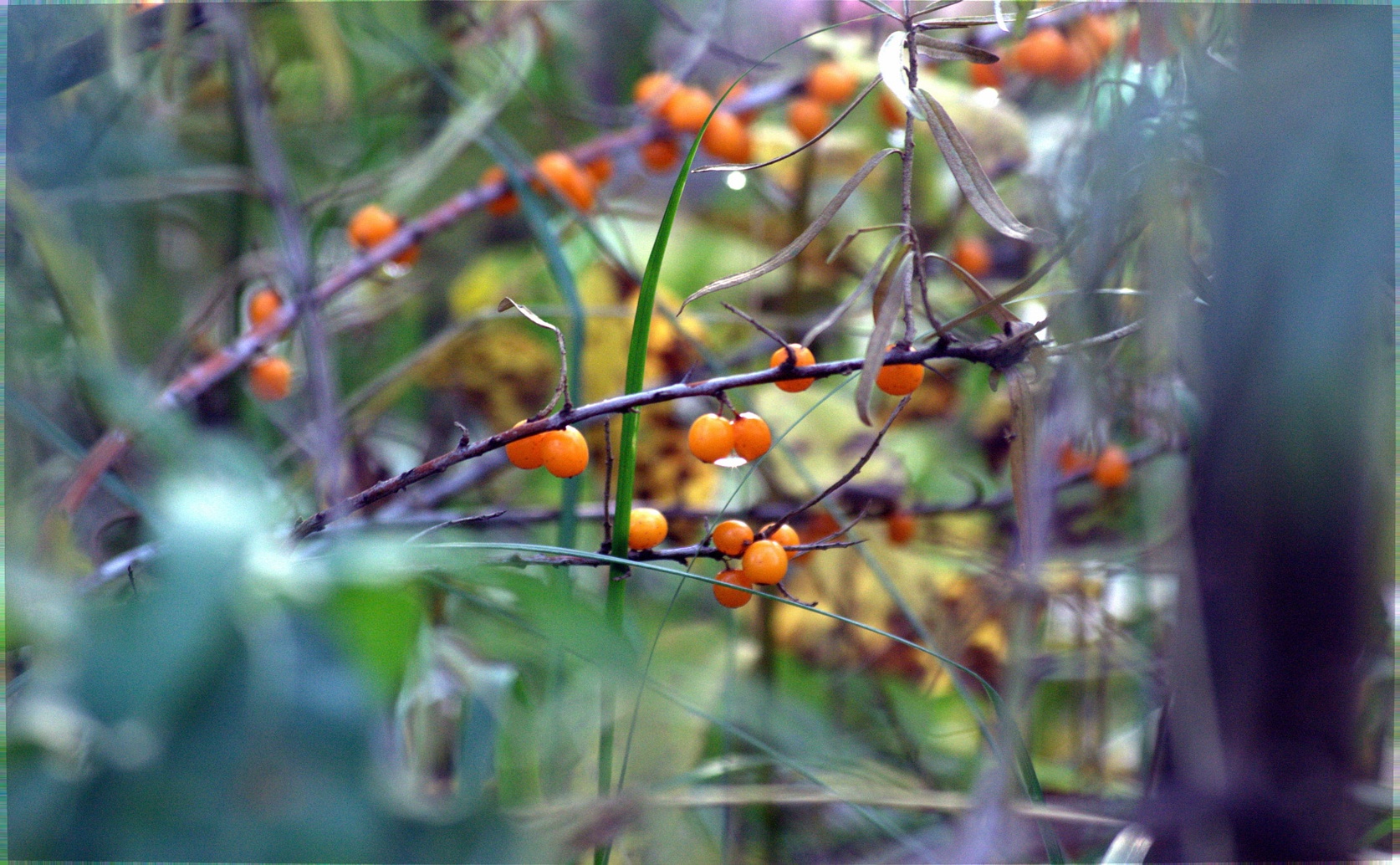
Sea buckthorn (Hippophae)

Photo adapted from: Aleksandr Kuznetsov / CC BY (Source)

Key Findings

  • A study by Northwest Normal University confirmed that Hippophae goniocarpa, previously considered a distinct sea buckthorn species, is actually a first-generation hybrid
  • The research also constructed the first comprehensive evolutionary tree for the entire sea buckthorn genus, clarifying how its various species are related
  • They identified challenges in using RNA data for genetic analysis, noting that low gene expression can lead to misclassifying genetic variations
Sea buckthorn, a hardy shrub found across Asia and Europe, is known for its nutritional berries and its ability to thrive in harsh environments. Scientists have long observed natural hybridization events within this genus, Hippophae, where different species interbreed. While the parent species involved in these crosses have been identified, a significant challenge has been distinguishing first-generation (F1) hybrids from later-generation (Fn) hybrids. F1 hybrids are the direct offspring of two distinct parent species, while Fn hybrids result from further breeding between F1 hybrids or backcrossing with parent species, leading to more complex genetic mixtures. Understanding these distinctions is crucial for accurately mapping the evolutionary history and relationships within the genus, and for clarifying the taxonomic status of certain populations or proposed species. A recent study by researchers at Northwest Normal University[1] tackled this problem by delving into the genetic makeup of these plants. The study aimed to resolve the complexities of sea buckthorn hybridization by precisely identifying different hybrid generations and clarifying the genetic composition of these populations. A key focus was to determine if Hippophae goniocarpa, previously considered a distinct species, might actually be an F1 hybrid. The researchers utilized advanced genetic sequencing techniques, specifically transcriptomic data, which involves sequencing all the RNA molecules present in a cell or tissue. This provides a snapshot of the genes that are actively being expressed. Alongside this, they used existing reference genomes, which are complete genetic blueprints of an organism, to provide a framework for their analysis. To identify the different hybrid generations and understand their genetic makeup, the study focused on detecting single-nucleotide polymorphisms (SNPs) and insertions/deletions (indels). SNPs are variations at a single DNA building block (nucleotide) that occur at a specific position in the genome, while indels are small additions or removals of DNA segments. By comparing these markers across individuals and with reference genomes, the researchers could trace genetic contributions from different parental lineages. This approach allowed them to confirm eight individuals, including H. goniocarpa and four members of a hybrid group from Qinghai, China, as F1 hybrids. This finding strongly supports the hypothesis that H. goniocarpa is not a separate species, but rather a first-generation hybrid within the Hippophae genus. The use of transcriptomic data for genetic analysis, particularly for identifying SNPs, has become increasingly common in plant phylogenetic studies, ushering in a new era of understanding plant evolution[2]. This method is particularly valuable when whole-genome sequencing is costly or impractical. For instance, in livestock species, RNA-seq data has been successfully used to detect SNPs in expressed regions, providing a cost-effective way to characterize genetic variants and study gene regulation[3]. Similarly, in trees like oaks, transcriptomic data has been instrumental in identifying millions of SNPs, providing a solid foundation for studying natural selection and speciation[4]. However, the study also openly discussed specific limitations when calling SNPs from transcriptomic data. One challenge is "allele-specific expression" (ASE), where one copy of a gene (an allele) is expressed much more strongly than the other. This can lead to an inaccurate assessment of the genetic makeup, potentially causing a site that is truly heterozygous (having two different alleles) to be misclassified as homozygous (having two identical alleles) if the weakly expressed allele is not sufficiently detected. Another limitation is "low transcript abundance," meaning some genes are expressed at very low levels, leading to insufficient sequencing reads to reliably detect SNPs. These challenges are not unique to sea buckthorn; studies on single-cell RNA sequencing, for example, have also highlighted how low read depths can dramatically decrease the sensitivity of SNP detection[5]. The researchers acknowledged these factors, which can influence the accuracy of SNP identification and genotype calling from RNA-seq data, as also noted in broader applications of RNA-seq for SNP detection[3]. Beyond identifying hybrids, the Northwest Normal University team constructed the first "phylogenomic tree" for the Hippophae genus using this extensive transcriptomic data. A phylogenomic tree is a diagram that illustrates the evolutionary relationships among a group of organisms, built using large amounts of genomic data. This is a significant step in plant phylogenetics, as it provides a comprehensive map of how different sea buckthorn species are related. They further performed a comparative analysis of interspecific relationships based on both SNP and indel markers derived from the same dataset. This comprehensive approach, leveraging the power of genomic data, allows for a more nuanced understanding of evolutionary pathways, especially in groups where complexities like hybridization and incomplete lineage sorting can make a simple bifurcating (branching) tree model insufficient[2]. By integrating these advanced genomic techniques and acknowledging their inherent challenges, the study provides a clearer picture of the genetic diversity and evolutionary history of sea buckthorn.

GeneticsPlant ScienceEvolution

References

Main Study

1) Reidentification of hybridization events with transcriptomic data and phylogenomic study in Seabuckthorn

Published 6th July, 2025

https://doi.org/10.1038/s41598-025-09923-x


Related Studies

2) Phylogenomics and the flowering plant tree of life.

https://doi.org/10.1111/jipb.13415


3) RNA-Seq Data for Reliable SNP Detection and Genotype Calling: Interest for Coding Variant Characterization and Cis-Regulation Analysis by Allele-Specific Expression in Livestock Species.

https://doi.org/10.3389/fgene.2021.655707


4) Evolutionary insights from de novo transcriptome assembly and SNP discovery in California white oaks.

https://doi.org/10.1186/s12864-015-1761-4


5) Systematic comparative analysis of single-nucleotide variant detection methods from single-cell RNA sequencing data.

https://doi.org/10.1186/s13059-019-1863-4


Related Articles

An unhandled error has occurred. Reload 🗙