
Genetic Differences and History of a Rare Plant from a High-Altitude Plateau
Greg Howard
8th February, 2025


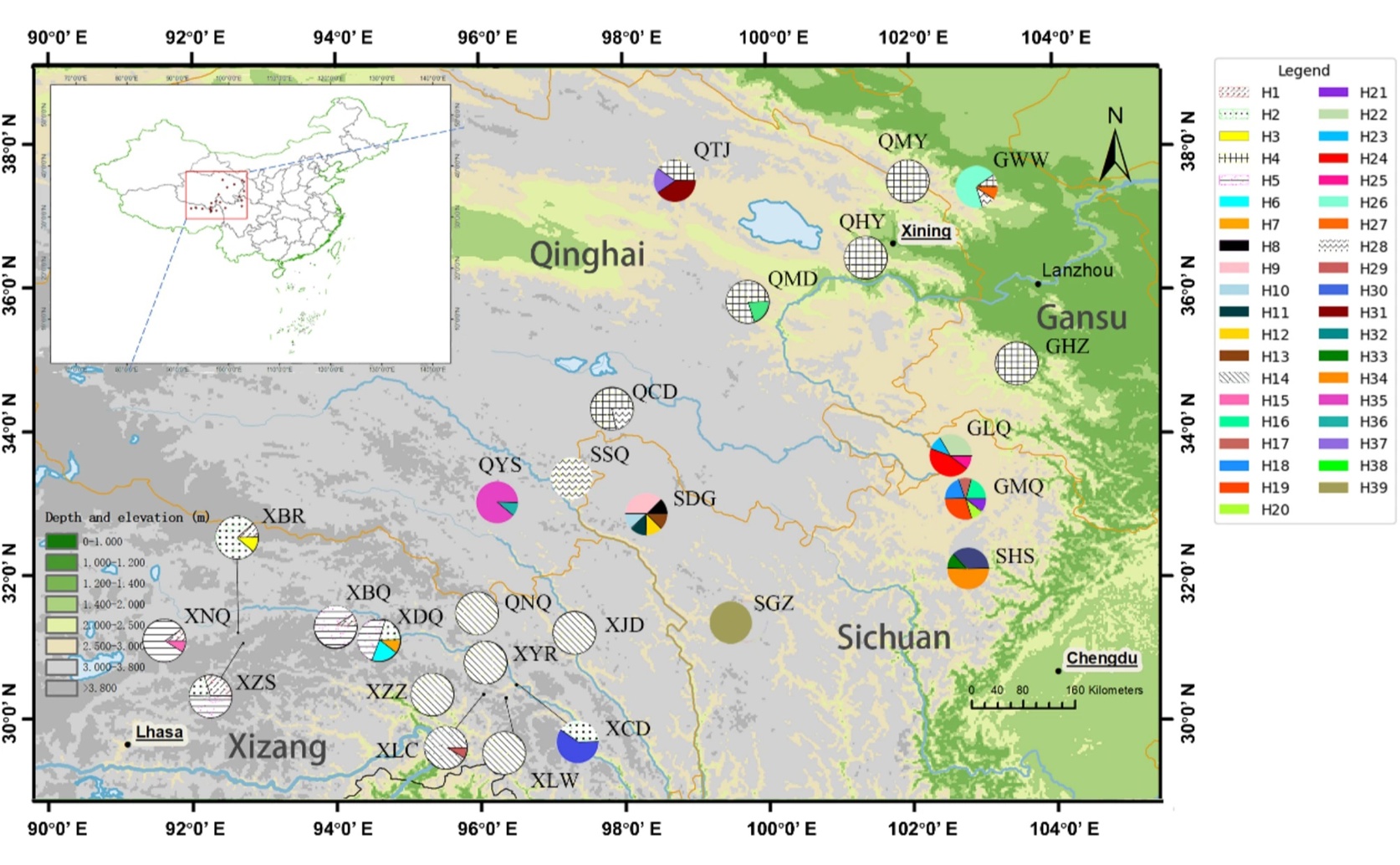
The geographical distribution of 39 genetic haplotypes among 26 populations of Rheum pumilum demonstrates a clear regional structure with most haplotypes being unique to single populations, reflecting a strong pattern of geographical isolation characteristic of an "alpine-island" model.
Key Findings
- The study focused on Rheum pumilum, an alpine plant on the Qinghai-Tibetan Plateau, to understand its adaptation to extreme environments and historical climate changes
- Researchers found high genetic diversity and isolated populations, shaped by the plateau's unique topography and limited gene flow
- The plant likely survived past climate changes in stable micro-refugia, maintaining a stable population size without rapid expansion
GeneticsPlant ScienceEvolution
References
Main Study
1) Genetic differentiation and historical dynamics of the endemic species Rheum pumilum on the Qinghai-Tibetan Plateau inferred from phylogeography implications.
Published 7th February, 2025
https://doi.org/10.1186/s12870-025-06164-y
Related Studies
2) The role of the uplift of the Qinghai-Tibetan Plateau for the evolution of Tibetan biotas.
3) Plant molecular phylogeography in China and adjacent regions: Tracing the genetic imprints of Quaternary climate and environmental change in the world's most diverse temperate flora.
4) Ancient introgression drives adaptation to cooler and drier mountain habitats in a cypress species complex.
Related Articles
 17th July, 2024 | Greg Howard