
Uncovering the Evolution of Plant Metabolism Through Gene Family Analysis
Greg Howard
1st October, 2024


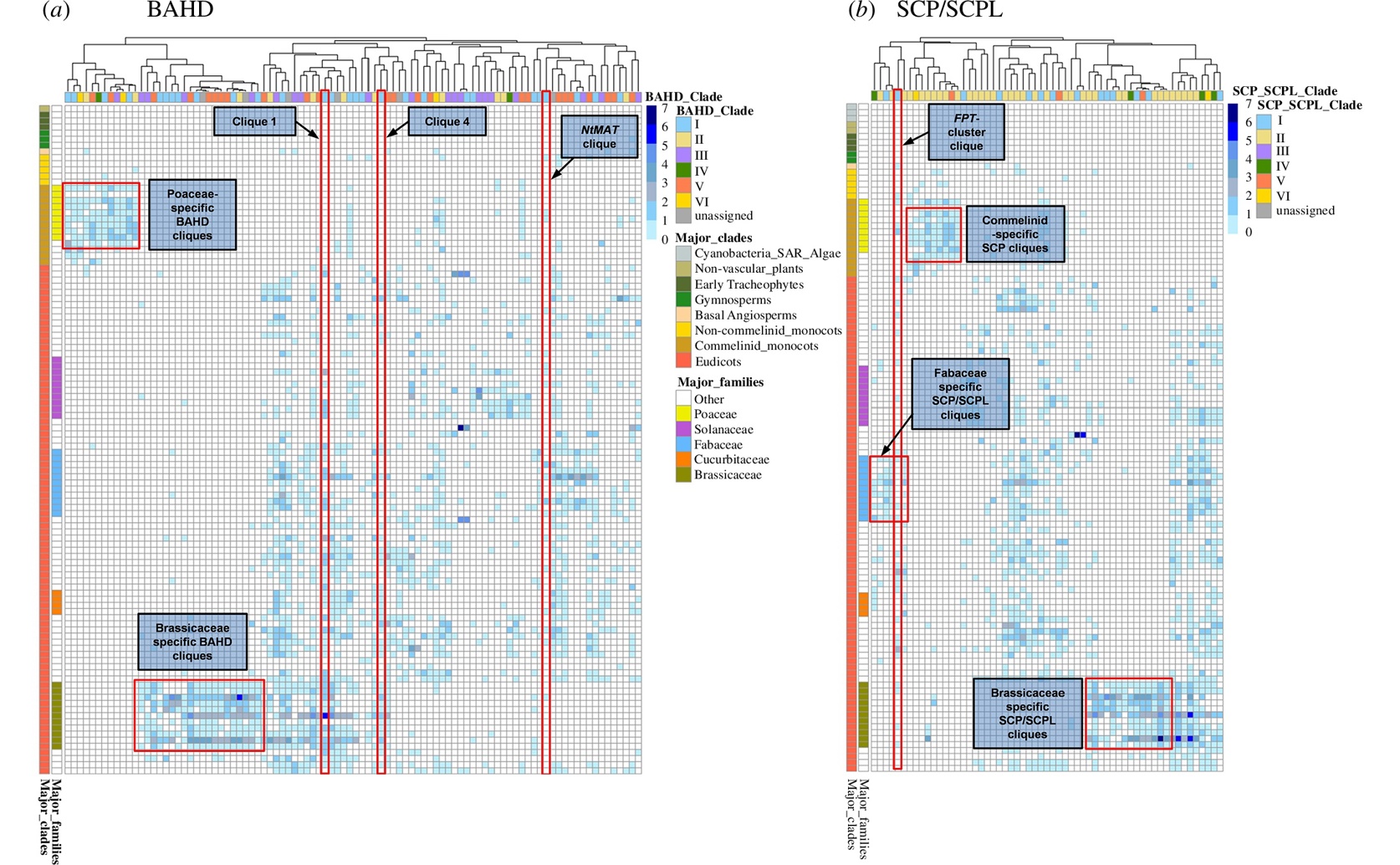
Analysis of highly conserved gene clusters, or cliques, reveals that the BAHD (a) and SCP/SCPL (b) gene families evolved through a combination of broad conservation across many species and numerous lineage-specific gains or losses within particular plant families.
Key Findings
- The study by the European Molecular Biology Laboratory (EMBL) explored the evolutionary history of two enzyme families, BAHD and SCPL acyltransferases, across 126 plant species
- SCPL genes have an older evolutionary origin compared to BAHD genes, which expanded significantly during the transition to land and the development of vascular systems
- The use of phylogenomic synteny networks revealed distinct patterns of gene copy number variation and evolutionary relationships, enhancing our understanding of plant metabolism evolution
GeneticsPlant ScienceEvolution
References
Main Study
1) Phylogenomic and synteny analysis of BAHD and SCP/SCPL gene families reveal their evolutionary histories in plant specialized metabolism.
Published 18th November, 2024 (future Journal edition)
https://doi.org/10.1098/rstb.2023.0349
Related Studies
2) Positional orthology: putting genomic evolutionary relationships into context.
3) Network approaches for plant phylogenomic synteny analysis.
4) Kingdom-wide analysis of the evolution of the plant type III polyketide synthase superfamily.
5) Evolution of the KCS gene family in plants: the history of gene duplication, sub/neofunctionalization and redundancy.
Related Articles
 4th July, 2024 | Jenn Hoskins