Biodegradable Gel With Eco-Friendly Silver For Healing Wounds

Jenn Hoskins
7th July, 2025

Biodegradable Gel With Eco-Friendly Silver For Healing Wounds

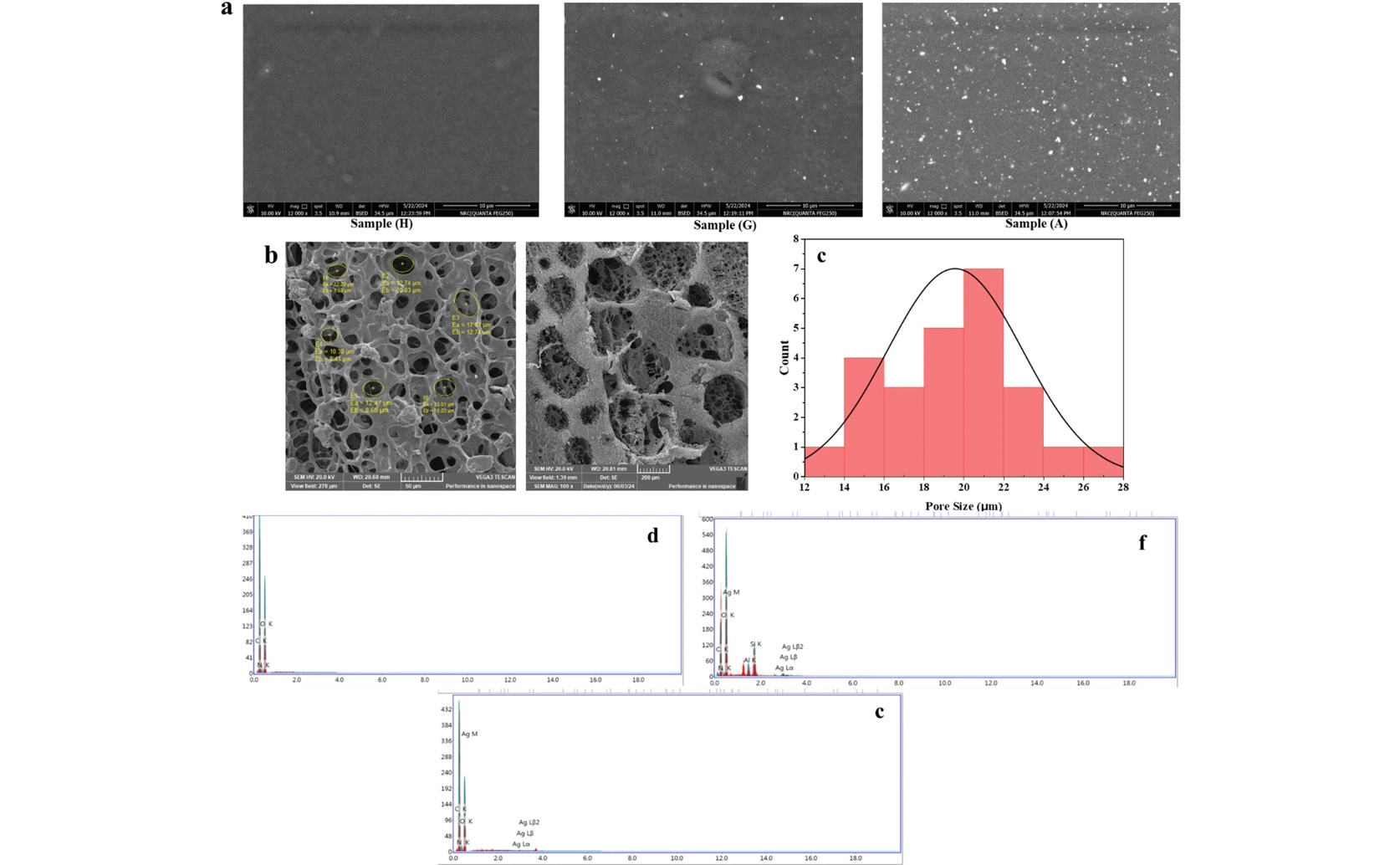
SEM analysis indicated that hydrogels utilizing Aloe Vera (Aloe barbadensis miller) achieved optimal nanoparticle dispersion and beneficial porosity for wound healing (a–c), while EDX spectra confirmed the successful elemental incorporation of silver in the green-synthesized patches compared to the control (d–f).

Image adapted from: Ragab et al. / CC BY (Source)

Key Findings

  • Researchers at Nile University developed new wound dressings using natural plant extracts to create silver nanoparticles within a hydrogel, showing promise for healing
  • These innovative patches, especially those made with Aloe Vera, effectively kill common wound bacteria, are safe for human cells, and maintain ideal moisture for healing
  • The Aloe Vera patches are also strong, flexible, and naturally break down over time, making them practical and effective for wound care
Chronic wounds present a substantial global health challenge, often leading to prolonged suffering, increased healthcare costs, and, in severe cases, limb amputation. The limitations of conventional wound dressings, such as inadequate moisture control, lack of antimicrobial properties, or poor biodegradability, underscore an urgent need for more advanced and effective solutions. Recent research from the School of Biotechnology, Nile University, addresses this critical issue by investigating novel hydrogel patches designed to optimize wound healing[1]. The current study focuses on developing advanced wound dressings by incorporating green synthesized silver nanoparticles (AgNPs) into polyvinyl alcohol (PVA) and chitosan hydrogels. These hydrogels were prepared using natural extracts from Aloe Vera and green tea to create the AgNPs, an environmentally friendly approach known as "green synthesis." The research aimed to evaluate the potential of these innovative hydrogel films for wound healing applications. The approach taken by the School of Biotechnology, Nile University, builds upon a foundation of previous research into chitosan and PVA-based materials for medical uses. Chitosan, a natural polymer derived from crustacean shells, is widely recognized for its biocompatibility, biodegradability, and inherent antimicrobial properties. Polyvinyl alcohol (PVA) is a synthetic polymer known for its excellent film-forming capabilities and mechanical strength. Earlier studies have successfully developed chitosan/PVA hydrogel films for wound healing, demonstrating their significant mechanical properties and ability to manage moisture[2]. Other research has also highlighted the flexibility of these hydrogels, making them ideal candidates for medical applications like wound dressings[3]. A key innovation in the current study is the integration of silver nanoparticles. Silver has long been known for its potent antibacterial effects, and incorporating it in nanoparticle form enhances its efficacy due to the increased surface area. The "green synthesis" method employed here, using natural extracts like Aloe Vera and green tea, is particularly noteworthy. This method avoids the use of harsh chemicals typically associated with nanoparticle production, making the process safer and more sustainable. The use of green tea extract for synthesizing AgNPs has been explored in prior work, where it was successfully combined with chitosan-grafted PVA hydrogels to create materials with excellent antibacterial activity[4]. The researchers at Nile University meticulously characterized the developed hydrogel films. Techniques such as X-ray Diffraction (XRD), Scanning Electron Microscopy (SEM), and Energy Dispersive X-ray (EDX) were employed. XRD confirmed the successful integration and crystallographic structure of the green synthesized nanomaterial, while SEM images indicated a smooth surface morphology for the films. This smooth surface is a desirable characteristic for wound dressings, as it minimizes irritation to the wound bed. Similar smooth surface morphologies have also been observed in earlier chitosan/PVA hydrogel films[2], and SEM has previously revealed well-defined pores in such hydrogels, which are beneficial for nutrient exchange and moisture retention[3]. One crucial aspect evaluated was the biodegradability of the hydrogel patches. The Aloe Vera-synthesized AgNPs hydrogel patch exhibited a high degradation rate, with a 22% weight loss after 30 days. This biodegradability is a significant advantage, as it means the dressing can naturally break down over time, potentially reducing the need for painful removal and minimizing trauma to the healing wound. The antimicrobial performance of the films was rigorously tested against common wound pathogens, Escherichia coli and Staphylococcus aureus. The results showed that the Aloe Vera-synthesized AgNPs possessed higher antibacterial activity against these bacteria. This finding is consistent with previous research that demonstrated the enhanced antimicrobial activity of chitosan/PVA hydrogels when loaded with silver nanoparticles, showing high inhibitory effects against S. aureus and K. pneumonia[3], and excellent activity against E. coli and S. aureus in other AgNPs/chitosan-PVA composites[4]. Furthermore, cytotoxicity assays confirmed a high cell viability of 82%, indicating that the hydrogels are safe and non-toxic to human cells, a vital criterion for any medical application. This aligns with earlier studies that also confirmed the lack of cytotoxicity of CS/PVA hydrogels, both with and without AgNPs[3]. The study also investigated the release profile of AgNPs from the hydrogels, which showed a gradual and sustained release, ensuring prolonged antimicrobial action at the wound site. Maintaining an optimal moist environment is critical for effective wound healing. The water vapor transmission rate of the hydrogels was found to be 1388.89 g/m2/day, coupled with a moisture content of 7.73%. These values fall within a range considered beneficial for wound healing, allowing the wound to breathe while preventing excessive dryness or maceration. Previous studies on similar hydrogel films also reported water vapor transmission rates within a comparable range, further supporting the suitability of these materials for moisture management in wound care[2]. Finally, the mechanical properties of the films were assessed. The tensile stress was found to range between 69.14 and 67.13 MPa, and the elongation at break between 4.84% and 4.34%. These impressive values indicate that the films possess significant mechanical strength, allowing them to withstand external forces and provide robust protection to the wound while maintaining flexibility. While earlier studies reported different ranges for tensile strength and elongation at break[2], the current study's results highlight the continued development of mechanically resilient hydrogels suitable for practical wound dressing applications. Overall, the findings from the School of Biotechnology, Nile University, demonstrate that these green synthesized AgNPs hydrogel patches, particularly those utilizing Aloe Vera, offer an optimal combination of properties for wound healing. They effectively manage moisture, exhibit stability, provide potent antibacterial activity, and are biodegradable. This comprehensive set of characteristics positions them as promising candidates for the next generation of wound dressings, expanding upon and integrating the successes of previous research in this field.

MedicineSustainabilityBiotech

References

Main Study

1) Biodegradable chitosan/PVA-based hydrogel incorporating green synthesized silver nanoparticles for wound healing applications

Published 3rd July, 2025

https://doi.org/10.1186/s13065-025-01564-5


Related Studies

2) Preparation and Evaluation of Chitosan/PVA Based Hydrogel Films Loaded with Honey for Wound Healing Application.

https://doi.org/10.3390/gels8020111


3) Dual Cross-Linked Chitosan/PVA Hydrogels Containing Silver Nanoparticles with Antimicrobial Properties.

https://doi.org/10.3390/pharmaceutics13091461


4) Silver Nanoparticles Loaded on Chitosan-g-PVA Hydrogel for the Wound-Healing Applications.

https://doi.org/10.3390/molecules28073241


Related Articles

An unhandled error has occurred. Reload 🗙