
Park Visits: Who Goes, Why, And How It Affects Health
Jenn Hoskins
30th June, 2025


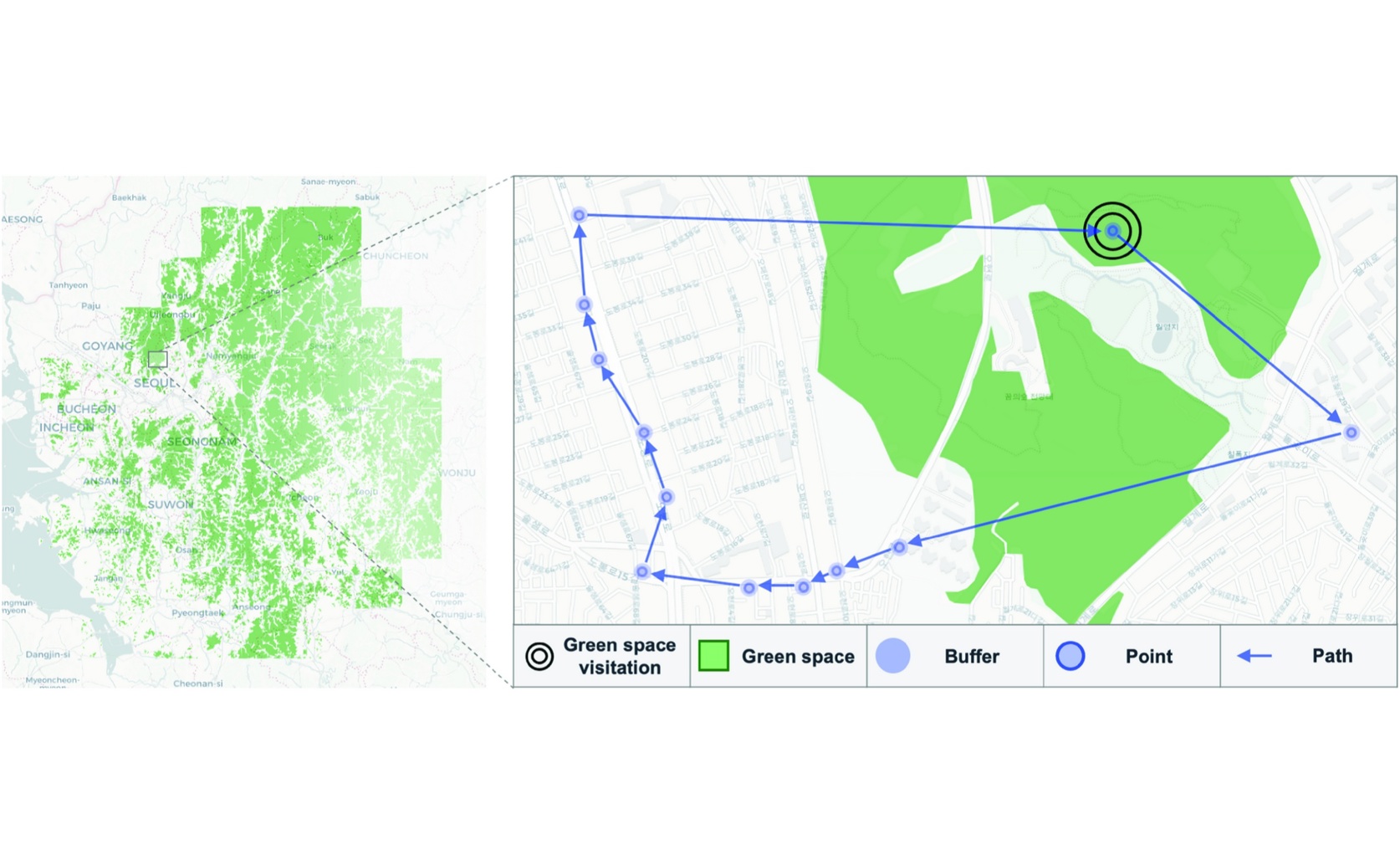
The spatial intersection of user trajectories with green spaces using a 15-meter GPS buffer allows for the objective identification of visitation events (double circles), providing the foundational data used to classify residents into distinct behavioral groups such as Weekend and Frequent Visitors.
Key Findings
- A study in Seoul, South Korea, found that residents who visited urban green spaces mainly on weekends reported the best mental and physical health
- Both weekend and frequent visitors held more positive views of green spaces, showing that regular engagement fosters appreciation
- Green space use varied with education levels, suggesting a need for programs to ensure equitable access and benefits for all
References
Main Study
1) Associations of green space visitation patterns with sociodemographics, health, and perceptions: A cluster analysis using smartphone Wi-Fi and GPS data
Published 27th June, 2025
https://doi.org/10.1371/journal.pone.0325697
Related Studies
2) An ecological study investigating the association between access to urban green space and mental health.
3) [Benefits of green spaces and physical activity for the well-being and health of people].
4) Urban green space and happiness in developed countries.
Related Articles
 28th May, 2025 | Greg Howard