
How Brain Memory Uses Complex Sight for Navigation
Greg Howard
24th June, 2025


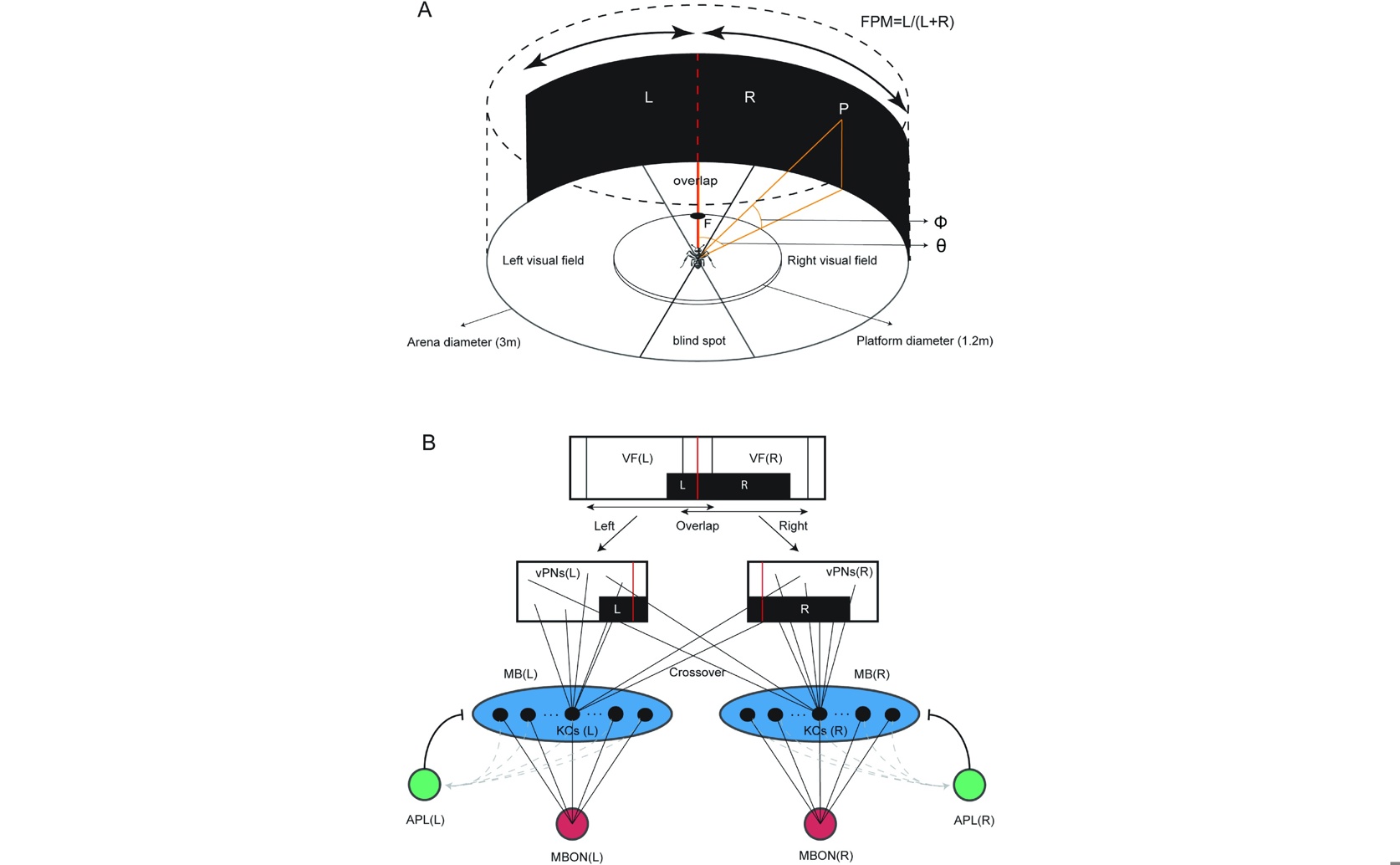
This study models the experimental finding that navigating wood ants (Formica rufa) use the fractional position of mass of a visual shape (a) by using a bilateral neural network (b) to test if this higher-order processing emerges from balancing separate left and right visual memories.
Key Findings
- A study from the University of Sussex and UC Santa Barbara found that ants' complex visual navigation, like using how much of a shape is on one side, emerges from their brain's two-sided structure
- This suggests that ants' brains don't need complex calculations for "higher-order" visual cues; instead, these abilities naturally arise from how visual information is processed across brain halves
References
Main Study
1) Lateralised memory networks may explain the use of higher-order visual features in navigating insects
Published 23rd June, 2025
https://doi.org/10.1371/journal.pcbi.1012670
Related Studies
2) Idiosyncratic route-based memories in desert ants, Melophorus bagoti: how do they interact with path-integration vectors?
Journal: Neurobiology of learning and memory, Issue: Vol 83, Issue 1, Jan 2005
3) A model of ant route navigation driven by scene familiarity.
4) Snapshots in ants? New interpretations of paradigmatic experiments.
Related Articles
 19th June, 2025 | Jim Crocker