
Identifying Species Using Ear Stone Shapes
Jenn Hoskins
21st June, 2025


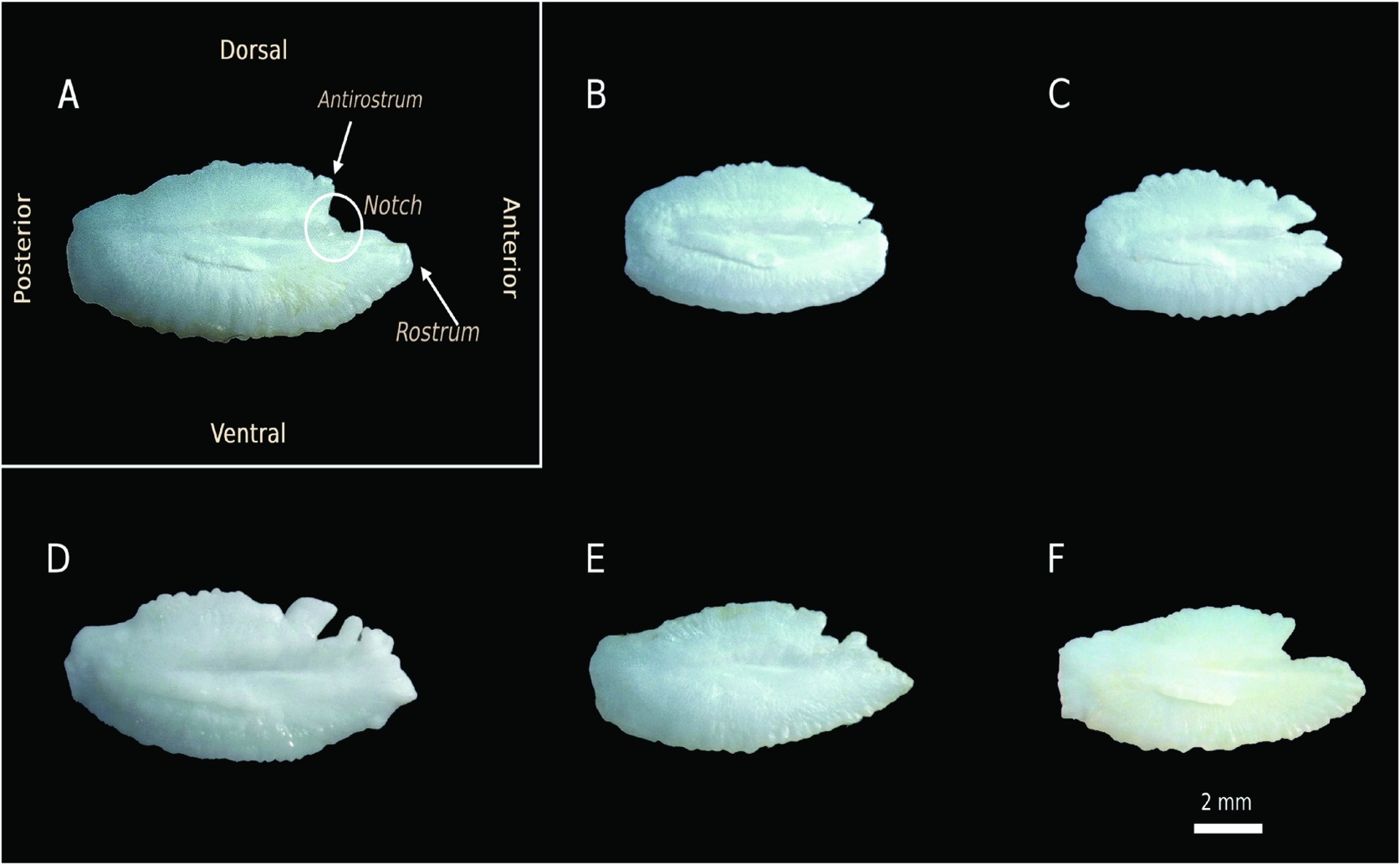
While visually similar, the otoliths of the black scabbardfish (Aphanopus carbo) (a–c) and the intermediate scabbardfish (A. intermedius) (d–f) possess subtle shape differences that this study's wavelet analysis uses to accurately identify each cryptic species.
Key Findings
- Researchers in the northeastern Atlantic developed a highly accurate method using fish ear stones and genetic data to tell apart two very similar scabbardfish species
- They found that A. carbo typically dominates catches (55-60%) with stable proportions over decades, though it declined in 2010, and A. intermedius prefers offshore areas
- These insights, influenced by environmental factors and fishing expansion, enable more precise and sustainable management of these economically important fish
References
Main Study
1) Clarifying species identity in Aphanopus using wavelet-based otolith shape analysis
Published 18th June, 2025
https://doi.org/10.1371/journal.pone.0326199
Related Studies
2) Cryptic species as a window on diversity and conservation.
Journal: Trends in ecology & evolution, Issue: Vol 22, Issue 3, Mar 2007
3) Identifying sagittal otoliths of Mediterranean Sea gobies: variability among phylogenetic lineages.
4) Evidence of stock connectivity, hybridization, and misidentification in white anglerfish supports the need of a genetics-informed fisheries management framework.
Related Articles
 16th February, 2025 | Greg Howard