Genetic Clues Reveal Fall-Spawning Group in the Apalachicola River

Greg Howard
5th June, 2025

Genetic Clues Reveal Fall-Spawning Group in the Apalachicola River
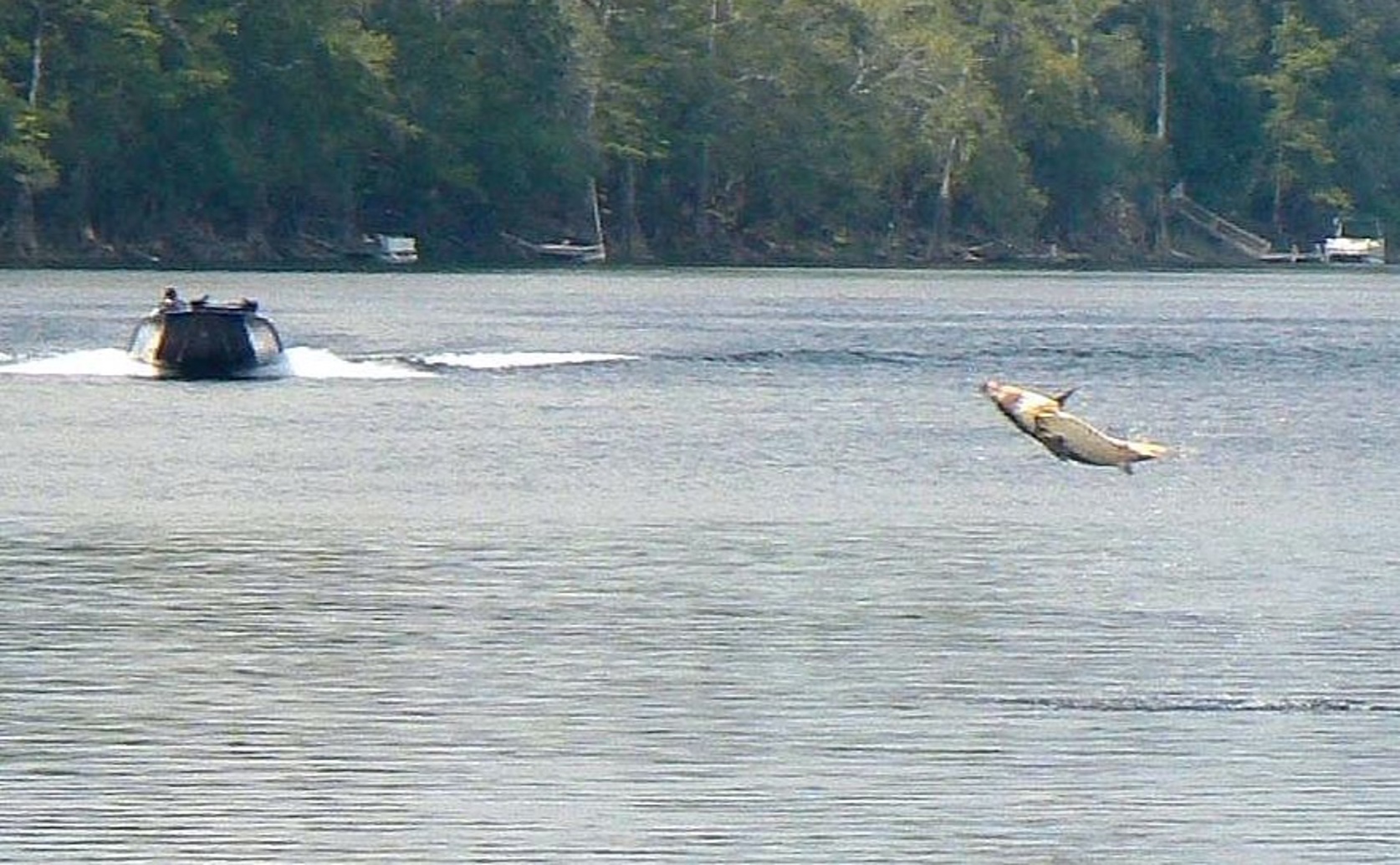
Gulf sturgeon (Acipenser oxyrinchus desotoi)

Key Findings

  • In Florida’s Apalachicola River, researchers used DNA tests to confirm two separate Gulf sturgeon groups—one that spawns in the spring (about 90% of juveniles) and a distinct fall-spawning group
  • The fall-spawning group has about a three-week shorter window for suitable water temperatures, implying they might be more sensitive to environmental changes
Recent research from the University of Southern Mississippi, in collaboration with the U.S. Fish and Wildlife Service, the University of Georgia, and the University of Tehran[1], has provided new insights into the reproductive behavior of the Gulf sturgeon (Acipenser oxyrinchus desotoi) in the Apalachicola River, Florida. Gulf sturgeon are large, long-lived fish that migrate between fresh and salt water (a behavior known as anadromy) and have a long history in the Gulf of Mexico. They were once heavily overexploited to the point of near extinction in the early 1900s and are now listed as threatened under the Endangered Species Act. Their ongoing recovery is complicated by issues such as habitat loss, bycatch (unintentional capture in commercial fishing gear), and the effects of climate change. This study addresses one of the key knowledge gaps on Gulf sturgeon by investigating whether a second, fall-spawning group exists in the Apalachicola River—a question that has important implications for conservation management. The study focused on the genetic structure of Gulf sturgeon populations to determine if distinct spawning groups could be identified. Researchers collected juvenile sturgeon between May and July over a span of nearly a decade (2013–2022) and captured a few adult sturgeon on known spawning grounds in October 2022. The central method involved examining thirteen microsatellite loci—specific regions in DNA that are highly variable among individuals—to detect genetic differences among the fish. Microsatellites serve as markers that can reveal population structures and are valuable in determining whether subgroups exist within a larger population. Data analysis clearly identified the presence of two genetically distinct groups in the Apalachicola River, as measured by an FST value of 0.085. (FST is a statistic that measures genetic differentiation between populations; higher values indicate stronger separation.) The findings revealed that while approximately 90% of the juveniles belonged to the spring-spawning group, a separate fall-spawning group was also present. In addition, measurements such as the size distribution of juveniles and the timing of adult captures on spawning grounds supported the existence of two seasonal groups. The study also found that the temperature window for spawning during the fall was, on average, three weeks shorter than that in the spring. This difference suggests that environmental conditions could play a role in influencing spawning season length, although additional research is needed to understand why these differences occur. The current findings tie together with earlier research on Atlantic sturgeon, another group of long-lived, anadromous fish with complex reproductive patterns. Previous studies on Atlantic sturgeon have documented a dual spawning strategy in which distinct spring and fall groups occur in rivers[2]. In one notable study, genetically distinct groups were identified in the James River of Virginia, where the fall and spring sturgeon showed little admixture—meaning there was very little interbreeding between the two groups[3]. These earlier findings in Atlantic sturgeon have been instrumental in shaping the understanding of sturgeon reproductive behaviors, and the Gulf sturgeon study builds on this by confirming that dual spawning, characterized by genetically distinct seasonal groups, is likely a more general pattern among sturgeon species than previously appreciated. This research has practical implications for how management and conservation efforts are designed. When populations display dual spawning patterns, each group may face different environmental pressures and anthropogenic threats. For instance, the shorter spawning window in the fall detected in the Gulf sturgeon may indicate a higher vulnerability to abrupt changes in water temperature or other environmental factors. The genetic distinctiveness of these groups means that conservation plans need to account for both to ensure the overall resilience and redundancy of the species. In other words, protecting one spawning group may not be sufficient if the other is declining due to different stressors. The use of genetic methods in this study has provided clear evidence that supports a more nuanced view of sturgeon reproduction. Genetic analysis allowed the researchers to identify the separate spawning groups despite the majority of juveniles being associated with the spring season. The identification of variation in genetic diversity and the similar levels found between the groups reinforce that both the spring and fall spawners are healthy and important to the species’ recovery. These findings are a critical addition to the growing body of literature that suggests a reconsideration of single-group assumptions in sturgeon management is necessary. By contributing evidence that the Gulf sturgeon in the Apalachicola River also exhibit a dual spawning strategy, this study reinforces the idea that reproductive behavior in sturgeon is more complex than once thought. It encourages managers to refine reference population databases to include multiple spawning groups, as confirmed by both the current work and earlier research on Atlantic sturgeon[2][3]. This expanded understanding of sturgeon biology helps conservationists focus on preserving not only the species as a whole but also the unique reproductive components that help the population rebound following historical declines.

WildlifeGenetics

References

Main Study

1) Genetic evidence for a fall-spawning group of Gulf sturgeon (Acipenser oxyrinchus desotoi) in the Apalachicola River, Florida, USA

Published 3rd June, 2025

https://doi.org/10.1371/journal.pone.0319117


Related Studies

2) Dual annual spawning races in Atlantic sturgeon.

https://doi.org/10.1371/journal.pone.0128234


3) Genetic differentiation of spring-spawning and fall-spawning male Atlantic sturgeon in the James River, Virginia.

https://doi.org/10.1371/journal.pone.0179661


Related Articles

An unhandled error has occurred. Reload 🗙