
Safe Swimming: Evaluating Community DNA Tests for Water Quality
Jenn Hoskins
28th May, 2025


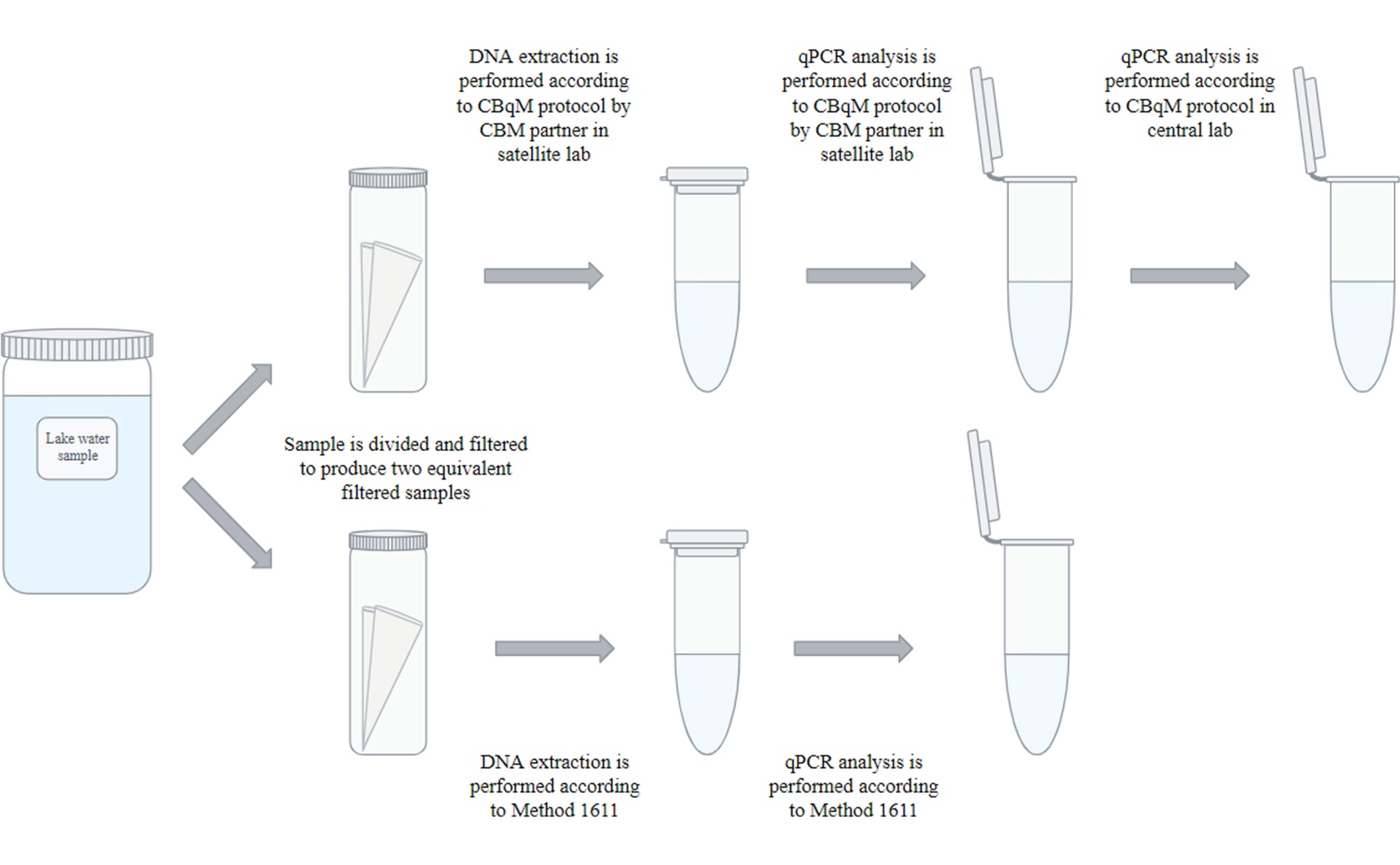
This comparative workflow utilized duplicate filtration of water samples to demonstrate that decentralized, community-based qPCR monitoring for Enterococcus spp. yields results comparable to the gold standard U.S. EPA Method 1611.
Key Findings
- The University of Alberta trained local community members to quickly test beach water quality using advanced DNA methods
- Community-generated results matched standard lab tests in about 75% of cases, proving reliable for beach safety decisions
- This approach enables faster water quality checks, involves the community, and helps protect public health more effectively
References
Main Study
1) From bench to beach: Assessing the reliability of community-based qPCR monitoring for recreational water quality
Published 27th May, 2025
https://doi.org/10.1371/journal.pwat.0000309
Related Studies
2) Rapidly measured indicators of recreational water quality are predictive of swimming-associated gastrointestinal illness.
Journal: Environmental health perspectives, Issue: Vol 114, Issue 1, Jan 2006
3) High sensitivity of children to swimming-associated gastrointestinal illness: results using a rapid assay of recreational water quality.
4) Monitoring urban beaches with qPCR vs. culture measures of fecal indicator bacteria: Implications for public notification.
Related Articles
 14th April, 2024 | Greg Howard