How Sink and Dryer Locations Affect Workplace Bacteria

Greg Howard
27th May, 2025

How Sink and Dryer Locations Affect Workplace Bacteria

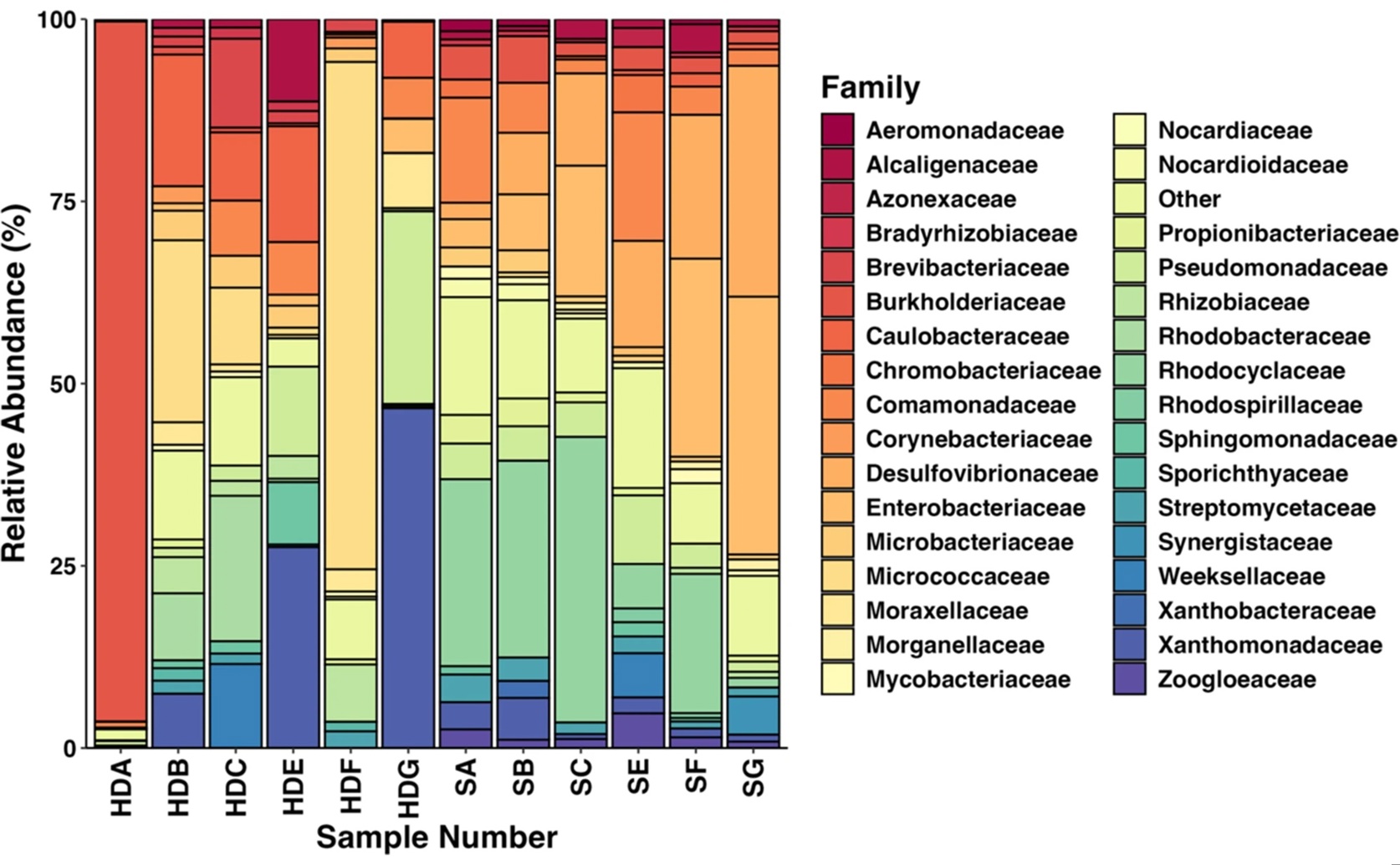
Taxonomic profiling at the family level demonstrates that individual sink and hand dryer microbiomes are distinct and frequently dominated by specific taxa such as Burkholderiaceae, reinforcing the finding that sample type, rather than location, primarily determines microbial community composition.

Image adapted from: Thompson et al. / CC BY (Source)

Key Findings

  • *At a UK industrial site, researchers found that the bacteria in hand dryers are distinct from those in sinks.*
  • *Antibiotic resistance genes were more affected by the specific location within the site than by whether they were in dryers or sinks.*
  • *Human activities play a key role in shaping the antimicrobial resistance found in everyday workplace devices.*
Antimicrobial resistance (AMR) poses a significant threat to global health, limiting the effectiveness of treatments for infections that were once easily curable. Understanding how resistance spreads in various environments is crucial for developing strategies to combat this issue. A recent study conducted by researchers at Queen’s University Belfast[1] offers valuable insights into how AMR can proliferate in high-traffic areas with limited surveillance, such as hand drying stations and sinks in industrial settings. The study focused on a pharmaceutical industrial site, where paired samples were collected from hand dryers and their adjacent sinks in different locations, including toilets near wet laboratories and areas associated with dry activities. By analyzing these samples, the researchers aimed to characterize the microbial communities and the collection of antimicrobial resistance genes, known as resistomes, present in these environments. One of the key findings of the study was that the microbial populations in hand dryers were significantly different from those found in sinks. This suggests that the environment and usage patterns of these devices create distinct bacterial communities. Interestingly, when examining the resistomes, the researchers found that variations were more influenced by the location of the samples rather than the type of sample itself. This indicates that different areas within the industrial site contribute uniquely to the spread of AMR. Further analysis revealed that the differences in microbial communities were primarily driven by the profiles of hand dryers from various locations. Additionally, the study uncovered many poorly characterized organisms, and no specific bacterial families were dominant in carrying antimicrobial resistance genes. This highlights the complexity and diversity of AMR in such environments, making it challenging to target specific sources of resistance. The findings of this study build upon the groundwork laid by the Global Research on AntiMicrobial resistance (GRAM) Project[2], which emphasized the importance of obtaining accurate data to understand the true burden of AMR. By focusing on an industrial setting, the current study provides detailed insights into how human activities and the design of commonly used appliances can influence the resistome. This aligns with the GRAM Project’s goal of improving AMR surveillance to better target control measures. Moreover, the study echoes concerns raised in the context of aquaculture[3], where high bacterial diversity and the use of antibiotics create environments conducive to the spread of resistance. Just as aquaculture systems are considered "genetic hotspots" for gene transfer, hand dryers and sinks in industrial sites can similarly facilitate the exchange of resistance genes among microbial populations. Monitoring these environments is essential to identify and mitigate the sources and pathways of AMR transmission. Understanding the mechanisms behind AMR is also critical, as discussed in previous reviews[4]. The historical presence of resistance genes and their evolution under selective pressures such as antibiotic use underscores the natural ability of bacteria to adapt and develop resistance. The current study contributes to this understanding by demonstrating how modern human practices and environmental factors continue to shape the landscape of antimicrobial resistance. The research conducted by Queen’s University Belfast underscores the necessity of ongoing AMR surveillance programs. By highlighting the role of human activities in determining the resistome of everyday appliances, the study calls for more comprehensive monitoring strategies in diverse environments. Effective surveillance is essential to track the spread of resistance, identify emerging threats, and implement measures to control the dissemination of antimicrobial resistance genes. In conclusion, the study provides a detailed examination of how antimicrobial resistance can spread in high-traffic industrial environments. By characterizing the microbial communities and resistomes of hand dryers and sinks, the research offers valuable insights into the factors that drive AMR in such settings. These findings not only enhance our understanding of AMR dynamics but also reinforce the need for robust surveillance systems to address this growing public health challenge[2][3][4].

EnvironmentHealthEcology

References

Main Study

1) The effect of sample type and location on industrial workplace sink and hand dryer microbiomes

Published 26th May, 2025

https://doi.org/10.1186/s12866-025-04054-9


Related Studies

2) BSAC Vanguard Series: Tracking the global rise of antimicrobial resistance.

https://doi.org/10.1093/jac/dkac255


3) The Rising Tide of Antimicrobial Resistance in Aquaculture: Sources, Sinks and Solutions.

https://doi.org/10.3390/md15060158


4) Antimicrobial Resistance in Bacteria: Mechanisms, Evolution, and Persistence.

https://doi.org/10.1007/s00239-019-09914-3


Related Articles

An unhandled error has occurred. Reload 🗙