
How Cutting Down Trees Affects Kids' Malaria Based on Income and Mosquito Traits
Jim Crocker
4th March, 2024


Map showing sampling clusters and distribution of the three dominant Anopheles species for Côte d’Ivoire, the Democratic Republic of the Congo, Guinea, Mozambique, Rwanda, and Togo, the six sub-Saharan African countries included in this study.
Key Findings
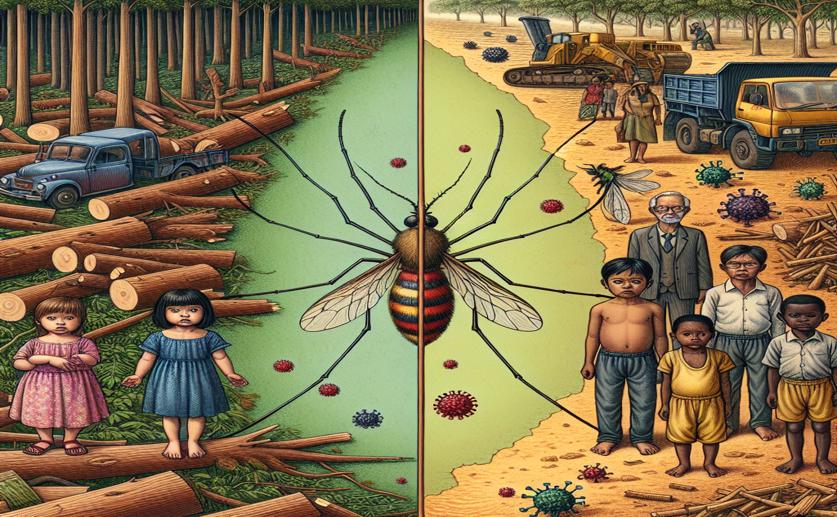
- In sub-Saharan Africa, deforestation raises malaria risk for the poorest kids by 27%-33%
- The negative health impact of deforestation on malaria doesn't significantly affect the richest households
- The increase in malaria from deforestation varies with mosquito species, notably affecting areas with Anopheles gambiae and Anopheles funestus
References
Main Study
1) Impacts of Deforestation on Childhood Malaria Depend on Wealth and Vector Biology.
Published 1st March, 2024
https://doi.org/10.1029/2022GH000764
Related Studies
2) Climate Drivers of Malaria Transmission Seasonality and Their Relative Importance in Sub-Saharan Africa.
3) Exploring agricultural land-use and childhood malaria associations in sub-Saharan Africa.
Related Articles
 2nd March, 2024 | Greg Howard