How a Well-Equipped Environment Boosts Learning and Mood

Jenn Hoskins
19th May, 2025

How a Well-Equipped Environment Boosts Learning and Mood

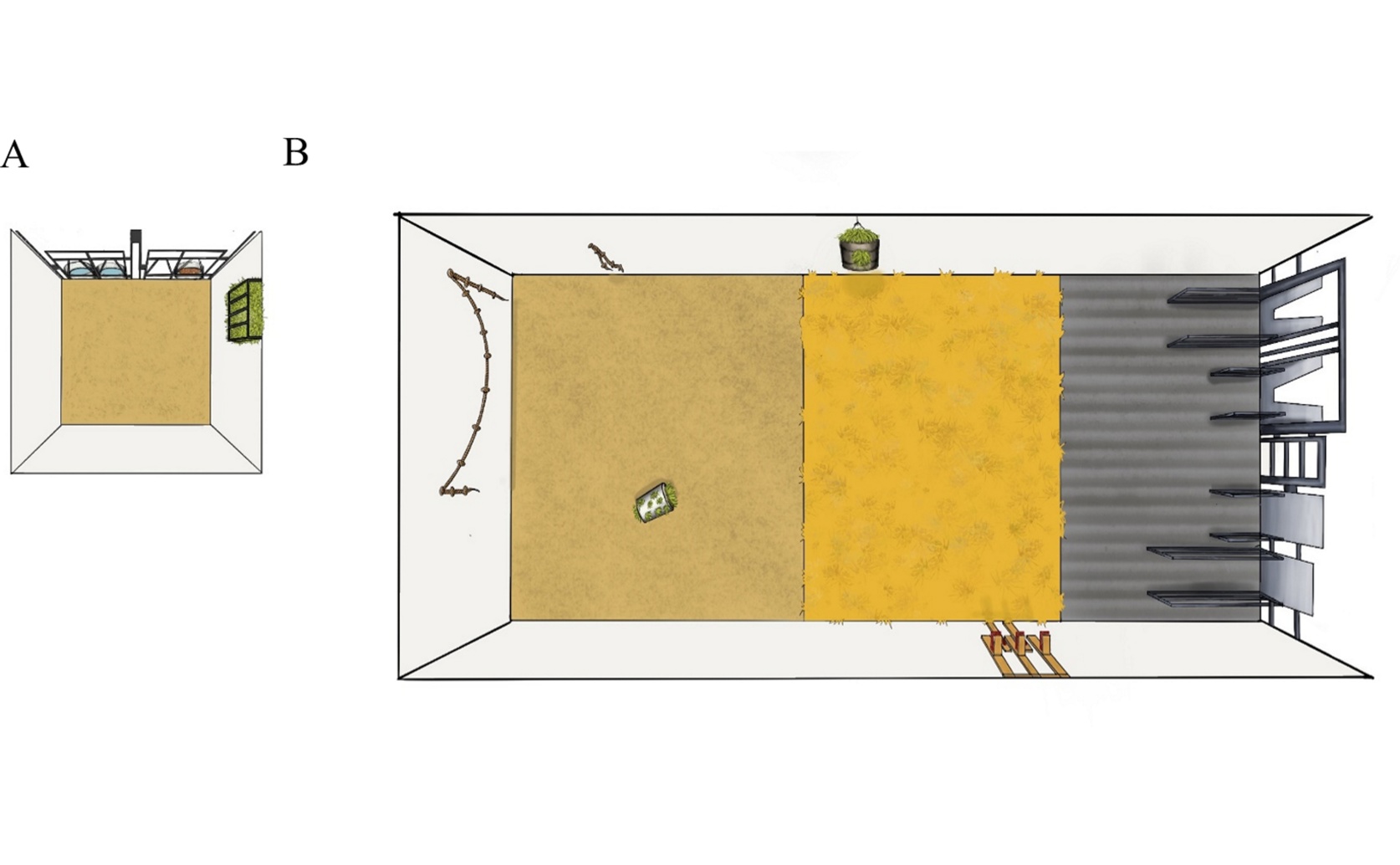
Providing dairy calves (Bos taurus) with daily access to a well-resourced environment (b) reduced their sensitivity to reward compared to those in standard pair housing (a), suggesting that the added physical and social complexity promoted a more positive affective state.

Image adapted from: Suchon et al. / CC BY (Source)

Key Findings

  • Researchers at the University of British Columbia found that enriched housing environments improve dairy calves' emotional well-being
  • Calves in enriched settings were more sensitive to changes in rewards, indicating healthier emotional states
  • Housing type did not affect the calves' ability to recognize and differentiate other calves
Animal welfare in dairy farming is a critical concern, particularly regarding how calves are housed and managed. Traditional methods often involve raising calves without maternal contact and in environments that limit their natural behaviors. These practices can impact the cognitive development and emotional well-being of the animals. A recent study conducted by researchers at The University of British Columbia[1] investigated how environmental complexity affects dairy calves. The study focused on two main aspects of welfare: social cognition, which is the ability of calves to recognize and differentiate between other calves, and affective states, which relate to their emotional well-being and sensitivity to rewards. In the study, pairs of calves were divided into two groups. The first group, known as the enriched group, was housed together for most of the day but had additional access to a well-resourced pen for 1.5 hours daily. This pen included three other calves and various physical devices, providing a more stimulating environment. The control group remained in pair housing without this additional enrichment. Both groups of calves underwent training to distinguish between two other calves using a Y-maze. The number of training sessions required to meet the learning criteria was similar for both groups, indicating that environmental complexity did not significantly impact their ability to learn this task. However, differences emerged when assessing their sensitivity to rewards. Calves in the enriched environment showed increased latency, meaning they took longer to approach a milk reward after it was reduced, suggesting they were more sensitive to changes in reward expectations. In contrast, control calves maintained shorter and consistent latencies, which may indicate a more negative emotional state due to their less stimulating living conditions. These findings align with earlier research highlighting the importance of natural living conditions for calves. For instance, study[2] emphasized that allowing calves to express natural behaviors, such as social interactions and gradual weaning, can significantly improve their welfare. The enriched environment in the main study mirrors these recommendations by providing social housing and access to additional resources, which are key to promoting natural behaviors. Furthermore, the study by[3] highlighted how different housing systems can influence the risk of infectious diseases in calves. While the main study did not specifically address disease prevalence, the improved social and environmental conditions in enriched housing could potentially contribute to better overall health by reducing stress and promoting natural behaviors that enhance immune function. In regions like South Brazil, as reported in[4], calves often face harsh management practices, including early separation from mothers and inadequate housing, leading to high mortality rates and poor health outcomes. The enriched housing system studied by the University of British Columbia offers a contrast to these practices, suggesting that improving environmental complexity can lead to better welfare and potentially lower mortality rates by enhancing the calves' emotional and cognitive well-being. Additionally, the review in[5] supports the notion that more natural, pasture-based systems generally result in better welfare outcomes for dairy cows. While the main study focused on housing complexity rather than pasture access, both approaches share the goal of creating environments that allow animals to express natural behaviors and improve their overall well-being. In conclusion, the University of British Columbia's study contributes to the growing body of evidence that emphasizes the importance of environmental complexity in dairy calf housing. By providing a more stimulating and socially enriched environment, farmers can enhance the cognitive and emotional welfare of their calves. This approach not only aligns with best practices suggested by previous research but also holds promise for improving the sustainability and ethics of dairy farming practices.

EnvironmentHealthAnimal Science

References

Main Study

1) Effects of access to a well-resourced environment on dairy calf cognition and affective state

Published 16th May, 2025

https://doi.org/10.1371/journal.pone.0323089


Related Studies

2) Understanding Behavioural Development of Calves in Natural Settings to Inform Calf Management.

https://doi.org/10.3390/ani11082446


3) Dairy calf housing systems across Europe and risk for calf infectious diseases.

https://doi.org/10.1017/S1751731110000650


4) A survey of management practices that influence performance and welfare of dairy calves reared in southern Brazil.

https://doi.org/10.1371/journal.pone.0114995


5) Review: welfare of dairy cows in continuously housed and pasture-based production systems.

https://doi.org/10.1017/S1751731116001336


Related Articles

An unhandled error has occurred. Reload 🗙