
Identifying and Analyzing Ethylene Response Genes in Oil-Tea Plants
Greg Howard
26th May, 2025


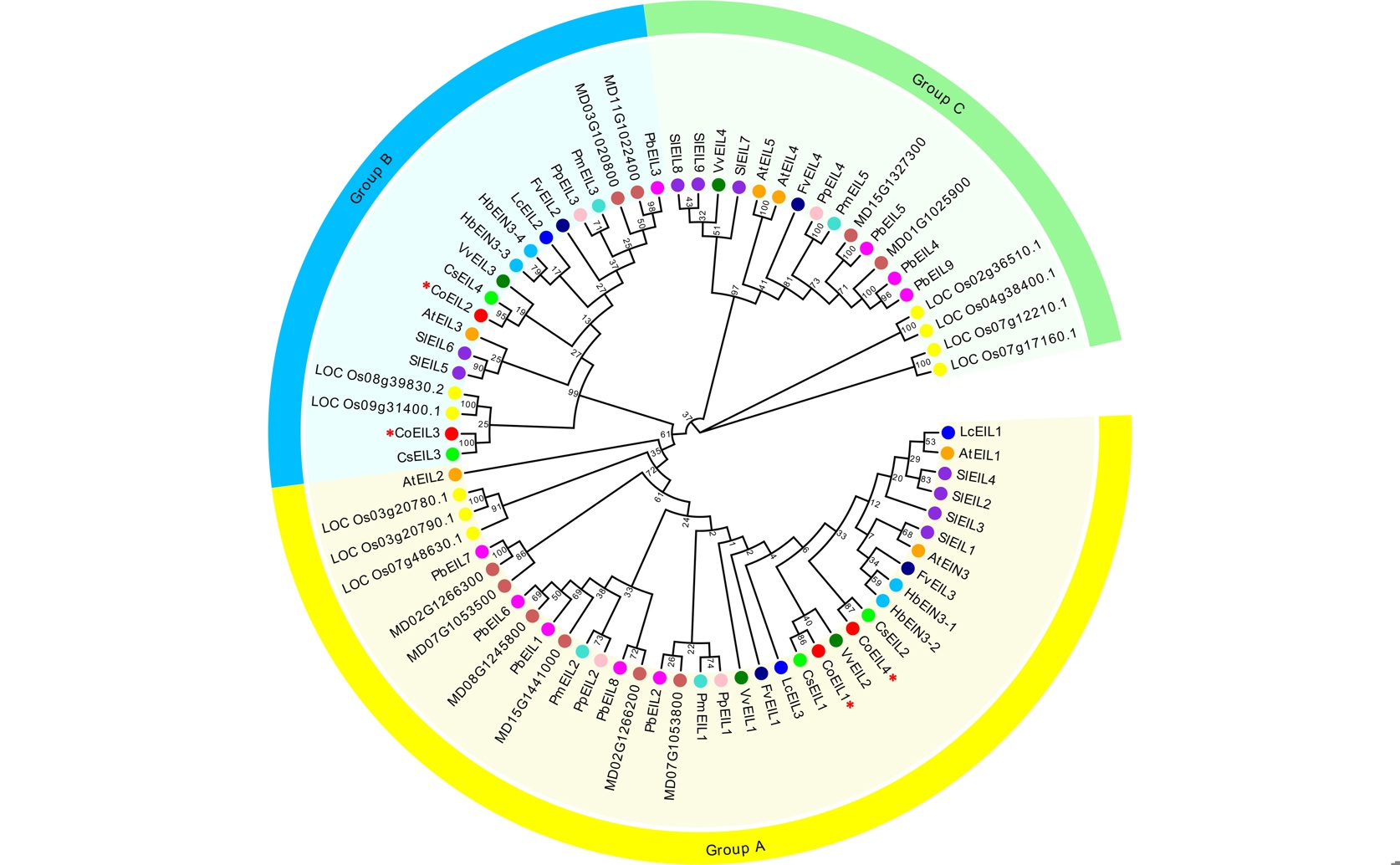
Phylogenetic analysis segregates the four oil-camellia (Camellia oleifera) proteins into distinct clades (Groups A and B), revealing a close evolutionary proximity to tea (Camellia sinensis) homologs that underscores the conservation of this gene family within the plant lineage.
Key Findings
- In China, scientists identified four key genes that control fruit drop in Camellia oleifera, an important oil-producing crop
- They found that the plant hormone ethylene increases fruit drop by activating these genes, while another hormone, brassinolide, can reduce this effect
- Understanding these genetic mechanisms may help develop strategies to control fruit loss and boost crop yields
References
Main Study
1) Genome-wide identification and characterization of Ethylene-Insensitive 3 (EIN3/EIL) gene family in Camellia oleifera
Published 23rd May, 2025
https://doi.org/10.1371/journal.pone.0324651
Related Studies
2) Ethylene-regulated immature fruit abscission is associated with higher expression of CoACO genes in Camellia oleifera.
3) Ethephon As a Potential Abscission Agent for Table Grapes: Effects on Pre-Harvest Abscission, Fruit Quality, and Residue.
4) The HD-Zip transcription factor LcHB2 regulates litchi fruit abscission through the activation of two cellulase genes.
5) Elucidating mechanisms underlying organ abscission.
Related Articles
 4th February, 2025 | Jim Crocker