Modeling Invasive Cogon Grass under Climate Change: Global Risk and Future

Greg Howard
11th May, 2025

Modeling Invasive Cogon Grass under Climate Change: Global Risk and Future

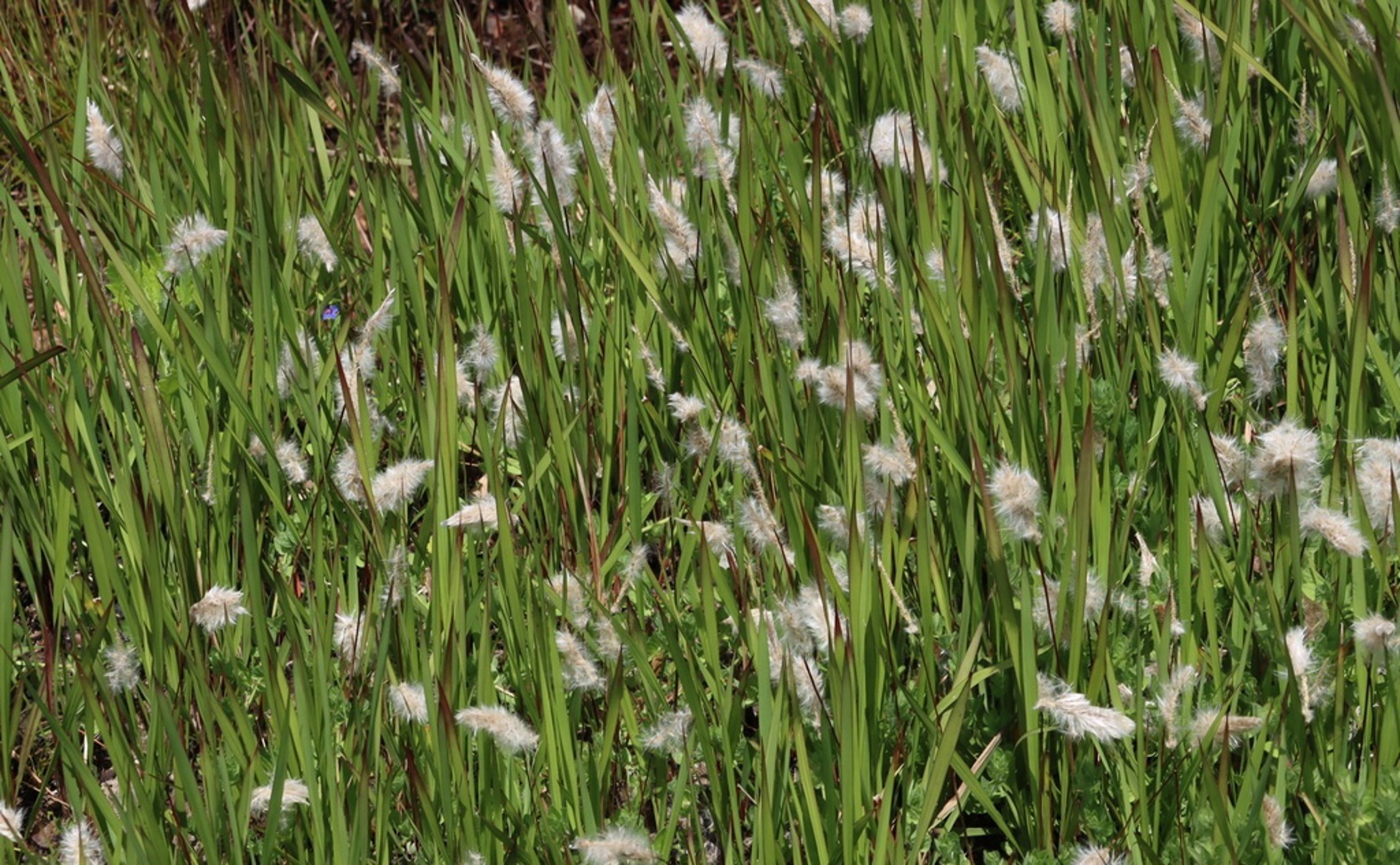
Cogon Grass (Imperata cylindrica)

Photo adapted from: Tony Rebelo / CC BY SA (Source)

Key Findings

  • Researchers in Brazil found that cogongrass currently thrives in 16% of the world's land, especially in Central America, Africa, and Australia
  • Climate change could expand cogongrass habitats by up to 19% by 2100, spreading into southern Argentina and North America while some African areas may become less suitable
  • Rising temperatures are the main driver of cogongrass’s spread, helping to identify key regions for targeted management efforts
Invasive plant species pose significant threats to native ecosystems, often exacerbated by climate change. Understanding how these invasions might evolve under future climate scenarios is crucial for effective ecosystem management. A recent study conducted by researchers at Universidade Federal dos Vales do Jequitinhonha e Mucuri, Brazil[1] provides valuable insights into the potential spread of Imperata cylindrica, commonly known as cogongrass, under changing climate conditions. Imperata cylindrica is a highly invasive grass that disrupts native habitats, competes with local flora, and alters fire regimes, making ecosystems more susceptible to wildfires. The study utilized the CLIMEX model, a tool that predicts the geographic distribution of species based on climatic factors, to forecast the areas suitable for I. cylindrica under current and future climate scenarios. The researchers analyzed a comprehensive dataset of 6,414 occurrence records, focusing on key climatic parameters such as temperature and soil moisture, to simulate the species' ecological niche. The findings reveal that currently, over 16% of the global land surface is highly suitable for I. cylindica, with significant risk areas identified in Central America, Africa, and Australia. Looking ahead, projections under the SRES A2 climate scenario indicate an expansion of suitable habitats by the years 2050, 2080, and 2100, particularly in regions like southern Argentina and parts of North America. Conversely, some areas in Africa may see a decrease in suitability due to rising temperatures. This expansion suggests that climate change could facilitate the spread of cogongrass into new regions, potentially increasing its impact on native ecosystems. Temperature-related factors emerged as the most influential in determining the distribution of I. cylindrica. Parameters such as minimum, optimal, and maximum temperature thresholds were critical in shaping the species' potential range. This highlights the pivotal role of climate in driving the invasive potential of cogongrass, aligning with broader research indicating that climate variables are key determinants in the spread of invasive species[2]. The study's methodology builds on previous research that has examined the interactions between invasive species and environmental stressors. For instance, a field experiment conducted by the University of Florida[3] demonstrated how drought and plant invasion can synergistically increase tree mortality during fires. Similarly, the current study leverages climate modeling to predict how such interactions might scale globally, providing a broader perspective on invasion risks under climate change. Moreover, the integration of fine-scale soil drainage data into the CLIMEX model allowed for more refined predictions of suitable habitats. This approach ensures that both climatic and edaphic factors are considered, offering a more comprehensive understanding of the conditions that favor I. cylindrica invasions. Such detailed modeling is essential for identifying high-risk areas where proactive management can be prioritized to mitigate the spread of invasive species. The implications of this research are significant for conservation and land management strategies. By identifying regions that are likely to become more susceptible to cogongrass invasions, policymakers and land managers can allocate resources more effectively to monitor and control the spread of this invasive species. This is particularly important in areas of ecological importance, where invasive species can disrupt biodiversity and ecosystem functions. Furthermore, the study underscores the importance of proactive management in regions identified as high-risk under future climate scenarios. Similar to the findings of previous research on other invasive species, such as Lantana camara in Queensland, Australia[2], addressing invasions before they become widespread can save substantial economic and environmental costs in the long term. Prioritizing management efforts in these vulnerable regions is crucial for preserving native biodiversity and maintaining ecosystem resilience. In conclusion, the research by Universidade Federal dos Vales do Jequitinhonha e Mucuri, Brazil advances our understanding of how climate change may influence the distribution of Imperata cylindrica. By employing robust modeling techniques and integrating various environmental factors, the study provides a comprehensive assessment of future invasion risks. These insights are invaluable for developing targeted strategies to combat invasive species and protect native ecosystems in an era of rapid climate change.

EnvironmentEcologyPlant Science

References

Main Study

1) Predicting the spread of invasive Imperata cylindrica under climate change: A global risk assessment and future distribution scenarios

Published 9th May, 2025

https://doi.org/10.1371/journal.pone.0321027


Related Studies

2) Potential distribution of an invasive species under climate change scenarios using CLIMEX and soil drainage: a case study of Lantana camara L. in Queensland, Australia.

https://doi.org/10.1016/j.jenvman.2012.10.039


3) Interacting global change drivers suppress a foundation tree species.

https://doi.org/10.1111/ele.13974


Related Articles

An unhandled error has occurred. Reload đź—™