More Vitamin K Helps Protect Older Women from Artery Hardening and Heart Disease

Greg Howard
6th May, 2025

More Vitamin K Helps Protect Older Women from Artery Hardening and Heart Disease

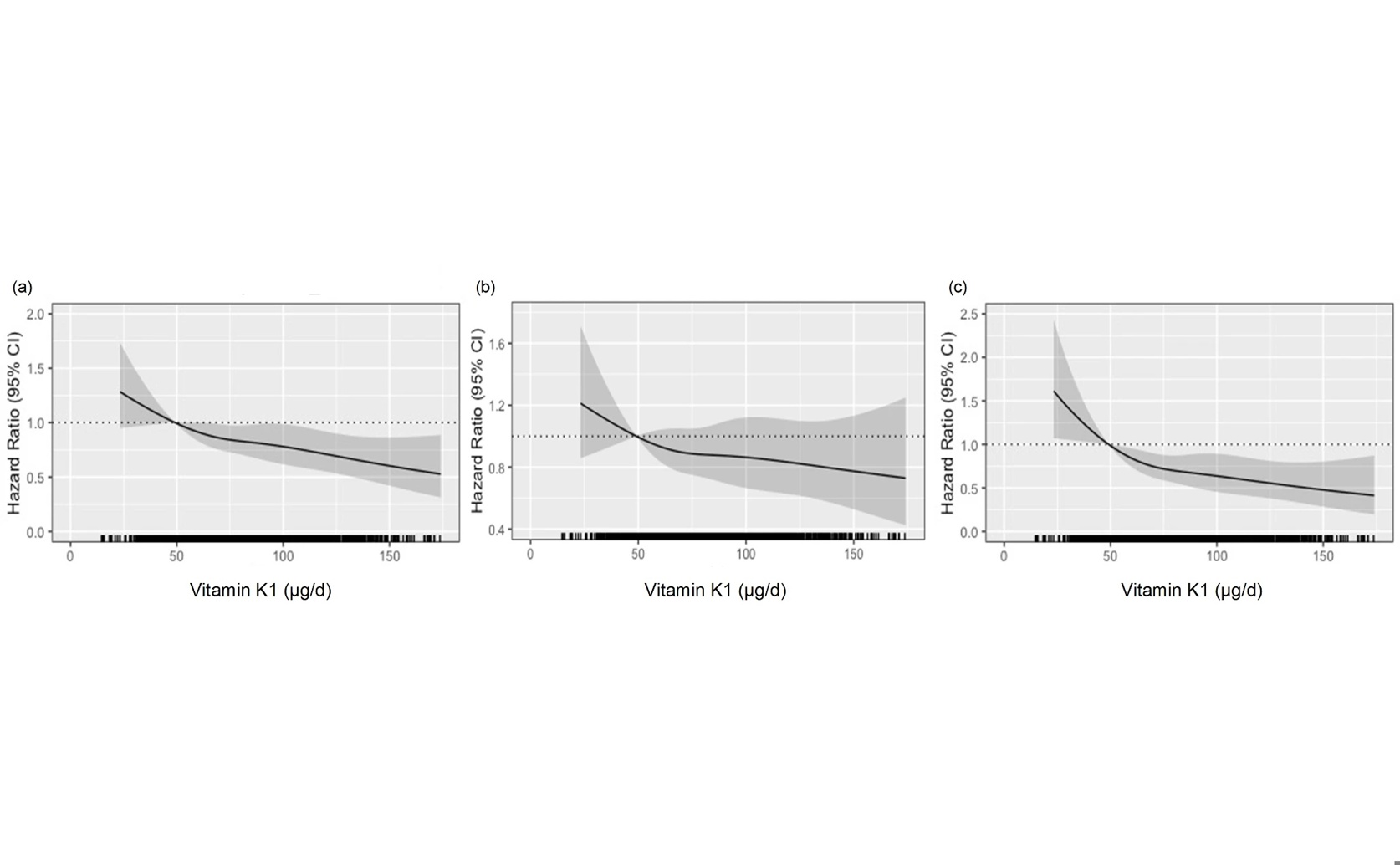
Higher dietary vitamin K1 intake in older women was associated with a significantly lower risk for atherosclerotic vascular disease events (a) and mortality (c), although the trend was not statistically significant for hospitalizations (b).

Image adapted from: Dupuy et al. / CC BY (Source)

Key Findings

  • Researchers in Perth found that older women who ate more vitamin K1-rich leafy greens had healthier arteries
  • Higher vitamin K1 intake was linked to a 29% lower risk of heart disease events and a 43% reduction in related deaths over 14 years
  • Adding vegetables like spinach and kale to the diet may help reduce heart disease risk in older women
Cardiovascular disease remains the leading cause of death globally, significantly impacting both men and women. However, recent trends indicate an alarming increase in mortality rates from atherosclerotic cardiovascular disease (ASCVD), particularly among middle-aged women[2]. Understanding and mitigating the risk factors associated with ASCVD is crucial for improving health outcomes, especially in older women who are already at heightened risk. Diet plays a pivotal role in cardiovascular health, with numerous studies highlighting the benefits of fruit and vegetable intake. Increasing the diversity and quantity of vegetables consumed has been linked to lower risks of atherosclerotic vascular disease (ASVD) mortality and reduced measures of subclinical atherosclerosis, such as common carotid artery intima-media thickness (CCA-IMT)[3]. Additionally, comprehensive analyses have reinforced the protective effects of fruits and vegetables against various cardiovascular outcomes, cancer, and overall mortality[4][5]. These findings underscore the importance of a nutrient-rich diet in preventing cardiovascular diseases. Building on this foundation, researchers at Edith Cowan University in Perth, Western Australia, conducted a study to explore the specific impact of vitamin K1 intake on cardiovascular health in older women[1]. Vitamin K1, primarily found in leafy green vegetables, is believed to inhibit vascular calcification—a common feature of ASVD. The study involved 1,436 community-dwelling women with an average age of 75 years. Dietary vitamin K1 intake was assessed using a validated food frequency questionnaire, and participants' cardiovascular health was monitored over 14.5 years through health records and ultrasound measurements of the carotid artery. The findings revealed that women with higher vitamin K1 intake had a significantly lower mean CCA-IMT, indicating less subclinical atherosclerosis. Specifically, those in the highest quartile of vitamin K1 consumption experienced a 5.6% reduction in CCA-IMT compared to those in the lowest quartile. Over the follow-up period, higher vitamin K1 intake was associated with a 29% lower risk of ASVD events and a 43% reduction in ASVD-related mortality. However, the study did not find a significant association between vitamin K1 intake and ASVD-related hospitalizations. These results are particularly meaningful when considered alongside previous research. The European Atherosclerosis Society has emphasized the importance of addressing sex-specific factors in ASCVD risk, advocating for early identification and treatment of modifiable risk factors in women[2]. The current study aligns with these recommendations by highlighting a dietary factor—vitamin K1 intake—that can be modified to reduce cardiovascular risk in older women. Moreover, the association between vegetable diversity and cardiovascular health observed in earlier studies[3][4][5] is further supported by the findings on vitamin K1. Leafy green vegetables, rich in vitamin K1, not only contribute to dietary diversity but also provide specific nutrients that directly impact vascular health. This connection emphasizes that it's not just the quantity but also the quality and variety of vegetables consumed that are important for cardiovascular protection. The methodological approach of the study ensures robust and reliable results. By utilizing a large cohort of older women and following them over an extended period, the researchers were able to capture long-term effects of vitamin K1 intake on cardiovascular outcomes. The use of multivariate analysis and Cox proportional hazard models allowed for the adjustment of potential confounding factors, strengthening the validity of the associations observed. However, it's important to note that while the study establishes a significant correlation between vitamin K1 intake and reduced ASVD risk, it does not prove causation. Further research, including randomized controlled trials, would be necessary to confirm the protective role of vitamin K1 and to understand the underlying mechanisms involved. Incorporating vitamin K1-rich foods into the diet, such as leafy green vegetables like spinach, kale, and broccoli, can be a practical strategy for older women to enhance their cardiovascular health. Given that vitamin K1 intake of approximately 120 µg per day was associated with beneficial outcomes, dietary adjustments to include these vegetables can be both achievable and impactful. This study adds to the growing body of evidence that supports the role of diet in cardiovascular health, particularly in vulnerable populations like older women. By identifying specific nutrients that contribute to reduced risk of ASCVD, public health recommendations can become more targeted and effective. As the burden of ASCVD continues to rise, especially among women, such insights are invaluable for developing strategies to improve longevity and quality of life. In conclusion, the research from Edith Cowan University reinforces the critical role of diet, and specifically vitamin K1 intake, in managing and preventing cardiovascular disease in older women. This aligns with and expands upon previous studies that highlight the importance of fruit and vegetable consumption, advocating for a comprehensive approach to dietary recommendations aimed at reducing the global burden of ASCVD.

NutritionHealth

References

Main Study

1) Higher vitamin K1 intakes are associated with lower subclinical atherosclerosis and lower risk for atherosclerotic vascular disease-related outcomes in older women

Published 3rd May, 2025

https://doi.org/10.1007/s00394-025-03686-x


Related Studies

2) Women, lipids, and atherosclerotic cardiovascular disease: a call to action from the European Atherosclerosis Society.

https://doi.org/10.1093/eurheartj/ehad472


3) Vegetable diversity in relation with subclinical atherosclerosis and 15-year atherosclerotic vascular disease deaths in older adult women.

https://doi.org/10.1007/s00394-019-01902-z


4) Fruit and vegetable intake and the risk of cardiovascular disease, total cancer and all-cause mortality-a systematic review and dose-response meta-analysis of prospective studies.

https://doi.org/10.1093/ije/dyw319


5) Relation of Different Fruit and Vegetable Sources With Incident Cardiovascular Outcomes: A Systematic Review and Meta-Analysis of Prospective Cohort Studies.

https://doi.org/10.1161/JAHA.120.017728


Related Articles

An unhandled error has occurred. Reload 🗙