How Vitamin E from Diet May Impact Leg Circulation Health

Jenn Hoskins
25th March, 2025

How Vitamin E from Diet May Impact Leg Circulation Health

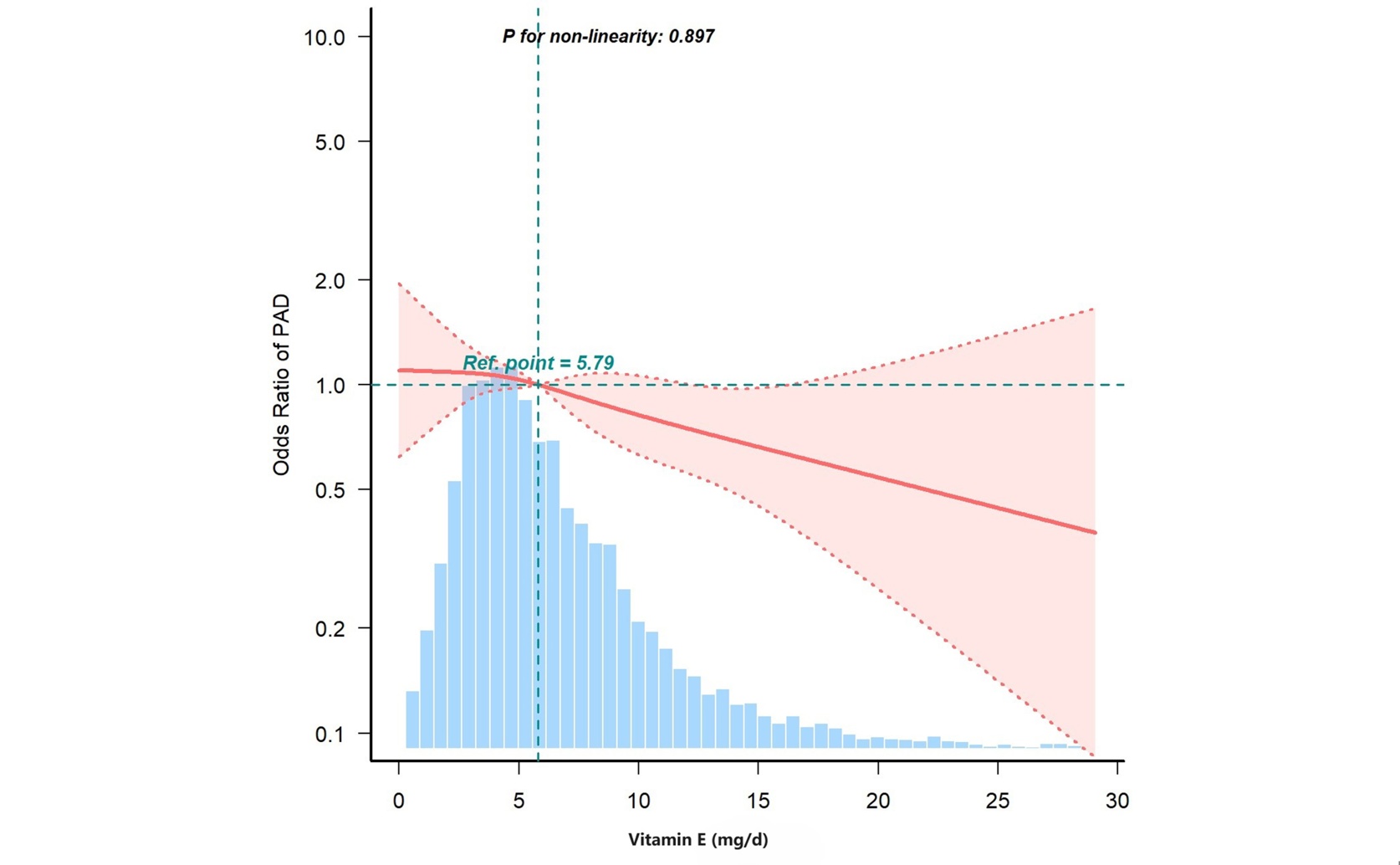
Higher dietary vitamin E intake is associated with a progressively lower odds ratio for peripheral arterial disease in a linear relationship, supporting the study's conclusion that increased vitamin E consumption may reduce PAD risk in US adults.

Image adapted from: Liu et al. / CC BY (Source)

Key Findings

  • Researchers at Erciyes University in the US found that adults over 40 who consume more vitamin E through their diet have a lower risk of developing Peripheral Arterial Disease (PAD)
  • Participants with the highest vitamin E intake had significantly fewer cases of PAD compared to those with the lowest intake
  • Eating vitamin E-rich foods like nuts and vegetable oils, combined with a healthy lifestyle, may help reduce the risk of PAD
Peripheral Arterial Disease (PAD) is a common circulatory problem where narrowed arteries reduce blood flow to the limbs, often causing pain and increasing the risk of heart disease and stroke. Understanding the factors that influence the development of PAD is crucial for prevention and management. Recent research from Erciyes University[1] sheds light on the role of dietary vitamin E intake in the incidence of PAD, building on previous studies that have explored various health indicators and lifestyle factors associated with this condition. The study conducted by Erciyes University analyzed data from 6,588 participants in the National Health and Nutrition Examination Survey (NHANES) between 1999 and 2004. This large-scale survey provides comprehensive health and nutritional information, making it an excellent resource for investigating the relationships between diet and disease. The researchers focused on examining whether there is a connection between the amount of vitamin E consumed through diet and the likelihood of developing PAD. Vitamin E is a fat-soluble antioxidant found in various foods, including nuts, seeds, and vegetable oils. It plays a vital role in protecting cells from oxidative stress, which can damage blood vessels and contribute to the development of cardiovascular diseases. Given its antioxidant properties, vitamin E has been hypothesized to have a protective effect against PAD. In their analysis, the researchers accounted for numerous factors that could influence PAD risk, such as age, sex, race, marital status, education, physical activity, income, smoking habits, hypertension, diabetes, cardiovascular disease, body mass index, total cholesterol, and HbA1c levels. By controlling for these variables, the study aimed to isolate the specific impact of vitamin E intake on PAD risk. The findings revealed a negative correlation between dietary vitamin E intake and the likelihood of developing PAD. Specifically, individuals in the third quartile of vitamin E intake had a significantly lower occurrence rate of PAD compared to those in the first quartile (OR: 0.68, 95% CI: 0.51-0.91). This suggests that higher intake of vitamin E is associated with a reduced risk of PAD. The overall prevalence of PAD in the study population was 5.9%, with a nearly equal distribution between males and females. These results align with previous research that has identified inflammatory and nutritional markers as important factors in PAD development. For instance, a study exploring the Systemic Immune-Inflammation Index (SII) found that higher SII levels are linked to an increased risk of PAD[2]. Similarly, research from Shanxi Medical University[3] demonstrated that a lower Prognostic Nutritional Index (PNI), indicating poorer nutritional status, is associated with a higher risk of PAD. The current study by Erciyes University complements these findings by highlighting the importance of specific dietary components, such as vitamin E, in mitigating PAD risk. Moreover, lifestyle factors play a crucial role in the management and prevention of PAD. A study involving individuals with type 2 diabetes from the UK Biobank found that a favorable lifestyle, including factors like non-smoking, regular physical activity, and a high-quality diet, was associated with a lower risk of PAD[4]. The vitamin E study reinforces the significance of diet as a modifiable risk factor, suggesting that increasing vitamin E intake could be a practical strategy for reducing PAD risk, especially when combined with other healthy lifestyle choices. The methodology of the Erciyes University study involved logistic regression and smooth curve fitting to analyze the data, ensuring robust and reliable results. By utilizing a retrospective cross-sectional design, the researchers were able to identify associations between vitamin E intake and PAD prevalence, although causality cannot be definitively established. The implications of this research are significant for public health and clinical practice. Dietary guidance and nutrition education programs may benefit from incorporating recommendations to increase vitamin E intake as a preventive measure against PAD. This is particularly important for populations at higher risk, such as older adults and individuals with existing cardiovascular conditions. In conclusion, the study from Erciyes University contributes valuable insights into the relationship between diet and peripheral arterial disease. By demonstrating a negative association between dietary vitamin E intake and PAD incidence, it emphasizes the potential of nutritional interventions in reducing the burden of this condition. When combined with findings from previous studies[2][3][4], this research underscores the multifaceted approach needed to effectively prevent and manage PAD, highlighting the interplay between nutrition, lifestyle, and inflammatory processes in cardiovascular health.

MedicineNutritionHealth

References

Main Study

1) Association of dietary vitamin E intake with peripheral arterial disease: A retrospective cross-sectional study

Published 24th March, 2025

https://doi.org/10.1371/journal.pone.0320356


Related Studies

2) Higher Systemic Immune-Inflammation Index is Associated With Higher Likelihood of Peripheral Arterial Disease.

https://doi.org/10.1016/j.avsg.2021.12.011


3) Association of prognostic nutritional index with peripheral artery disease in US adults: a cross-sectional study.

https://doi.org/10.1186/s12872-024-03815-0


4) Modifiable Lifestyle Factors, Genetic Risk, and Incident Peripheral Artery Disease Among Individuals With Type 2 Diabetes: A Prospective Study.

https://doi.org/10.2337/dc23-1503


Related Articles

An unhandled error has occurred. Reload 🗙