Severe Coral Damage and Death During 2023-2024 Ocean Heatwave

Greg Howard
5th May, 2025

Severe Coral Damage and Death During 2023-2024 Ocean Heatwave

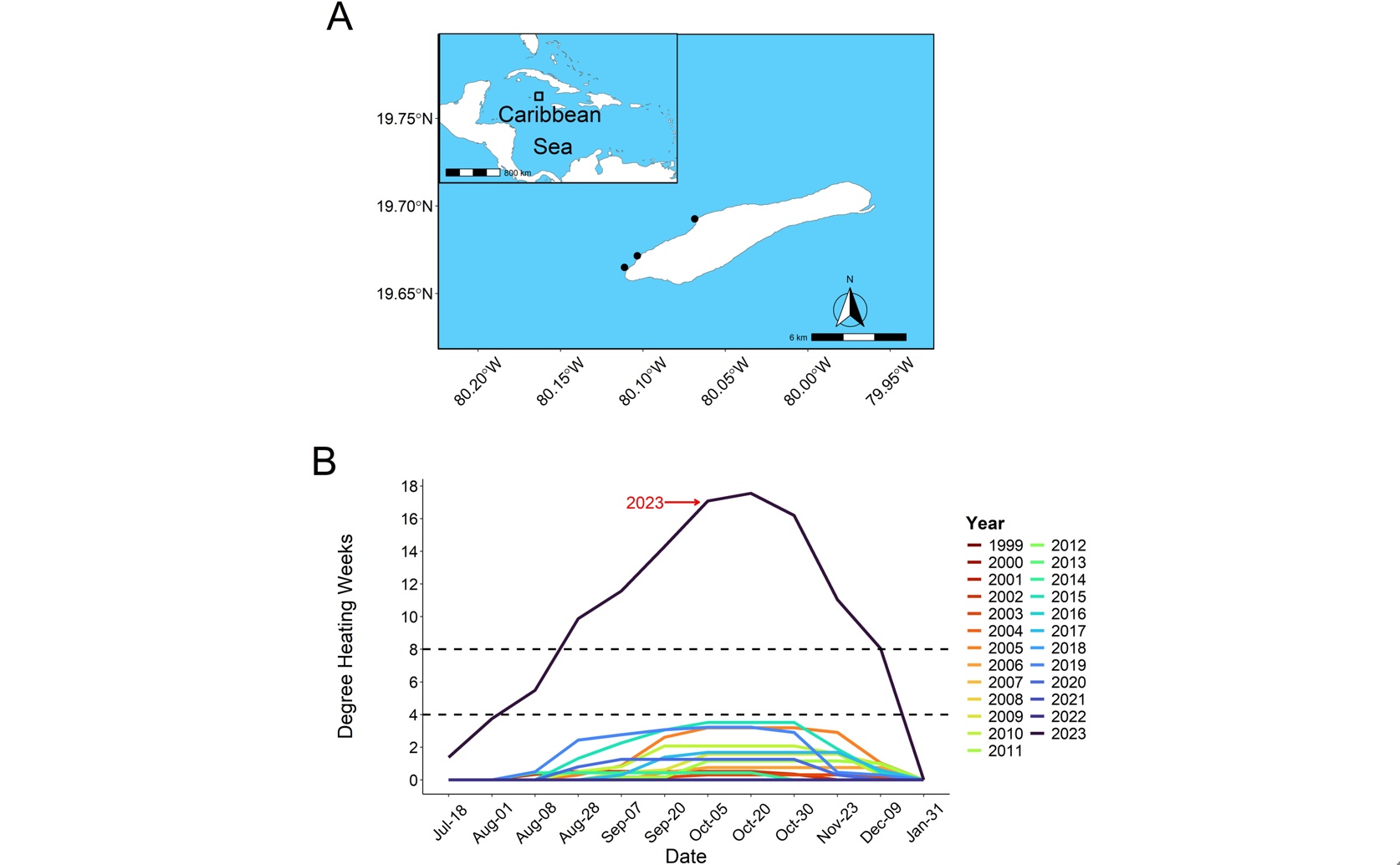
The 2023 marine heatwave at the study sites in Little Cayman (a) was historically unprecedented, with thermal stress far surpassing the critical thresholds for mass bleaching and mortality for the first time in over two decades of monitoring (b).

Image adapted from: Doherty et al. / CC BY (Source)

Key Findings

  • In Little Cayman, a record-breaking 2023 marine heatwave caused over half of the coral to die
  • About 80% of corals were bleached or showed signs of death, especially sensitive species
  • Even protected marine areas couldn't prevent this massive coral loss, highlighting climate change’s severe impact
Coral reefs are vital marine ecosystems that support a diverse range of marine life and provide significant economic benefits to coastal communities. However, they are increasingly threatened by climate change, particularly through the rise in marine heatwaves (MHWs). MHWs are prolonged periods of unusually high sea surface temperatures that can last from days to months and cover extensive geographic areas[2]. These extreme temperature events can lead to coral bleaching, where corals expel the symbiotic algae that provide them with energy, ultimately resulting in coral mortality. A recent study conducted by researchers at the University of Plymouth, United Kingdom[1], highlights the severe impact of MHWs on coral reefs. In 2023, the reefs around Little Cayman experienced an unprecedented MHW with more than 17 Degree Heating Weeks (DHW). DHW is a measure of heat stress that combines the intensity and duration of elevated temperatures, and a value above 8 is typically associated with significant bleaching events. The 2023 heatwave far exceeded previous DHW measurements, leading to catastrophic outcomes for the coral population in this region. During the peak of the heatwave, approximately 80% of all corals in Little Cayman were either bleached or showed signs of mortality. By the final survey date, around 54% of the corals examined were dead. The study found that different coral species responded differently to the heat stress. Weedy coral taxa, such as Agaricia spp., Porites astreoides, and Porites porites, were highly susceptible to bleaching and experienced extensive mortality. In contrast, stress-tolerant reef-building taxa like Orbicella spp. bleached but had lower mortality rates. This disparity is significant because Little Cayman’s reefs were predominantly composed of the highly sensitive weedy taxa, making them particularly vulnerable to severe heat events. This study builds on previous research that has shown the increasing frequency and intensity of MHWs due to global warming[2]. Between 1982 and 2016, the number of MHW days doubled, and projections indicate that this number could increase by factors of 16 to 41 depending on the level of global warming[2]. The current study in Little Cayman provides concrete evidence of these projections, demonstrating how extreme heat events can devastate coral ecosystems even in well-protected areas. One of the critical findings of the study is that local protection measures, such as no-take Marine Protected Areas (MPAs), were insufficient to prevent coral mortality during the extreme heatwave. Approximately 57% of the coastal environment in Little Cayman was classified as no-take MPAs, yet even these protected areas could not shield the corals from the global stressor of climate change. This underscores the notion presented in earlier studies that while local conservation efforts are essential, they cannot fully mitigate the impacts of global climate change on marine ecosystems[3]. The researchers employed satellite observations and extensive field surveys to monitor the extent and intensity of the MHW and its effects on coral health. By analyzing the bleaching and mortality rates across different coral taxa, they were able to identify the specific vulnerabilities within the coral community. This approach allowed for a detailed understanding of how different species respond to thermal stress, providing insights into the future resilience of coral reefs under ongoing climate change. The study also relates to broader climate projection research, which emphasizes the reliability of Earth System Models (ESMs) in predicting future warming scenarios[3]. The foundational work of scientists like Svante Arrhenius and Guy Stewart Callendar established the mathematical basis for understanding the relationship between greenhouse gas emissions and global warming[3]. The current study in Little Cayman adds to this body of knowledge by illustrating the tangible consequences of these projections on marine ecosystems. Furthermore, the findings highlight the urgent need to address global carbon emissions to prevent the most severe outcomes predicted by climate models. The projected increase in MHWs and their devastating impact on coral reefs serve as a stark reminder that mitigating climate change requires coordinated global efforts. Without significant reductions in greenhouse gas emissions, even well-managed and protected marine areas will continue to face existential threats from rising temperatures. In conclusion, the 2023 marine heatwave in Little Cayman serves as a critical case study demonstrating the profound effects of climate change on coral reefs. Despite substantial local protections, the global nature of warming led to unprecedented coral mortality, particularly among sensitive weedy taxa. This research reinforces the findings of earlier studies on the increasing threat of MHWs and the limitations of local conservation efforts in the face of global climate change[2][3]. It underscores the necessity of global action to reduce greenhouse gas emissions to preserve these vital marine ecosystems for the future.

EnvironmentEcology

References

Main Study

1) Widespread coral bleaching and mass mortality during the 2023–2024 marine heatwave in Little Cayman

Published 2nd May, 2025

https://doi.org/10.1371/journal.pone.0322636


Related Studies

2) Marine heatwaves under global warming.

https://doi.org/10.1038/s41586-018-0383-9


3) CO2, the greenhouse effect and global warming: from the pioneering work of Arrhenius and Callendar to today's Earth System Models.

https://doi.org/10.1016/j.endeavour.2016.07.002


Related Articles

An unhandled error has occurred. Reload 🗙