Regulating G6PD Affects Growth and Citric Acid in Black Mold

Jim Crocker
27th April, 2025

Regulating G6PD Affects Growth and Citric Acid in Black Mold

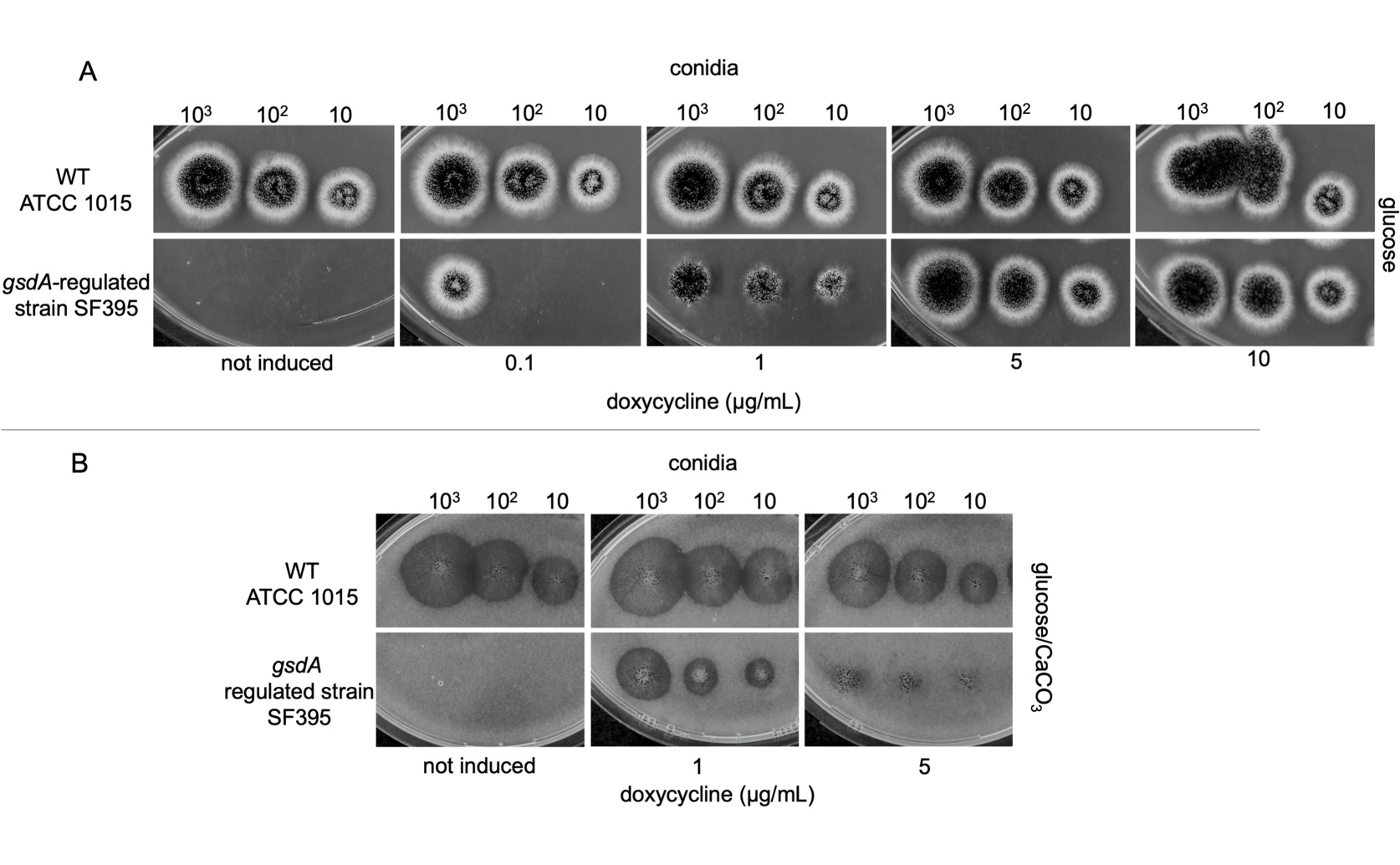
An engineered strain of Aspergillus niger demonstrates its dependency on induced gsdA expression for growth on glucose (a), and shows that while moderate expression allows for acid production, higher expression levels support growth but inhibit the acidification linked to citric acid synthesis (b).

Image adapted from: Fritsche et al. / CC BY (Source)

Key Findings

  • Researchers in Austria and Nigeria engineered Aspergillus niger to enhance citric acid production
  • By precisely controlling a key enzyme, they increased citric acid yield by nearly 50%
  • This genetic modification offers a more efficient method for industrial citric acid manufacturing
Aspergillus niger, a filamentous fungus, is a cornerstone in industrial biotechnology due to its ability to produce a variety of valuable compounds, including organic acids like citric acid, proteins, and enzymes[2]. Enhancing the efficiency of A. niger in these processes is crucial for industrial applications, but challenges such as controlling its growth and optimizing metabolic pathways have persisted for decades[2][3]. Recent research from the Austrian Centre of Industrial Biotechnology at Technische Universität Wien and Federal University Dutse, Nigeria, has shed new light on improving citric acid production by manipulating a key metabolic enzyme in A. niger[1]. Citric acid production relies heavily on glycolysis, a fundamental metabolic pathway that breaks down glucose to generate energy and essential precursors. A critical enzyme in this pathway is glucose-6-phosphate dehydrogenase (G6PD), encoded by the gene gsdA. G6PD directs glucose-6-phosphate into the pentose phosphate pathway (PPP), which is vital for producing NADPH, a cofactor necessary for various anabolic reactions and maintaining cellular redox balance[4][5]. Despite its importance, the exact role of G6PD in citric acid synthesis and overall fungal growth was not fully understood. The study introduced a genetically modified strain of A. niger where the expression of gsdA was controlled using a tetracycline-inducible (ptet-on) system inserted at the pyrG locus. This modification allowed precise regulation of G6PD levels, disrupting the native gsdA expression and ensuring that the gene's activity could be tightly controlled. Under conditions where gsdA was not induced, the modified strain could not grow on glucose alone, highlighting the essential role of G6PD in glucose metabolism. However, when gluconate, a precursor in the PPP, was added to the growth medium, the fungus was able to grow, albeit more slowly compared to the control strain with the native gsdA promoter. To evaluate the impact of varying gsdA expression on citric acid production, the researchers adjusted the induction levels using doxycycline. At low induction levels, the yield of citric acid on glucose increased by 49% compared to the control strain. This improvement came with reduced growth rates, resulting in lower overall citric acid concentrations. By supplementing the growth medium with gluconate, the team aimed to provide additional precursors for biomass production, thereby enhancing the conversion of glucose to citric acid more efficiently. In conditions where the native gsdA regulation was absent, both growth and citric acid production were delayed. However, after 120 hours of cultivation, the gsdA-regulated strain demonstrated higher citric acid yields than the control, especially when higher proportions of gluconate were present in the medium. This research builds on previous studies that have highlighted the significance of the PPP and NADPH in fungal metabolism. The pentose phosphate pathway is not only a major source of NADPH but also contributes to the synthesis of various industrially relevant compounds, including polyols and biofuels[4]. Additionally, prior work has indicated that increasing NADPH availability can enhance the production of proteins and secondary metabolites in A. niger[5]. By specifically targeting the gsdA gene, the current study provides a focused approach to manipulating NADPH levels, thereby optimizing citric acid production. The methodology employed involved the Design-Build-Test-Learn (DBTL) cycle, a systematic approach in metabolic engineering that allows for iterative improvements in strain design and performance[5]. By overexpressing genes involved in NADPH generation, such as gsdA, researchers can redirect metabolic fluxes to favor the production of desired compounds like citric acid[3]. In this case, the controlled expression of gsdA under different induction levels enabled the fine-tuning of the PPP, balancing growth and product yield effectively. The findings of this study are significant for industrial biotechnology. They demonstrate that precise genetic modifications can lead to substantial improvements in product yields while maintaining or even enhancing the growth and metabolic efficiency of the production organism. This approach aligns with the broader goals of metabolic engineering, which seeks to optimize microbial cell factories for the sustainable and cost-effective production of biochemicals[3]. Furthermore, the ability to regulate gsdA expression offers flexibility in industrial processes, allowing manufacturers to adjust conditions based on production needs. For instance, during phases where high citric acid yield is desired, gsdA can be upregulated to channel more glucose into the PPP, increasing NADPH availability and, consequently, citric acid production. Conversely, during growth phases, gsdA expression can be modulated to support biomass accumulation without compromising overall productivity. In conclusion, the study from the Austrian Centre of Industrial Biotechnology and its collaborators advances our understanding of the metabolic pathways in A. niger and provides practical strategies for enhancing citric acid production. By leveraging genetic regulation of key enzymes like G6PD, it is possible to achieve higher yields and more efficient industrial processes. This work not only addresses long-standing challenges in fungal biotechnology but also paves the way for future innovations in the field[2][3][4][5].

BiotechGeneticsMycology

References

Main Study

1) Regulating the glucose-6-phosphate dehydrogenase encoding gene gsdA and its impact on growth and citric acid production in Aspergillus niger

Published 24th April, 2025

https://doi.org/10.1371/journal.pone.0321363


Related Studies

2) Something old, something new: challenges and developments in Aspergillus niger biotechnology.

https://doi.org/10.1042/EBC20200139


3) Engineering of primary carbon metabolism in filamentous fungi.

https://doi.org/10.1016/j.biotechadv.2020.107551


4) The pentose phosphate pathway in industrially relevant fungi: crucial insights for bioprocessing.

https://doi.org/10.1007/s00253-021-11314-x


5) Engineering cofactor metabolism for improved protein and glucoamylase production in Aspergillus niger.

https://doi.org/10.1186/s12934-020-01450-w


Related Articles

An unhandled error has occurred. Reload 🗙