Exploring Yeasts Finds New Ways to Boost Enzyme Production in Baker's Yeast

Jim Crocker
12th March, 2025

Exploring Yeasts Finds New Ways to Boost Enzyme Production in Baker's Yeast

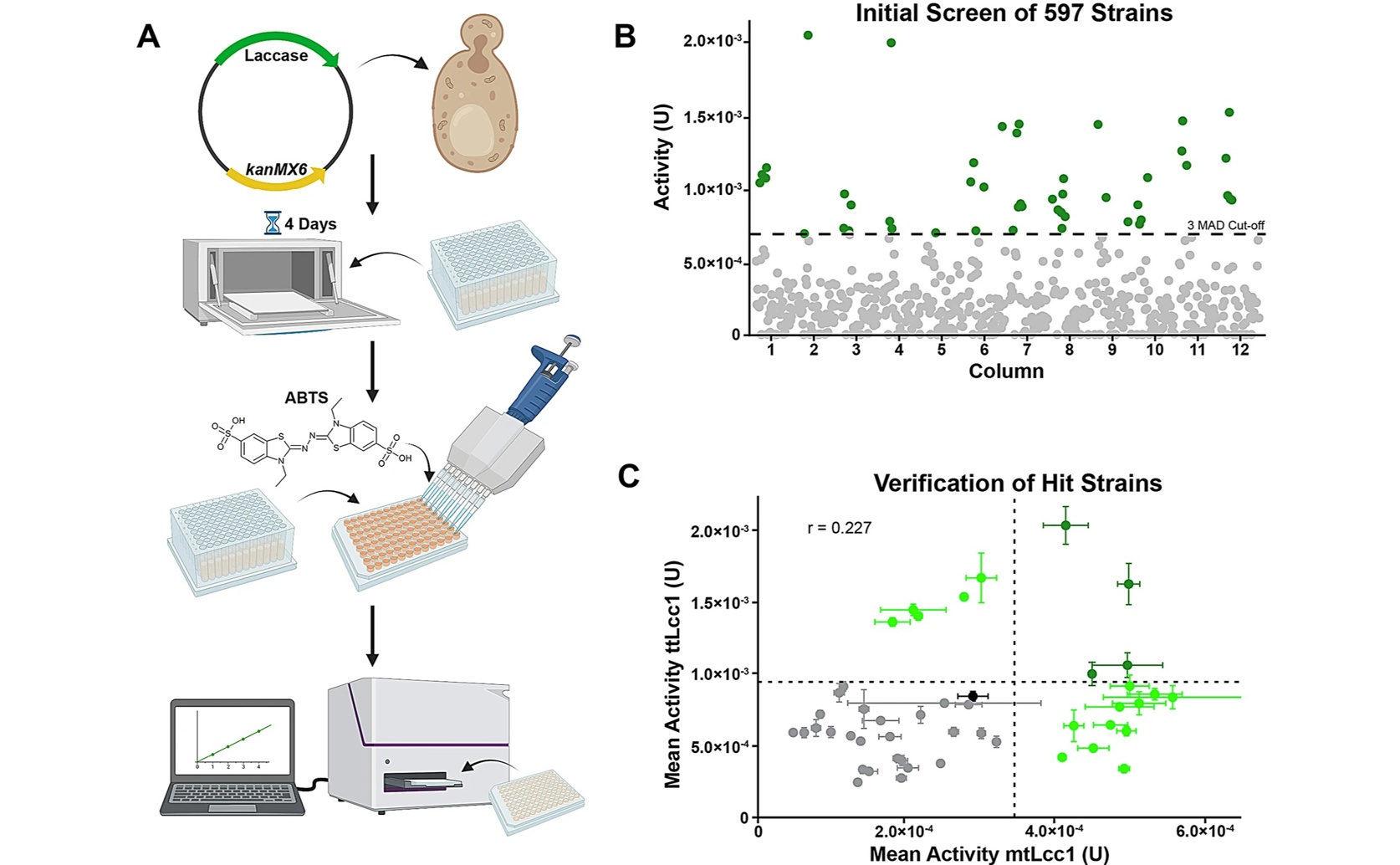
A high-throughput screen of ~600 diverse Saccharomyces cerevisiae isolates for laccase activity identified 47 preliminary hits (b), of which 20 strains were validated as producing significantly higher levels of active Trametes trogii or Myceliophthora thermophila laccase compared to the BY4741 laboratory reference, with low correlation between the two laccase activities suggesting protein-specific factors influence heterologous expression capacity (c).

Image adapted from: Wong et al. / CC BY (Source)

Key Findings

  • Researchers at the University of British Columbia discovered special yeast strains that produce higher levels of important proteins used in medicines
  • These superior yeast strains made more active enzymes without needing increased gene activity, indicating improved cellular processes
  • By studying their genes and proteins, scientists identified key pathways and made genetic changes that further boosted protein production efficiently
Producing recombinant proteins is essential for creating many biopharmaceuticals, such as vaccines and therapeutic enzymes. The yeast Saccharomyces cerevisiae is a popular choice for this purpose because it has a well-understood genome, can grow quickly, and is cost-effective to cultivate. However, one challenge researchers face is that the amount of protein these yeast cells produce often doesn't match the levels achieved by other organisms. Addressing this issue could significantly improve the efficiency and cost-effectiveness of producing important biopharmaceuticals[2]. Researchers at the University of British Columbia conducted a study to find yeast strains that naturally produce higher levels of recombinant proteins. They focused on laccase enzymes, specifically multicopper oxidases from the fungi Trametes trogii and Myceliophthora thermophila. Laccases are valuable in various industries, including bioremediation and biotechnology, because they can break down a wide range of pollutants and are used in processes from food processing to biofuel production[3][4]. Despite their potential, producing these enzymes on a large scale remains challenging due to issues with stability and the complexity of industrial environments. The team developed a high-throughput screening method to evaluate different strains of S. cerevisiae, including wild, industrial, and laboratory isolates. Through this method, they identified 20 non-laboratory yeast strains that were significantly better at producing active laccase enzymes compared to the standard laboratory strain. Interestingly, these high-producing strains had lower levels of laccase mRNA, which suggests that the increased protein production was not due to higher gene expression. Instead, the factors contributing to enhanced protein production must lie elsewhere in the cell’s machinery[1]. To understand what made these strains more effective, the researchers performed comprehensive genomic and proteomic analyses. This approach allowed them to examine changes in the yeast cells' genes and proteins that could be responsible for the increased production of laccase. Their analysis revealed several pathways that were altered in the high-producing strains. Specifically, there were broad changes in cellular metabolism, including genes involved in carbohydrate breakdown, thiamine biosynthesis, transmembrane transport, and vacuolar degradation. These modifications suggest that the yeast cells were adjusting their internal processes to better support the production and secretion of the recombinant protein[2]. Further investigation involved targeted genetic modifications based on the study's findings. The researchers deleted specific genes, such as HXT11, which encodes a hexose transporter, and PRM8 and PRM9, which are involved in transporting proteins from the endoplasmic reticulum to the Golgi apparatus. These deletions in the standard laboratory strain resulted in significantly higher laccase production. Additionally, removing the Hsp110 SSE1 gene, identified through proteomic analysis, also led to increased enzyme activity. Notably, these genetic changes did not significantly impact the overall protein homeostasis network, indicating that the improvements in laccase production were achieved without disrupting the cell’s general protein management systems. This study builds on previous research that emphasizes the importance of understanding and engineering the cellular machinery to enhance protein production in yeast[2]. By identifying and manipulating specific genetic pathways, the researchers were able to create yeast strains that are more efficient at producing valuable enzymes like laccases. This not only improves the potential for industrial-scale production but also provides insights into how yeast cells can be optimized for various biotechnological applications. The findings from this research open new possibilities for leveraging the genetic diversity of Saccharomyces cerevisiae. By exploring different natural strains and understanding the underlying genetic factors that contribute to high protein production, scientists can develop more robust and efficient yeast platforms. This advancement could lead to more effective production processes for a wide range of biopharmaceuticals and industrial enzymes, ultimately benefiting various sectors from healthcare to environmental management.

BiotechGeneticsMycology

References

Main Study

1) Mining yeast diversity unveils novel targets for improved heterologous laccase production in Saccharomyces cerevisiae

Published 10th March, 2025

https://doi.org/10.1186/s12934-025-02677-1


Related Studies

2) Exploring the potential of Saccharomyces cerevisiae for biopharmaceutical protein production.

https://doi.org/10.1016/j.copbio.2017.03.017


3) Laccases: structure, function, and potential application in water bioremediation.

https://doi.org/10.1186/s12934-019-1248-0


4) Laccase: a multi-purpose biocatalyst at the forefront of biotechnology.

https://doi.org/10.1111/1751-7915.12422


Related Articles

An unhandled error has occurred. Reload 🗙