
Proximity to Greenhouse Flower Farms Linked to Teen Pesticide Levels
Jenn Hoskins
21st April, 2025


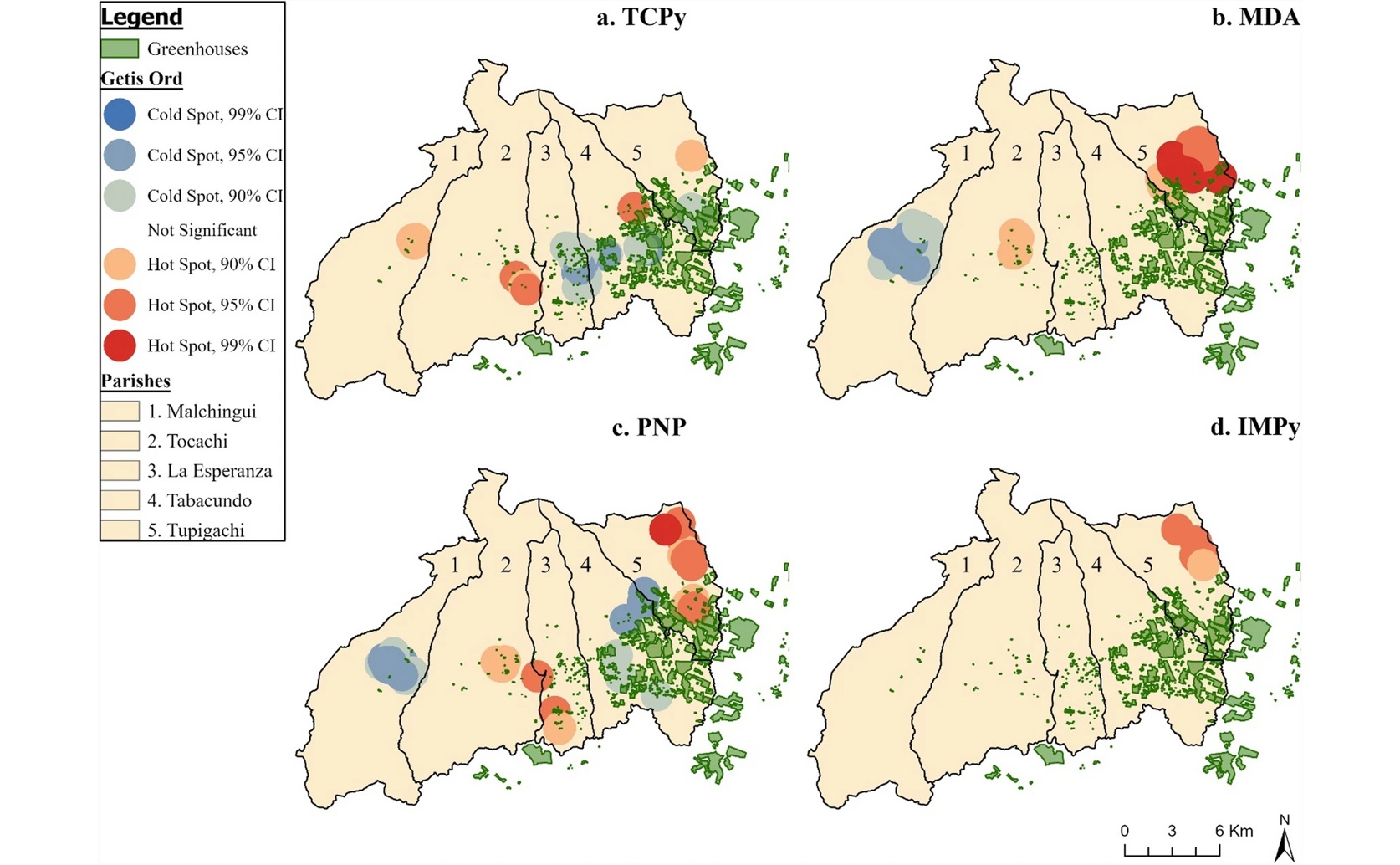
Geospatial analysis shows that elevated urinary concentrations of the organophosphate metabolites TCPy (a), MDA (b), PNP (c), and IMPy (d) cluster into "hotspots," predominantly in parishes with a high density of floricultural greenhouses.
Key Findings
- In Pedro Moncayo, Ecuador, teens living within 200 meters of flower greenhouses have higher levels of certain pesticides
- Adolescents farther than 200 meters away showed increased levels of different pesticides, indicating varied pesticide drift
- The study highlights significant health risks for youth near farming activities and suggests measures to reduce pesticide exposure
References
Main Study
1) Relationships of residential distance to greenhouse floriculture and organophosphate, pyrethroid, and neonicotinoid urinary metabolite concentration in Ecuadorian Adolescents
Published 18th April, 2025
https://doi.org/10.1186/s12942-025-00395-w
Related Studies
2) Acetylcholinesterase activity, cohabitation with floricultural workers, and blood pressure in Ecuadorian children.
3) Acute pesticide illnesses associated with off-target pesticide drift from agricultural applications: 11 States, 1998-2006.
4) A review of nonoccupational pathways for pesticide exposure in women living in agricultural areas.
5) Pesticides in household dust and soil: exposure pathways for children of agricultural families.
Journal: Environmental health perspectives, Issue: Vol 103, Issue 12, Dec 1995
Related Articles
 14th April, 2024 | Jenn Hoskins