Autism-Linked Chemical Affects Adult Social Behavior Despite Small Early Impact

Greg Howard
18th April, 2025

Autism-Linked Chemical Affects Adult Social Behavior Despite Small Early Impact

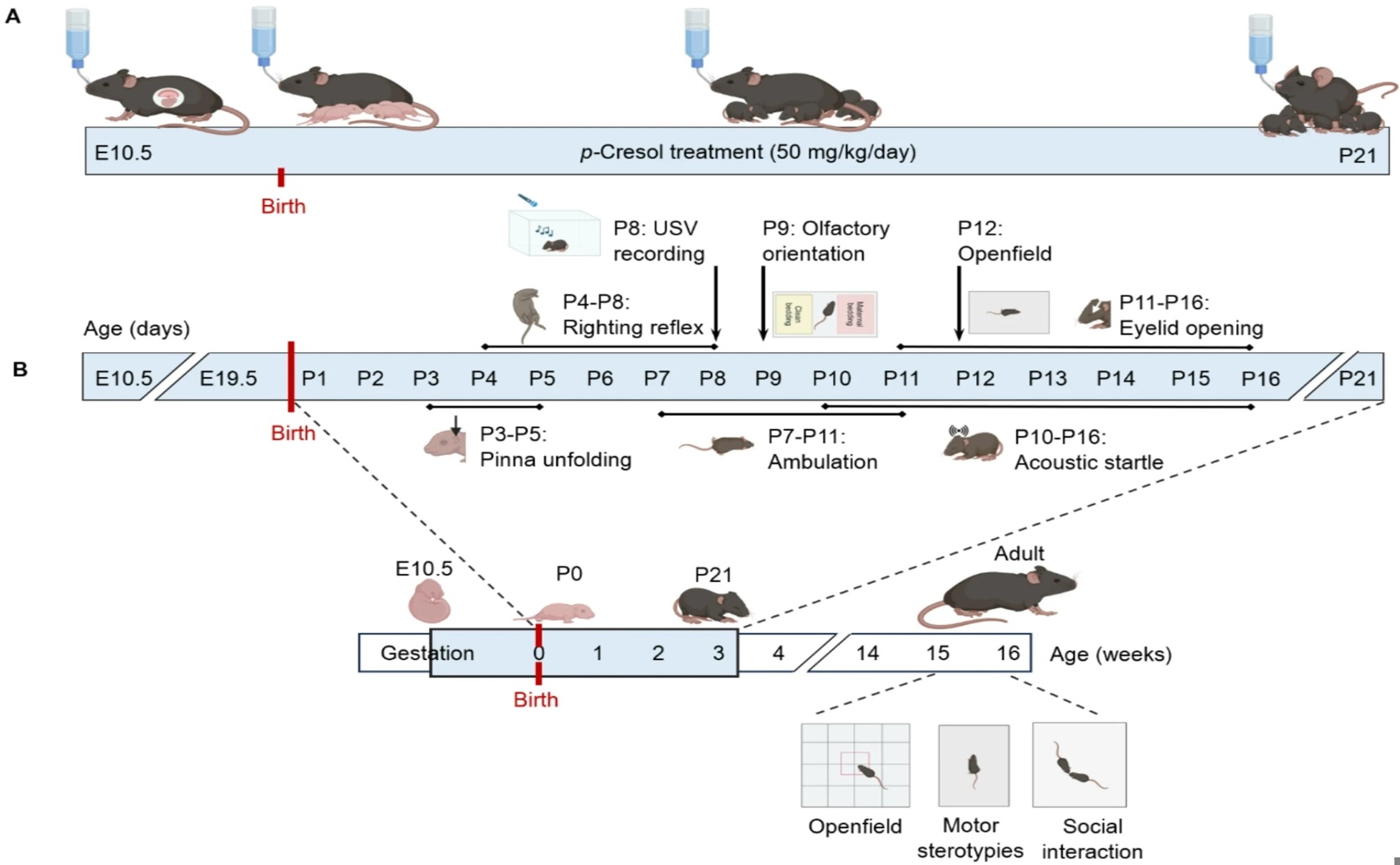
This figure illustrates the experimental design where perinatal p-Cresol exposure was administered to mothers from mid-gestation through weaning (a), followed by behavioral testing of the offspring in infancy and adulthood (b), a protocol that revealed lasting social deficits despite having limited impact on early development.

Image adapted from: Canaguier et al. / CC BY (Source)

Key Findings

  • Researchers at Université Côte d’Azur found that pregnant mice exposed to the chemical p-Cresol showed no early growth issues in their babies
  • As adults, these mice displayed social challenges and repetitive behaviors similar to autism, affecting both males and females
  • The study suggests that environmental toxins like p-Cresol during pregnancy could influence the development of autism-related traits
Environmental exposures during pregnancy are increasingly recognized as significant factors influencing the health of offspring. One such exposure, p-Cresol, a chemical produced both naturally by gut bacteria and industrially through processes like chemical manufacturing and exhaust fumes, has been linked to autism spectrum disorders (ASD)[2][3]. Elevated levels of p-Cresol have been consistently observed in individuals with ASD, raising concerns about its potential role in neurodevelopmental disorders. A recent study conducted by researchers at *Université Côte d’Azur[1] investigated the effects of perinatal exposure to p-Cresol on the development of ASD-like behaviors in mice. The study aimed to mimic human exposure patterns by administering p-Cresol to pregnant mice through their drinking water from mid-gestation, continuing through lactation, and until weaning. This approach was designed to reflect the critical developmental windows during pregnancy and early infancy when the brain is particularly vulnerable to external toxins. The researchers found that while exposure to p-Cresol did not impact gestational outcomes, postnatal growth, developmental milestones, or sensorimotor reflexes, it did result in significant social deficits and stereotyped behaviors in adult offspring of both male and female mice. These behavioral changes are core phenotypes associated with ASD, suggesting that p-Cresol selectively induces ASD-like behaviors without broadly impairing early development. This study builds on previous research indicating a link between gut-derived metabolites and ASD. For instance, elevated urinary p-Cresol levels have been documented in autistic children[2], and alterations in the gut microbiota and metabolome have been observed in individuals with ASD compared to healthy controls[3][4]. The current study by Université Côte d’Azur extends these findings by demonstrating a direct behavioral impact of p-Cresol exposure during critical developmental periods. The methodology employed involved exposing pregnant mice to p-Cresol and monitoring various developmental and behavioral parameters in their offspring. By focusing on specific behavioral outcomes related to ASD, the researchers were able to isolate the effects of p-Cresol from other potential developmental disruptions. This targeted approach allowed for a clearer understanding of how p-Cresol may contribute to neurodevelopmental disorders. Furthermore, the study’s findings are consistent with earlier research on the gut-brain axis, which explores how metabolites produced by gut bacteria can influence brain function and behavior[5]. For example, the metabolism of proteins by gut bacteria can lead to the production of toxic metabolites like p-Cresol, ammonia, and indole, which have been associated with negative health outcomes[5]. The addition of prebiotics has been shown to modulate these bacterial activities, potentially reducing the production of harmful metabolites and thereby improving host health[5]. Although the main study did not directly investigate prebiotics, its findings highlight the importance of microbial metabolites in neurodevelopment, aligning with the broader understanding of the gut microbiota’s role in health and disease. Moreover, the study resonates with research indicating that children with ASD often exhibit altered gut microbiota composition and metabolite profiles[3][4]. For instance, reduced diversity in gut bacteria and lower levels of beneficial microbes like Bifidobacterium have been reported in ASD populations[3][4]. The current study’s focus on p-Cresol provides a specific mechanistic insight into how certain microbial metabolites might influence behavioral outcomes, supporting the hypothesis that gut microbiota dysbiosis could be a contributing factor to ASD. The implications of this research are significant, as they suggest that environmental exposures to specific microbial metabolites during critical periods of development could have lasting impacts on behavior and neurological health. This underscores the need for further epidemiological studies to quantify p-Cresol exposure in pregnant women and young children and to explore its potential associations with ASD and other neurodevelopmental disorders. In conclusion, the study by Université Côte d’Azur* provides valuable evidence linking perinatal p-Cresol exposure to ASD-like behaviors in mice, building on existing research that highlights the interplay between gut microbiota, their metabolites, and neurodevelopment. These findings pave the way for future investigations into environmental factors that may contribute to the rising prevalence of ASD, offering potential avenues for prevention and intervention through modulation of gut microbiota and reduction of harmful metabolite exposure.

HealthMental HealthBiochem

References

Main Study

1) Perinatal exposure to the autism-linked metabolite p-Cresol has limited impact on early development in mice but lasting effects on adult social behavior

Published 15th April, 2025

https://doi.org/10.1038/s41598-025-96840-8


Related Studies

2) Urinary p-cresol is elevated in young French children with autism spectrum disorder: a replication study.

https://doi.org/10.3109/1354750X.2014.936911


3) Differences in fecal microbial metabolites and microbiota of children with autism spectrum disorders.

https://doi.org/10.1016/j.anaerobe.2017.12.007


4) Fecal microbiota and metabolome of children with autism and pervasive developmental disorder not otherwise specified.

https://doi.org/10.1371/journal.pone.0076993


5) Prebiotic Supplementation of In Vitro Fecal Fermentations Inhibits Proteolysis by Gut Bacteria, and Host Diet Shapes Gut Bacterial Metabolism and Response to Intervention.

https://doi.org/10.1128/AEM.02749-18


Related Articles

An unhandled error has occurred. Reload 🗙