Heart Cell Study Shows Varied Response to Heat Stress

Jenn Hoskins
18th April, 2025

Heart Cell Study Shows Varied Response to Heat Stress
Image Source: © Natural Science News. This image is an artistic rendition.

Key Findings

  • Researchers at Ocean University of China discovered that rising ocean temperatures damage scallop hearts by disrupting their energy production
  • Different heart cells in scallops respond uniquely to heat, with some enhancing communication to maintain heart function
  • They identified a crucial gene, AiPLRP2-like, essential for scallops to tolerate high temperatures, ensuring their survival and aquaculture sustainability
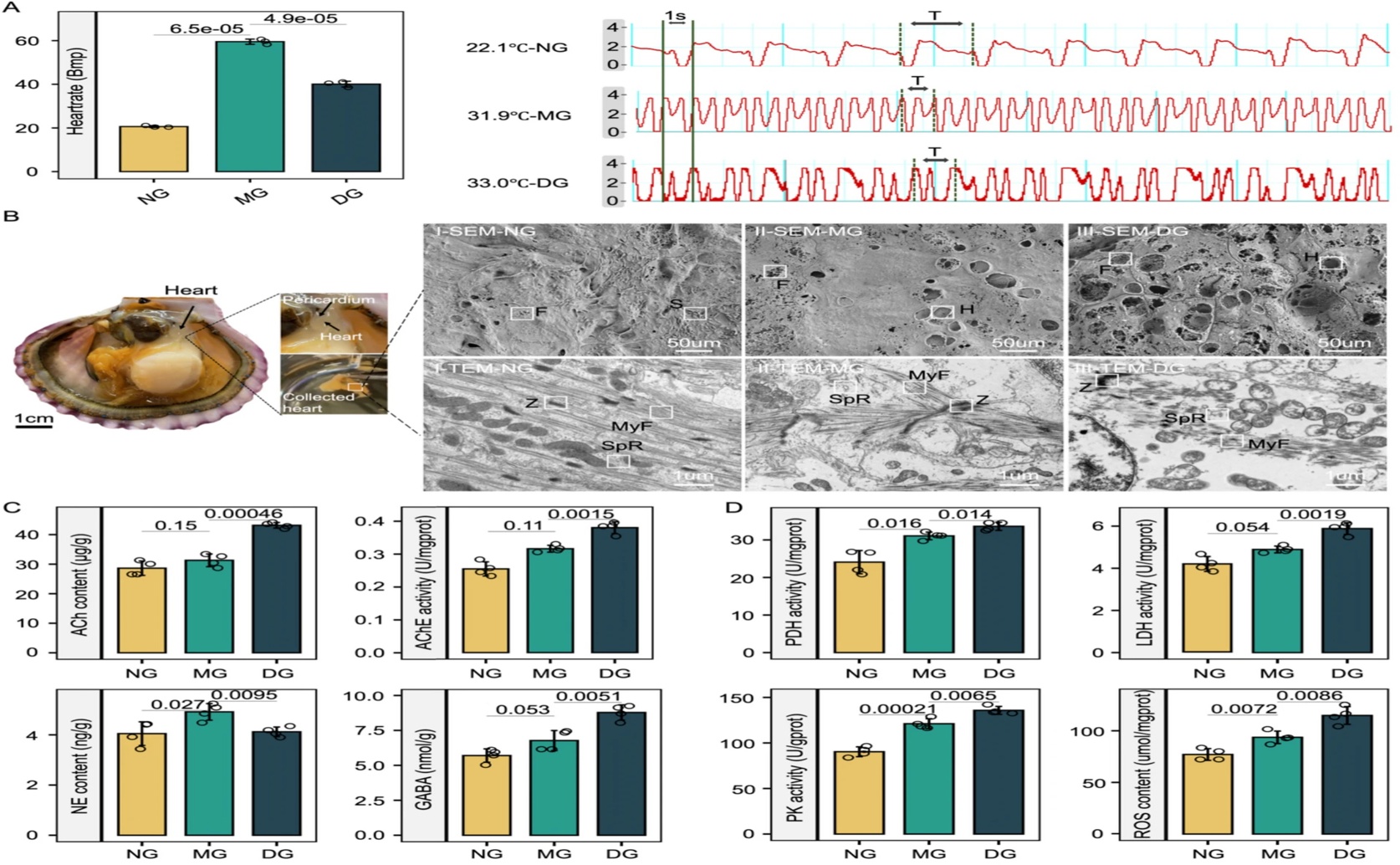
Climate change poses significant threats to marine life, particularly for species with open circulatory systems like scallops. Rising ocean temperatures can disrupt vital physiological processes, leading to increased mortality and impacting aquaculture industries. Addressing these challenges requires a deeper understanding of how marine organisms respond to heat stress at the cellular level. A recent study by researchers at the Ocean University of China[1] explores the heart’s response to elevated temperatures in the bay scallop, Argopecten irradians irradians, providing valuable insights into their thermal tolerance mechanisms. The study focused on the scallop’s heart, an essential organ responsible for circulating blood and maintaining bodily functions. Using a combination of morphological analysis, metabolic assessments, and single-cell RNA sequencing (scRNA-seq), the researchers investigated how heat stress affects the heart’s structure and function. Their findings revealed that as temperatures rise, the scallop’s cardiac structure experiences increasing damage. This damage is closely linked to widespread mitochondrial dysfunction—mitochondria being the cell’s powerhouses responsible for energy production—and disruptions in neurohumoral responses, which involve the interactions between the nervous system and hormones to regulate bodily functions. Through scRNA-seq, the team identified two distinct subpopulations of heart cells, known as cardiomyocytes: ventricular myocytes (VMs) and atrial myocytes (AMs). These cells play specialized roles in responding to thermal stress. AMs were found to enhance communication with immune-like cells and fibroblasts, aiding in maintaining cardiac homeostasis, which is the stable functioning of the heart despite external stressors. On the other hand, VMs increased their energy supply and differentiation potential, enabling the heart to better withstand high temperatures. This research builds on previous studies that have highlighted the vulnerability of marine bivalves to environmental stressors. For instance, earlier work demonstrated that increased sea temperatures lead to severe mortalities in scallops, affecting both local ecosystems and aquaculture[2]. Another study identified key genetic factors associated with thermal tolerance in bay scallops, such as the AiPC4 gene, which plays a role in DNA repair and genome stability[3]. Additionally, research on mussels revealed that ocean acidification and warming disrupt metabolic processes and circadian rhythms, further impacting energy supply and overall health[4]. The current study complements these findings by providing a detailed cellular perspective on how scallop hearts respond to heat stress, highlighting the importance of both cellular metabolism and genetic factors in thermal tolerance. A significant breakthrough of this study was the identification of the AiPLRP2-like gene as a crucial player in regulating cardiac thermotolerance. Unlike its mammalian counterpart, AiPLRP2-like exhibits unique cellular localization patterns in scallops, suggesting it has evolved specific functions to help these marine organisms adapt to fluctuating temperatures. To confirm its role, the researchers employed RNA interference, a technique used to reduce or silence specific gene expressions. Knocking down AiPLRP2-like resulted in a notable decrease in the scallops’ heat tolerance and an accumulation of triglycerides, a type of fat. This indicates that AiPLRP2-like is essential for managing energy storage and maintaining heart function under thermal stress. The study’s comprehensive approach, combining morphological assessments with advanced genetic techniques, provides a holistic view of the scallop heart’s response to heat. By distinguishing between the roles of VMs and AMs, the research underscores the complexity of cellular interactions in maintaining heart health under stress. The enhanced communication between AMs and immune-like cells suggests that immune responses are integral to protecting the heart, while the increased energy supply in VMs highlights the importance of energy management in coping with high temperatures. Furthermore, this research contributes to the broader understanding of how marine invertebrates adapt to climate change. The identification of key genes like AiPLRP2-like offers potential targets for molecular breeding programs aimed at improving thermal tolerance in aquaculture species. By selecting for scallops with favorable genetic traits, it may be possible to develop strains that are more resilient to rising ocean temperatures, ensuring the sustainability of scallop farming and the health of marine ecosystems. In addition to genetic factors, the study’s findings resonate with earlier research on metabolic and circadian disruptions caused by environmental stressors. For example, the observed mitochondrial dysfunction aligns with previous studies showing that impaired energy production is a common response to heat stress in marine organisms[2][4]. The disruption of neurohumoral responses further echoes findings that stress impacts regulatory processes essential for maintaining homeostasis[4]. By integrating these aspects, the current study provides a more detailed understanding of the multifaceted ways in which heat stress affects marine invertebrates. Overall, the research conducted by the Ocean University of China offers significant advancements in our knowledge of marine biology and environmental stress responses. By elucidating the cellular and genetic mechanisms underlying thermal tolerance in scallops, the study not only addresses pressing ecological and economic concerns but also lays the groundwork for future investigations into marine organism resilience. These insights are crucial for developing strategies to mitigate the impacts of global warming on marine life, ensuring the preservation of biodiversity and the sustainability of aquaculture practices.

GeneticsBiochemMarine Biology

References

Main Study

1) Single-cell transcriptomic dynamics of scallop heart reveals the heterogeneous response to heat stress

Published 15th April, 2025

https://doi.org/10.1186/s12915-025-02210-1


Related Studies

2) Cardiac performance and heart gene network provide dynamic responses of bay scallop Argopecten irradians irradians exposure to marine heatwaves.

https://doi.org/10.1016/j.scitotenv.2023.163594


3) Genome-Wide Association Study Reveals PC4 as the Candidate Gene for Thermal Tolerance in Bay Scallop (Argopecten irradians irradians).

https://doi.org/10.3389/fgene.2021.650045


4) Circadian Rhythm and Neurotransmitters Are Potential Pathways through Which Ocean Acidification and Warming Affect the Metabolism of Thick-Shell Mussels.

https://doi.org/10.1021/acs.est.1c06735


Related Articles

An unhandled error has occurred. Reload 🗙